Best Backup Power Solutions for Home Use in 2026?
In 2026, the importance of backup power for home has never been clearer. Power outages can disrupt everyday life, affecting everything from food safety to entertainment. Families are increasingly seeking reliable solutions to ensure their homes remain functional during these disruptions.
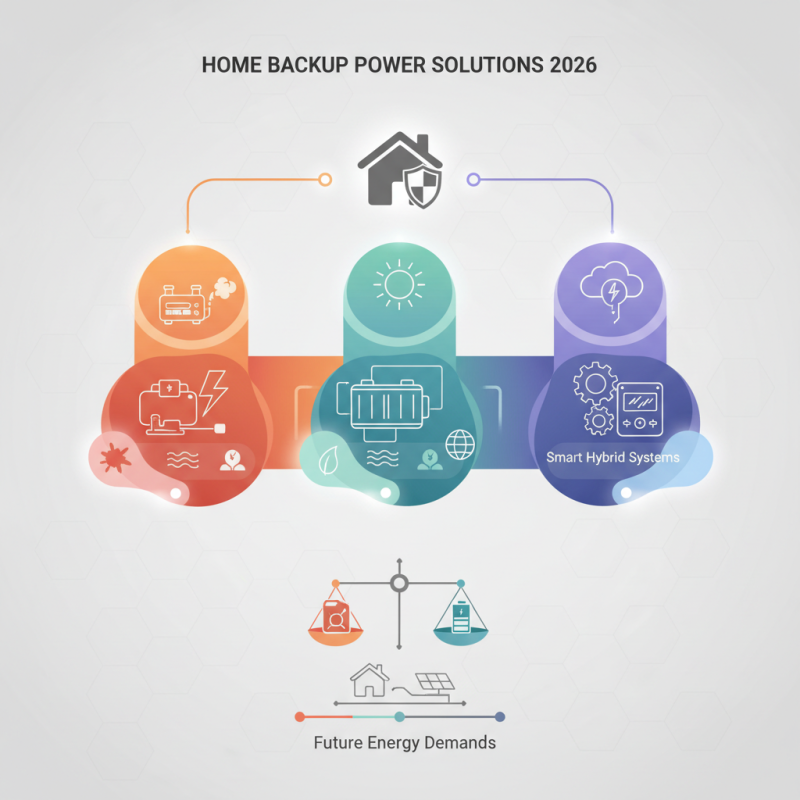
Several backup power options are available today, from generators to battery-powered systems. Each solution has its pros and cons. For instance, traditional generators offer high output but can be noisy and require fuel. On the other hand, battery systems are quieter and eco-friendly but may lack the power needed for larger homes. Choosing the right solution can feel overwhelming.
Reflecting on personal experiences with power outages can be enlightening. Many find they are unprepared when the lights go out. This highlights the need for planning and understanding what backup power for home best suits individual needs. It is essential to weigh options carefully and consider future energy demands.
Top Considerations for Choosing Backup Power Solutions in 2026
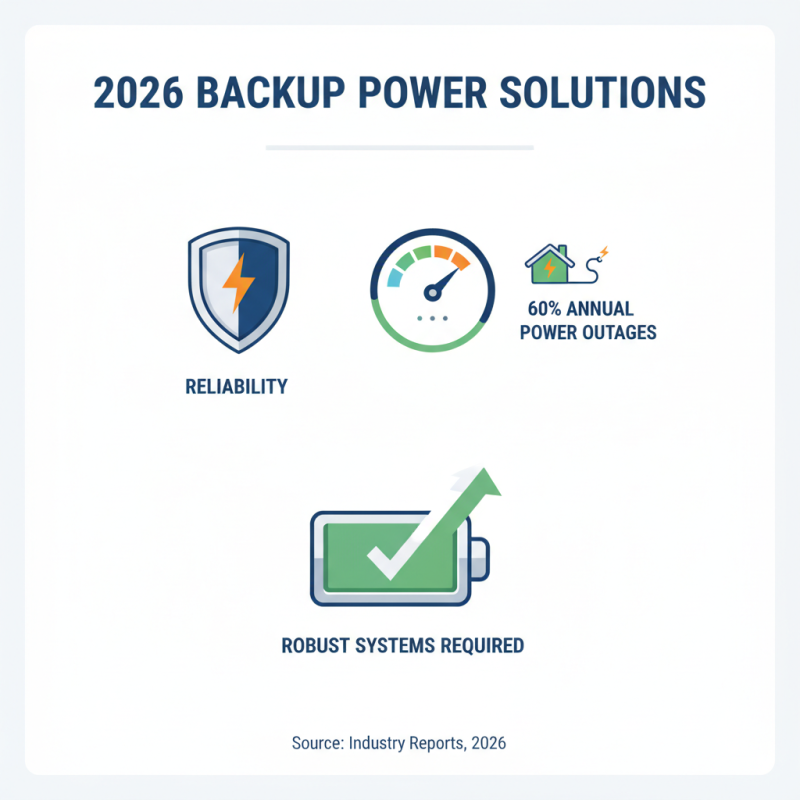
When choosing backup power solutions in 2026, key considerations emerge. The demand for reliable energy sources has grown significantly. Recent industry reports indicate that nearly 60% of households experience at least one power outage annually. This highlights the need for robust backup systems.
Battery storage options are gaining traction. These systems can store energy for later use. As solar technology advances, integrating solar panels with storage units becomes more viable. Many homeowners seek environmentally friendly solutions that reduce carbon footprints. It’s important to evaluate the power capacity to ensure it meets your household needs.
Tips: Choose a system that offers scalability. This allows for future expansion as your energy needs grow. Research local incentives for renewable energy installations.
Efficiency should be measured, too. Some systems might not perform as expected under certain conditions. Regular maintenance is also crucial to ensure reliability. Understanding potential limitations can help in making better choices.
Types of Backup Power Solutions: Generators, Inverters, and More
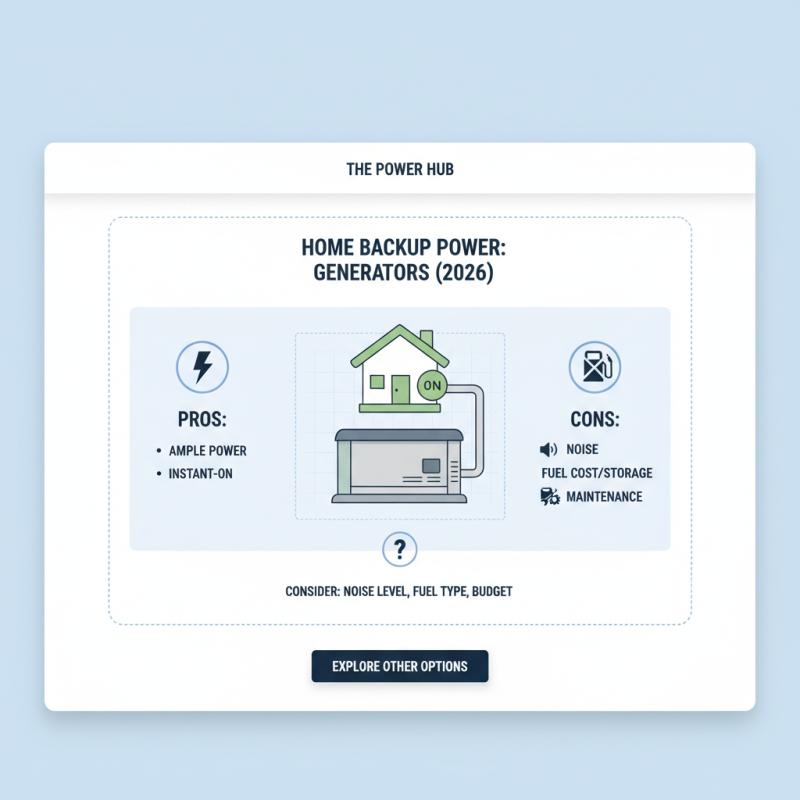
When considering backup power solutions for home use in 2026, understanding the types available is essential. Generators are one of the most common options. They can provide ample power during outages. However, noise can be a concern. The fuel can add to the expense. Not all homeowners enjoy maintaining a generator.
Inverters present another choice. They convert DC power into AC power, usually from batteries. This process is quieter and more efficient. Yet, depending on the capacity, they might not sustain high-demand appliances for long. You may find yourself needing multiple units.
There are also other alternatives like solar-powered systems. These can reduce electricity bills. Still, installation costs may deter some homeowners. The efficiency can fluctuate based on weather conditions. Each solution has its pros and cons. Homeowners need to weigh these factors when selecting the right backup power for their needs.
Battery Technology Advancements Impacting Home Backup Systems
In 2026, advancements in battery technology are set to revolutionize home backup power systems. New lithium-ion and solid-state batteries offer higher energy densities. They are lighter and more efficient than traditional options. With these innovations, homeowners can expect longer backup times during outages. This means less stress when the lights flicker.
Tips: Regularly monitor your battery health. Keeping the battery charged can extend its lifespan.
Solar integration is becoming more prevalent. Homeowners can couple battery systems with solar panels. This synergy can provide a sustainable power source. However, sizing the system correctly is crucial. An oversized system may lead to wasted resources, while an undersized system could leave you in the dark.
Tips: Assess your energy requirements accurately. Consider using energy-monitoring devices. They can provide insight into your daily usage patterns.
While these advancements bring promise, they are not perfect. Prices for advanced batteries can be high and continuing to drop is essential for accessibility. Additionally, the environmental impact of battery production remains a concern. Continuous improvement and responsible sourcing are necessary.
Tips: Stay educated on recycling programs for old batteries. This can minimize your environmental footprint.
Cost Analysis: Budgeting for Home Backup Power Options
As we look ahead to 2026, having a backup power solution for your home is more critical than ever. The options range from generators to battery storage systems. Investing in these solutions requires careful budgeting. The upfront costs can be substantial. Yet the peace of mind they provide during outages can be invaluable.
Battery systems tend to have higher initial expenses. However, they are more efficient and require less maintenance. Portable generators are often cheaper to purchase. Still, their fuel costs can add up over time. Consider your household's power needs. Identify how often outages occur in your area. Are you prepared for extended outages, or do you need something more short-term?
It's important to balance costs and benefits. Some people overlook ongoing expenses. Fuel for generators and battery replacements add to the total. Are you ready for these costs? Always think ahead. This ensures that your choice will keep serving you well into the future.
Best Backup Power Solutions for Home Use in 2026
| Power Solution Type |
Average Cost ($) |
Power Output (Watts) |
Run Time (Hours) |
Fuel Type |
| Solar Generator |
$1,500 |
3000 |
8 |
Solar |
| Portable Generator |
$800 |
2500 |
6 |
Gasoline |
| Home Standby Generator |
$5,000 |
10000 |
24 |
Natural Gas |
| Battery Backup System |
$2,000 |
5000 |
10 |
Electric |
| Hybrid Generator |
$3,000 |
7000 |
12 |
Gasoline/Solar |
Maintenance and Safety Tips for Home Backup Power Systems
When considering backup power solutions for home use, maintenance and safety are paramount. According to industry reports, improper maintenance can reduce the efficiency of backup systems by up to 30%. Regular inspection is crucial. Check the fuel levels of generators monthly and ensure that batteries are charged. Neglect can lead to unexpected failures during outages.
Tip: Always keep your backup power system clean and dust-free.
Safety is another key concern. Improper installation can result in carbon monoxide poisoning and electrical hazards. Ensure that your system is installed by a qualified professional. Follow local codes and guidelines for outdoor generators, keeping them at least 20 feet away from windows and doors.
Tip: Invest in a carbon monoxide detector installed near sleeping areas.
Testing backup systems regularly is essential. Many people overlook this crucial step. Conduct tests every three months to ensure peak performance. This practice can help identify issues before they become serious problems. Awareness is vital in preventing accidents and ensuring your family's safety during emergencies.