2026 How to Choose the Best Home Inverter for Your Needs?
In the world of home energy solutions, choosing the right home inverter is crucial. According to Emily Carter, a renowned expert in energy systems, “A reliable home inverter can make or break your energy management.” This statement highlights the importance of selecting an inverter that meets your specific needs.
When looking for a home inverter, consider your power requirements. Assess how many appliances you want to support, especially during outages. Each household varies in energy consumption, so it’s essential to know your limits. A mismatch can lead to underperformance or burnout.
Don’t overlook features like battery compatibility and efficiency ratings. Many people forget that not all inverters fit all technologies. Additionally, customer support and warranty are often neglected aspects. A good warranty can protect your investment in the long run. Inverter selection is not simple, and erring on the side of caution is wise.
Understanding Home Inverters: What They Are and How They Work
Home inverters play a critical role in modern energy management. They convert direct current (DC) from batteries into alternating current (AC), which powers household appliances. This function is essential, especially during power outages. According to industry reports, the global inverter market is projected to reach $16 billion by 2026. This growth highlights the increasing dependence on reliable backup power.
Understanding how inverters work can help in making informed choices. A good inverter not only provides stability but also efficiency. The efficiency rate typically ranges from 80% to 95%. This indicates the amount of stored energy converted to usable power. Choosing between a pure sine wave and a modified sine wave inverter is crucial. Though pure sine wave inverters are pricier, they are better for sensitive devices.
While many homeowners opt for cheaper models, this might lead to issues with long-term usage. A basic inverter may save money upfront, but it can cause damage to electronics over time. Investing in quality pays off. However, not every product on the market meets necessary safety standards. Research is essential to avoid poor performance and malfunctions, which can be costly.
Types of Home Inverters: Pros and Cons of Each Type
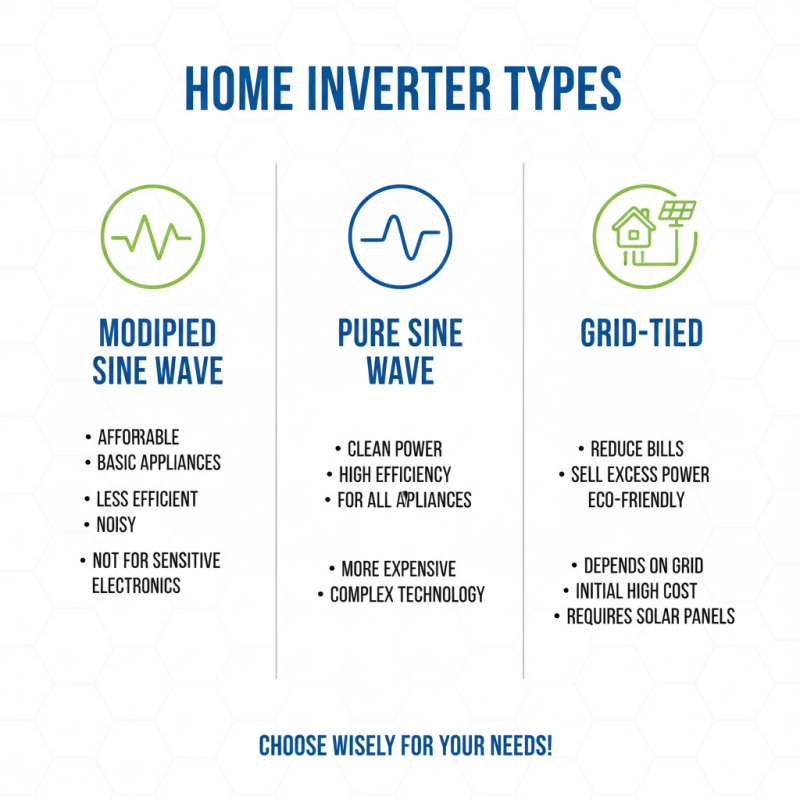
When choosing a home inverter, understanding the various types and their pros and cons is essential. There are three main types: modified sine wave, pure sine wave, and grid-tied inverters. Each type has its unique features, impacting performance and efficiency.
Modified sine wave inverters are often cheaper. They work well for basic devices like lights and fans. Yet, they can cause issues with sensitive electronics, leading to reduced lifespan. According to industry reports, these inverters have about a 70% efficiency rate.
Pure sine wave inverters, on the other hand, provide cleaner power. They are ideal for running appliances requiring consistent voltage, like refrigerators and computers. The drawback? They are more expensive, with costs running up to 30% higher. Some users find the initial investment challenging. Grid-tied systems operate only when connected to the grid. They save on electricity bills but won’t provide power during outages. Each option carries trade-offs, making it vital to assess specific needs before deciding.
Key Factors to Consider When Choosing a Home Inverter
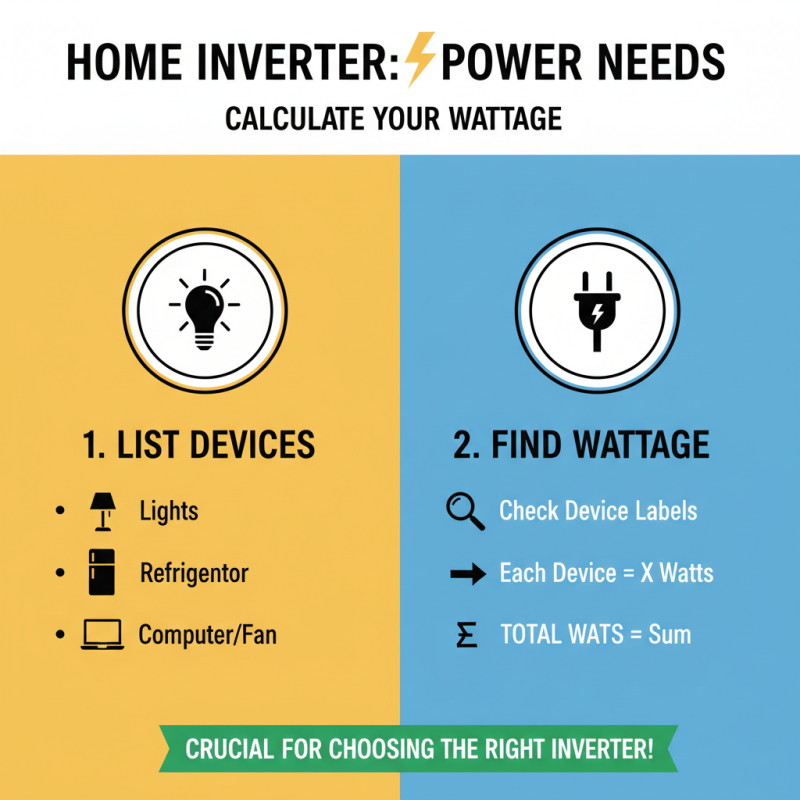
When selecting a home inverter, several key factors come into play. Start by assessing your energy needs. Consider your daily power consumption in kilowatt-hours. Make a list of essential devices. This will help determine the required wattage of the inverter. Do you need it for a few lights or an entire home? An accurate calculation is vital.
Next, evaluate the inverter type that suits your setup. Options include pure sine wave and modified sine wave inverters. Pure sine wave models provide cleaner energy for sensitive electronics. Think about your gadgets. If you often use medical devices, a pure sine wave inverter is worth considering.
Battery compatibility also matters. Ensure your inverter can connect seamlessly with your battery system. Check how long you need backup power. Some users need longer support while others may manage with shorter durations. It’s easy to overlook this detail, but it can affect your decision. Lastly, durability is key. Look for models with good reviews on longevity. A well-chosen inverter stands as a reliable energy companion.
How to Choose the Best Home Inverter for Your Needs? - Key Factors to Consider When Choosing a Home Inverter
| Feature |
Description |
Importance |
| Power Rating |
The maximum wattage the inverter can handle |
Critical - must match your power needs |
| Wave Type |
Modified sine wave vs pure sine wave |
High - affects compatibility with appliances |
| Battery Compatibility |
Types of batteries that work with the inverter |
Important - ensures optimal performance |
| Efficiency |
Ratio of input power to output power |
High - reduces energy loss |
| Portability |
Weight and size considerations |
Medium - relevant for mobile usage |
| Safety Features |
Overload, overheating, and short-circuit protection |
Critical - essential for user safety |
| Warranty |
Duration and terms of the warranty |
Important - indicates reliability |
| Price |
Total cost of the inverter |
Essential - must fit budget |
Budgeting for Your Home Inverter: Costs and Value Considerations
When budgeting for a home inverter, consider upfront costs and long-term value. Inverters can range from a few hundred to several thousand dollars. This price often reflects their capacity and features. A larger inverter can handle more appliances but may cost more. It’s essential to assess what you need for your home.
Look at your electricity consumption. A small inverter may suffice for essential devices. However, if you rely on larger appliances, a robust model is necessary. Always factor in installation costs. Unexpected expenses can arise, pushing your budget beyond its limits. Extra components, like batteries or additional wiring, often add to the final amount.
Remember to evaluate energy savings over time. A higher initial investment can lead to reduced utility bills. This aspect is often overlooked. Many people miss out on the long-term benefits, focusing solely on the initial outlay. Reflect on the inverter's lifespan and reliability. Sometimes, spending more upfront saves money later. It’s not just about the price tag—think about future needs.
2026 Home Inverter Comparison
This chart displays the costs of different home inverters based on their wattage. As the wattage increases, the cost also tends to rise, providing insights into budgeting for home power backup systems.