How to Choose the Best Solar Solutions for Your Home?
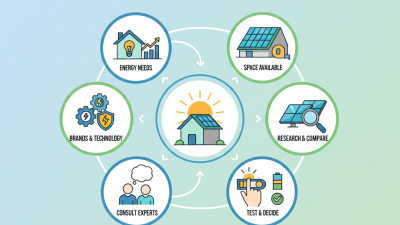
Choosing the right solar solutions for your home involves careful consideration and understanding. This process can seem overwhelming due to the variety of options available. Each solution promises energy efficiency and cost savings, but not all are suitable for every home.
Awareness of your individual needs is crucial. Factors like roof size, energy consumption, and budget should guide your decision. Solar panels vary widely in type and efficiency. Some may fit your home’s aesthetics but lack output. Others might promise high returns yet fail under certain conditions.
Reflecting on these choices can help mitigate future regrets. Consulting with experts can provide valuable insights. Their experience will often highlight potential pitfalls you may overlook. Ultimately, making informed decisions about solar solutions will lead to greater satisfaction and long-term benefits.
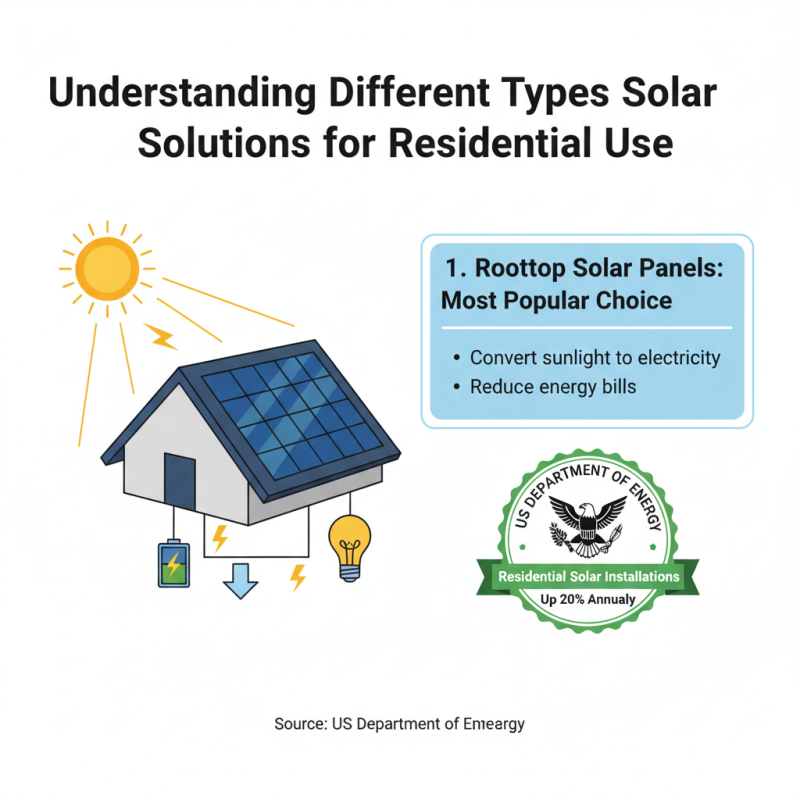
Understanding Different Types of Solar Solutions for Residential Use
When considering solar solutions for your home, it's crucial to understand the different types available. Rooftop solar panels are the most popular choice. They convert sunlight into electricity, helping homeowners reduce energy bills. According to the U.S. Department of Energy, residential solar installations have increased by over 20% annually. This trend shows a growing acceptance of solar technology.
Another option is solar shingles. These are integrated directly into your roof. They provide a sleek appearance and save space. However, solar shingles can be more expensive than traditional panels. Homeowners should weigh the cost against aesthetic appeal. The National Renewable Energy Laboratory reports that while upfront costs are high, energy savings can accumulate over time.
Solar water heaters are an alternative for homes focused on hot water needs. These systems can cut water heating costs by 50% or more. Yet, they have limited applicability in colder regions. Homeowners must consider local climate factors before choosing. The investment in any solar solution should reflect both the immediate financial impact and the long-term benefits. Each type has its advantages and challenges, highlighting the importance of informed decision-making.
Evaluating Energy Needs: Determining Your Home's Solar Requirements
Evaluating your home’s energy needs is crucial when selecting solar solutions. Start by understanding how much electricity your household consumes. You can find this information on your utility bills. The U.S. Energy Information Administration (EIA) states that the average American home uses about 877 kWh per month. Gather data on your daily usage patterns. Consider factors such as household size, appliances, and seasonal variations. Every detail matters in determining your solar requirements.
Next, assess the solar potential of your property. A study by the National Renewable Energy Laboratory (NREL) shows that the amount of sunlight your roof receives greatly influences actual energy output. Factors like shading from trees, roof orientation, and pitch should not be overlooked. Conduct a thorough evaluation, including a sunlight hours analysis. It may reveal that even slight adjustments could optimize energy efficiency.
Lastly, think about future energy needs. As families grow, energy consumption can change significantly. Incorporating energy-efficient appliances can also shift your total energy demand. A report from the Lawrence Berkeley National Laboratory highlights that homes equipped with energy-efficient appliances use up to 30% less energy than average homes. This is valuable to know when planning for solar installation. These insights will ensure your solar solution is both effective and sustainable.
Solar Solutions Energy Needs Analysis
This bar chart illustrates the energy consumption needs of a typical home compared to the output of solar panels and the capacity of battery storage. The parameters include daily energy consumption, solar panel output capability, and battery storage capacity, helping homeowners understand their solar energy requirements.
Assessing Cost-Effectiveness: Return on Investment for Solar Installations
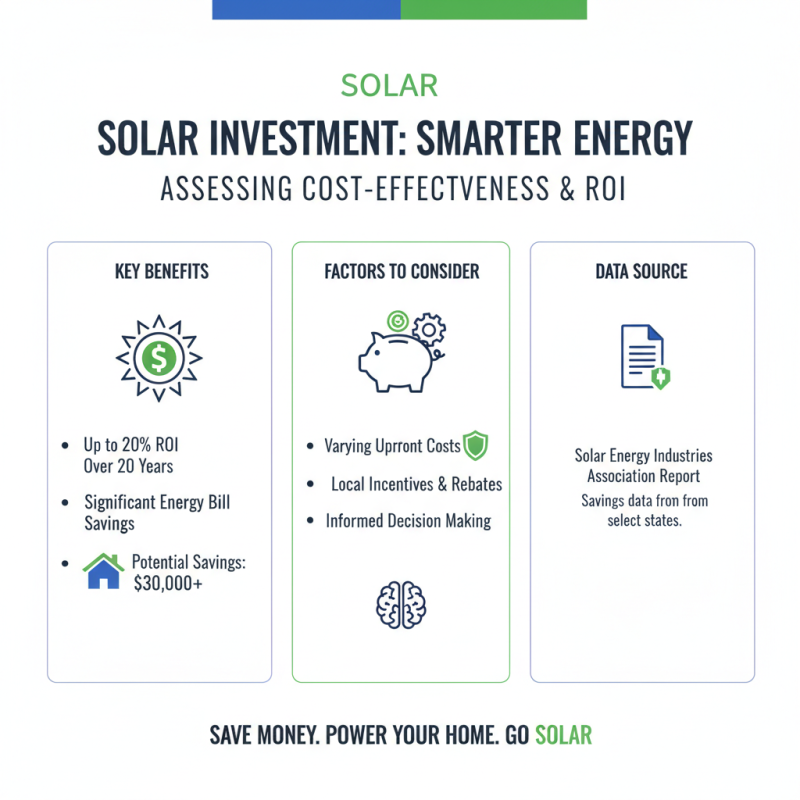
When considering solar installations, evaluating cost-effectiveness is crucial. A recent report by the Solar Energy Industries Association highlights that solar systems can provide up to a 20% return on investment over 20 years. This data indicates that homeowners can save considerably on energy bills, with some states reporting savings as high as $30,000. However, upfront costs and local incentives can vary widely. Understanding these dynamics is key to making an informed decision.
Tips: Research local incentives and rebates. They can significantly enhance your return.
The calculation of return on investment (ROI) often involves multiple factors. Installation costs, energy savings, and maintenance should all be assessed. According to the U.S. Department of Energy, reducing energy consumption by 20% can increase the ROI. Yet, homeowners must also consider the solar system's lifespan and degradation over time. Some systems may underperform, challenging initial financial estimations.
Tips: Prioritize quality over price. Cheaper systems may lead to unexpected costs later.
Analyzing your roof’s orientation and local solar radiation can affect ROI too. If your roof isn’t ideal, energy production might be lower than expected. Homeowners should consult professional assessments to understand potential energy output. This way, they can weigh the investment against the anticipated savings accurately.
Understanding Incentives: Federal and State Solar Tax Rebate Programs
When considering solar solutions for your home, understanding available tax incentives is crucial. Both federal and state programs can significantly lower your costs. According to the Solar Energy Industries Association, homeowners can save up to 30% on solar installations through the federal solar tax credit. This benefit makes solar technology accessible to more families.
State programs vary widely, with many offering rebates and additional tax credits. For instance, California provides substantial incentives, allowing for quicker return on investment. If you're in a state with a Renewable Portfolio Standard, you might also receive credit for surplus energy production. These financial incentives can substantially impact your overall budgeting for solar projects.
**Tip:** Research local incentives thoroughly. Websites like the Database of State Incentives for Renewables & Efficiency can help you find relevant information.
Keep in mind that eligibility criteria can change. Some programs may have cap limits or expiration dates. Therefore, staying informed is essential. Engaging with a solar advisor can help navigate these options efficiently. Investigate all avenues to maximize your savings.
Best Practices for Solar Panel Installation and Maintenance in Homes
When considering solar panel installation for your home, several best practices ensure effective and lasting performance. Start with a thorough roof assessment. Cells must ideally face south, free from obstructions. If your roof isn't suitable, ground-mounted systems can be an alternative. Regular checks for shading from trees or buildings are crucial. These factors directly influence energy output.
Maintenance is equally vital. Clean panels regularly to remove dirt and debris. This ensures they capture maximum sunlight. Schedule professional inspections at least once a year. Technicians can detect potential issues before they escalate. Watch for unusual noises or performance drops, as these may indicate underlying problems.
Also, think about your energy needs before installation. Using energy efficiency measures can reduce the required panel size. Lighting, appliances, and heating systems should all be assessed. Reflection on your family’s energy habits is important. Address any areas where you waste power. This preemptive step could lead to a smaller, more efficient system.
How to Choose the Best Solar Solutions for Your Home? - Best Practices for Solar Panel Installation and Maintenance in Homes
| Aspect |
Recommendation |
Frequency |
Notes |
| Location Assessment |
Ensure proper sunlight exposure |
Before installation |
Consider shade from trees/buildings |
| System Size |
Calculate energy needs |
Every year |
Adjust based on new appliances |
| Orientation and Tilt |
Optimal south-facing installation |
During installation |
Tilt angle can affect efficiency |
| Panel Maintenance |
Clean panels regularly |
Every 6 months |
Check for dirt and debris |
| Monitoring System Performance |
Use a monitoring tool |
Monthly |
Track energy production |
| Professional Inspections |
Schedule periodic inspections |
Annually |
Identifies potential issues |