How to Choose the Right Home Energy Storage Battery for Your Needs
Choosing the right home energy storage battery can be overwhelming. The market is filled with options. Each product promises unique advantages. As energy demands rise, the need for reliable storage becomes crucial. Expert Mark Johnson, a leader in renewable energy solutions, states, "Selecting an efficient home energy storage battery is essential for sustainable living."
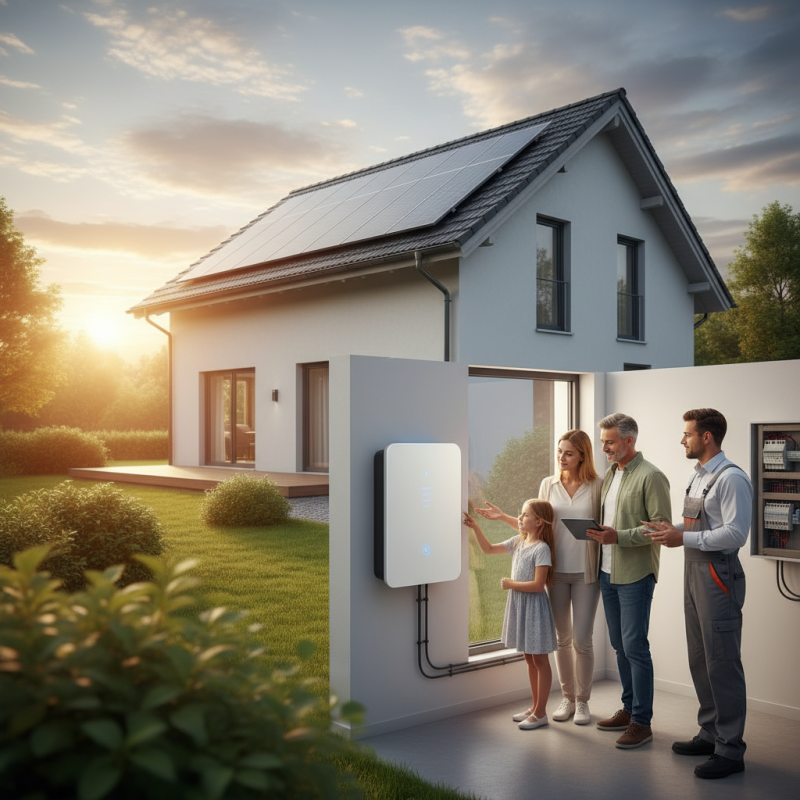
Imagine having a home that harnesses energy from the sun. A good battery stores this energy for later use. But how do you pick the best one? It’s not just about brand names. Consider capacity, efficiency, and lifespan. Many overlook these factors. Some batteries might seem cheaper, but they may not last long. Reliability is key.
There’s also the question of installation. A comfortable setup can save you headaches later. Some homeowners discover their systems don’t fit their needs. Reflecting on your energy usage is important. Do you want backup for outages, or to cut electricity costs? Determining your priorities will guide your choice.
Factors to Consider When Selecting a Home Energy Storage Battery
When selecting a home energy storage battery, several factors come into play. Start with capacity. How much energy do you typically use? Look at your energy consumption patterns. A battery with a suitable capacity can store enough energy for daily needs. However, overestimating your requirements can lead to unnecessary costs.
Next, think about lifespan. Batteries degrade over time, impacting their performance. Consider the warranty and how long the battery is expected to last. This aspect can be a little tricky. Some batteries may perform well initially, but drop in efficiency sooner than expected. Also, check the cycle life. This tells you how many charge and discharge cycles the battery can handle.
Cost is another crucial factor. Set a budget and stick to it. However, remember that initial costs are not the only expenses. Installation and maintenance can add up. Explore options for incentives or rebates that can ease financial pressure. It’s imperative to weigh long-term savings against initial costs. This decision can feel overwhelming, yet it is essential to research thoroughly before committing.
How to Choose the Right Home Energy Storage Battery for Your Needs
| Battery Type |
Capacity (kWh) |
Cycle Life |
Depth of Discharge (%) |
Efficiency (%) |
Warranty (Years) |
Est. Cost ($) |
| Lithium-ion |
10 |
3000 |
80 |
90 |
10 |
7000 |
| Lead-acid (AGM) |
8 |
1500 |
50 |
85 |
5 |
4000 |
| Flow Battery |
20 |
5000 |
100 |
80 |
10 |
15000 |
| Lithium Iron Phosphate |
12 |
3000 |
90 |
90 |
10 |
8000 |
| Nickel Manganese Cobalt |
15 |
2000 |
80 |
92 |
7 |
9000 |
Overview of Different Types of Home Energy Storage Technologies
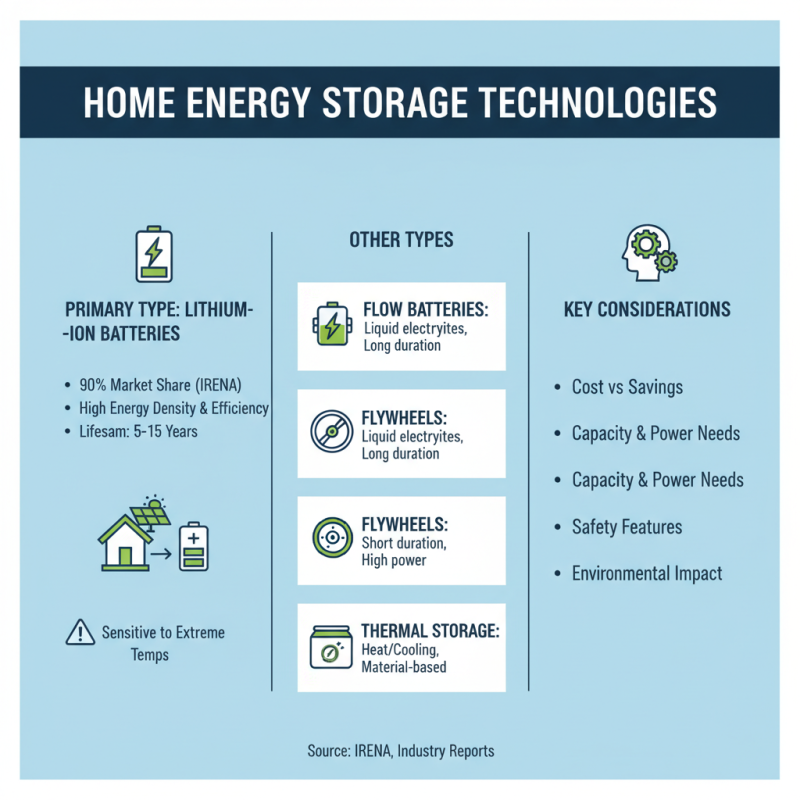
Home energy storage technologies have evolved significantly in recent years. Understanding the different types is essential for informed decision-making. Lithium-ion batteries are popular due to their high energy density and efficiency. According to the International Renewable Energy Agency (IRENA), they make up about 90% of the market. These batteries typically last 5 to 15 years, depending on usage. However, their performance can degrade in extreme temperatures.
Lead-acid batteries are another option. They are cheaper and have a long history of use, but their lifespan is shorter, usually ranging from 3 to 5 years. A report from the U.S. Department of Energy indicates they account for 10% of energy storage systems. While effective for some, their weight and recycling challenges can be drawbacks. Moreover, solid-state batteries are emerging as a promising technology, boasting increased safety and longer life cycles. However, they remain in the research phase, with real-world applications still limited.
Choosing the right technology involves balancing cost, lifespan, and efficiency. Each option has trade-offs. It's vital to assess your specific energy needs and local climate conditions. For instance, colder regions may impact battery performance differently. In making this decision, consider future energy demands and potential expansions.
Evaluating Battery Capacity: Understanding kWh Needs for Your Household
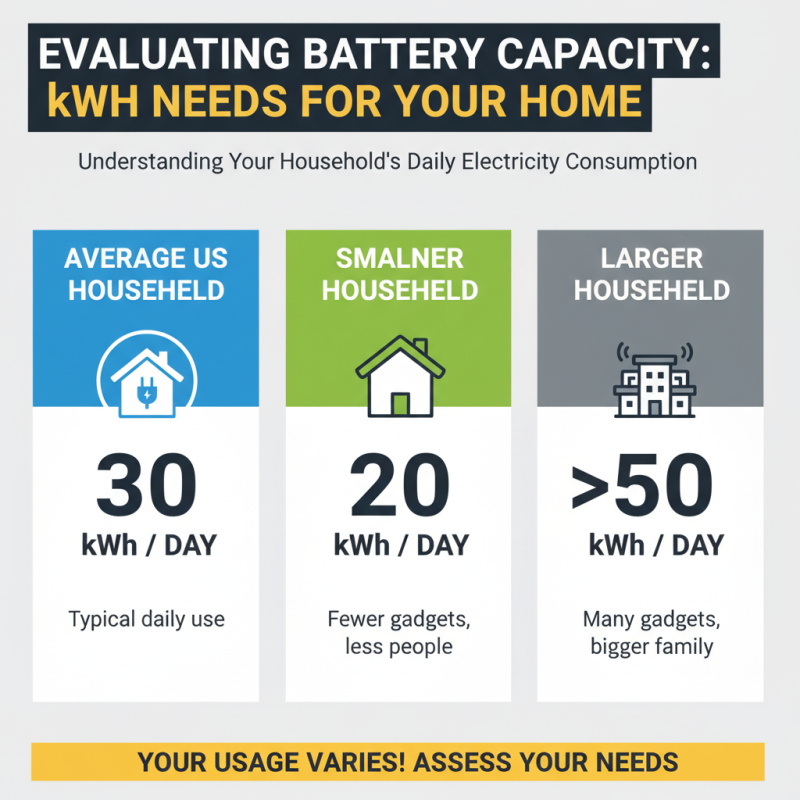
When evaluating battery capacity, understanding your household's kWh needs is crucial. On average, a U.S. household consumes about 30 kWh per day. However, your usage can significantly vary. Larger families or homes with multiple gadgets may require more than 50 kWh daily, while smaller households can function on 20 kWh.
A key metric for storage batteries is their usable capacity, measured in kilowatt-hours (kWh). Batteries with a higher kWh rating are capable of supporting more devices simultaneously. For example, a 10 kWh battery can power essential appliances like refrigerators and lights for a day. If you're using energy-intensive devices, you might think you need a larger battery, but proper assessment is necessary to avoid overestimation.
It’s also essential to factor in your solar output, if applicable. An average solar panel generates about 300 watts per hour. This equates to around 3-4 kWh daily for a 10-panel setup. Aligning your solar production with battery capacity helps you optimize energy usage. Many people forget this when strategizing their energy needs, leading to inefficiencies and wasted resources. You may discover that you don't need as much storage as you initially thought.
Analyzing Lifecycle and Warranty: Key Indicators of Battery Reliability
When choosing a home energy storage battery, lifecycle and warranty are critical. A battery's lifecycle can indicate its longevity. For instance, lithium-ion batteries typically offer around 2,000 to 5,000 cycles. On average, a cycle means the battery is discharged and then fully charged again. A battery with fewer cycles may not meet your long-term needs.
Warranty also plays a significant role in assessing reliability. Many manufacturers provide warranties that last from 5 to 10 years. A longer warranty often suggests confidence in the product's durability. However, the terms may vary greatly. Detailed examination of what is covered is essential. Some warranties only cover the battery's capacity, not its overall performance.
Moreover, real-world usage may reveal performance issues. Batteries degrade over time, which isn't always accounted for in warranty terms. A battery performing optimally for the first few years may show significant capacity loss later. Reports indicate that after 5 years, some batteries lose up to 20% of their capacity. Therefore, understanding both lifecycle expectations and warranty coverage is crucial. These indicators help ensure that your investment in home energy storage aligns with your immediate and future needs.
Cost-Benefit Analysis: Comparing Initial Investment vs. Long-Term Savings
When considering a home energy storage battery, a cost-benefit analysis is essential. Initial investment costs can be steep. Batteries vary widely in price. You might face a substantial upfront payment. However, it is crucial to weigh this against long-term savings. A system can reduce monthly utility bills significantly. Energy independence is also a tempting prospect. You may eventually see a return on investment in about five to ten years.
In some cases, perceived savings may not match reality. Local energy rates play a big role here. If rates are low, the benefits diminish. Maintenance costs can surprise homeowners. Sometimes, batteries don’t last as long as expected. Battery efficiency also might drop over time. It’s worth considering these factors carefully. A detailed analysis can illuminate hidden costs.
In short, the financial landscape involves many variables. Market fluctuations affect energy prices daily. It may be confusing to navigate this. A thorough understanding is necessary. You must ensure your investment makes sense over time. Balancing immediate costs with potential savings is key.
Cost-Benefit Analysis of Home Energy Storage Batteries