10 Tips for Choosing the Best Solar Panels for Your Home
Choosing solar panels for your home is more than comparing prices and glossy efficiency ratings. Your roof, electricity use, local climate, and future plans all influence the right decision. A sunny roof may still perform poorly if trees shade it after 3 p.m.
This guide presents ten practical tips for making a confident choice. You will learn how to compare panel efficiency, temperature performance, warranties, degradation rates, and installation quality. It also explains why an experienced installer matters. Check licensing, insurance, recent customer feedback, and independent product testing before signing a contract. Manufacturer datasheets and recognized certification bodies offer stronger evidence than sales promises.
Small details matter.
Measure your roof’s usable area. Notice vents, chimneys, gutters, and seasonal shadows. Review your past twelve months of electricity bills, not one unusually high month. A professional site assessment can reveal roof repairs that should happen before installation. Ignoring them may create expensive problems later.
No panel is perfect. Higher efficiency may cost more, while a cheaper system could produce less energy over time. Battery storage, changing utility rules, and household growth also deserve careful thought. Some recommendations may need revision after a detailed inspection. That is normal. Reliable decisions come from verified information, clear estimates, and realistic expectations. With these ten tips, you can evaluate solar panels for your home with greater clarity and less pressure.
Assess Your Home’s Solar Energy Needs
Before comparing panel efficiency, measure how much electricity your home actually needs. Pull twelve months of utility bills and record seasonal peaks. The U.S. Energy Information Administration reported average residential electricity use of about 10,800 kilowatt-hours in 2022. Your household may differ sharply. Electric heating, a well pump, or future vehicle charging can change the target.
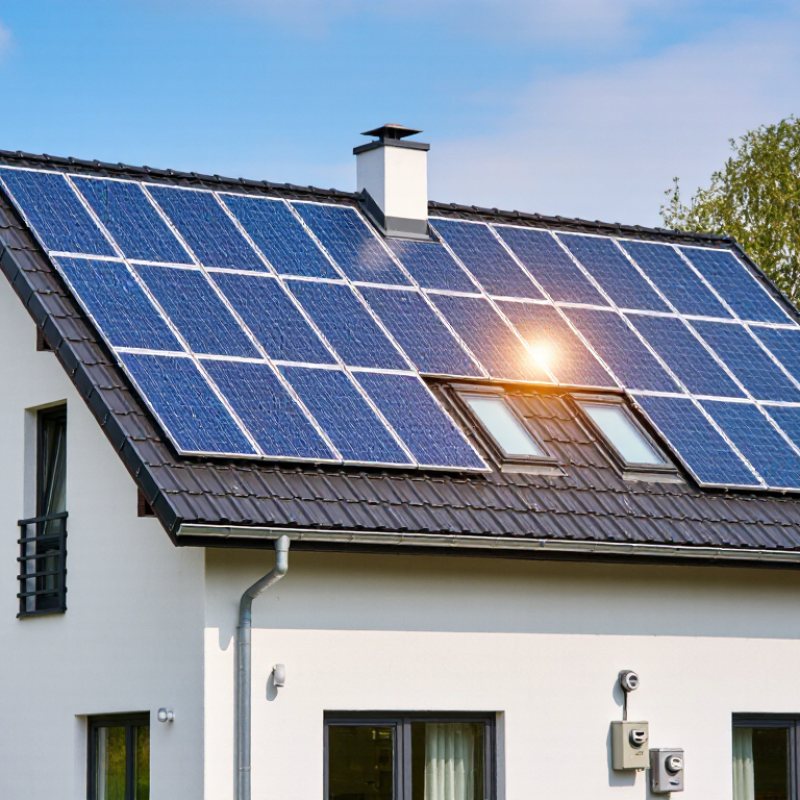
Check your roof in person, not only through satellite images. Note shade at 9 a.m., noon, and 3 p.m., especially from trees and chimneys. The National Renewable Energy Laboratory’s PVWatts model estimates production using location, weather, orientation, tilt, and system losses. Its default loss assumption is 14%, but real roofs deserve a site-specific review. A south-facing roof is not automatically perfect. Roof age matters too.
Convert your annual load into a production target, then compare it with a credible design estimate. For example, a 10,800-kilowatt-hour household may need roughly 8 to 10 kilowatts of solar in a moderate U.S. climate. Local sunlight can change that range. Ask for hourly production, monthly output, and clear modeling assumptions. NREL emphasizes that modeled results are estimates, not guarantees. Annual averages can hide winter shortfalls. That detail is easy to miss. Battery sizing should follow evening demand and outage priorities, not sales claims.
Compare Solar Panel Types and Efficiency Ratings
Choosing the best solar panels starts with comparing technology, not just appearance or price. Monocrystalline panels usually offer the highest efficiency, often between 19% and 23%. They suit smaller roofs where every square meter matters. Polycrystalline panels may cost less, but their efficiency is commonly lower. They need more roof space for similar output. Thin-film panels are lightweight and flexible. However, they often require a larger installation area.
Efficiency ratings
show how much sunlight a panel converts into electricity under standard test conditions. A higher rating is useful, but it is not the whole story. Check the temperature coefficient, because panels lose output as temperatures rise. Review the degradation rate and product warranty, too. A panel rated at 22% may produce less energy annually than expected if shading is overlooked.
During a roof assessment, measure afternoon shadows from trees, vents, and nearby buildings. Small shadows can affect several connected panels. I would also compare real-world energy estimates, not only laboratory ratings. Testing conditions are controlled and rather tidy. Roofs are not. My own preference can become too focused on efficiency, especially when a lower-rated panel fits the roof better. Ask for local sunlight data, installation angles, and estimated yearly production before deciding. Consider maintenance access as well. A crowded roof is harder to inspect.
Check Product Durability, Warranties, and Certifications
Choosing solar panels is not only about yearly energy output. Durability matters when panels face summer heat, winter frost, hail, dust, and strong coastal winds. Check the panel’s tested resistance to mechanical stress and temperature changes. A strong frame and sealed junction box can reduce moisture-related failures. However, laboratory results may not perfectly predict every rooftop. Local weather still deserves careful attention.
Read both warranties closely. A product warranty covers manufacturing defects, while a performance warranty addresses expected power loss over time. Check the warranty period, degradation limit, repair process, and exclusions. Some policies exclude damage from poor installation, unusual weather, or unauthorized modifications. Labor, shipping, and removal costs may also remain with the homeowner. Those details are easy to miss.
Certifications provide useful evidence, but they are not magic guarantees. Look for safety and performance testing from recognized, independent certification bodies. Confirm that the certificate applies to the exact panel model, not merely a similar series. Ask the installer for test documents and the installation plan. Keep invoices, serial numbers, photographs, and maintenance records. This paperwork can become important during a claim. A long warranty may sound impressive, yet a difficult claims process can still create stress. A cheaper panel might work well, but choosing it without checking certification records is a risk worth questioning.
Calculate Costs, Incentives, Installation, and Long-Term Value
Choosing solar panels involves more than comparing wattage. Lawrence Berkeley National Laboratory’s Tracking the Sun 2024 report placed the 2023 median residential installation price near $4.20 per watt. A 6-kilowatt system could therefore approach $25,000 before incentives. Ask for an itemized quote covering panels, inverters, labor, permits, roof repairs, and electrical upgrades.
Use NREL’s PVWatts calculator to estimate annual production from your roof’s angle, shade, and local weather. Then compare that output with your utility rate and expected electricity inflation. Eligible U.S. homeowners may claim a 30% federal clean-energy tax credit under current IRS guidance. State and local incentives vary, so check the DSIRE database and confirm eligibility with a qualified tax professional. Incentives can change.
Installation quality affects long-term value. Request proof of licensing, insurance, permits, and previous inspections. Ask how installers will manage heavy rain, snow loads, roof penetrations, and system monitoring. NREL’s Annual Technology Baseline shows solar costs continuing to decline, but cheaper equipment does not guarantee better lifetime performance. My first estimate ignored inverter replacement and tree growth; that made the payback period look unrealistically short. Leave room for maintenance, future roof work, and imperfect production. A panel with a slightly lower output may still make sense if its layout reduces shading and simplifies installation.