
Choosing the right Porcelain Bushing starts with the conditions it must withstand, not just its catalog price. A unit serving a transformer in a clean indoor room faces different demands from one exposed to coastal salt, dust, rain, or wide temperature swings. Small details matter. Check the system voltage, insulation level, current rating, and required creepage distance against the equipment design and site conditions. A mismatch may not be obvious during installation, but it can contribute to overheating, flashover, or premature failure.
Mechanical fit matters too. Confirm mounting dimensions, conductor arrangement, terminal type, and the forces expected during operation. Review the bushing’s rated cantilever strength and temperature limits, then compare them with the manufacturer’s technical documentation. Look for clear test information, material specifications, and traceable quality records rather than relying on appearance alone. Porcelain can look sound while hidden damage or poor handling has weakened it. Inspect for cracks, chips, and contamination, especially around sheds and sealing surfaces.
A careful selection process also considers maintenance access and replacement availability. Ask the supplier how the product was tested and whether its ratings match the intended application; verify critical details with a qualified electrical engineer. There is no single best bushing for every installation. And specifications can be incomplete. Site conditions change, and assumptions deserve a second look. The sections below explain how to compare electrical, mechanical, environmental, and quality requirements before making a practical choice.
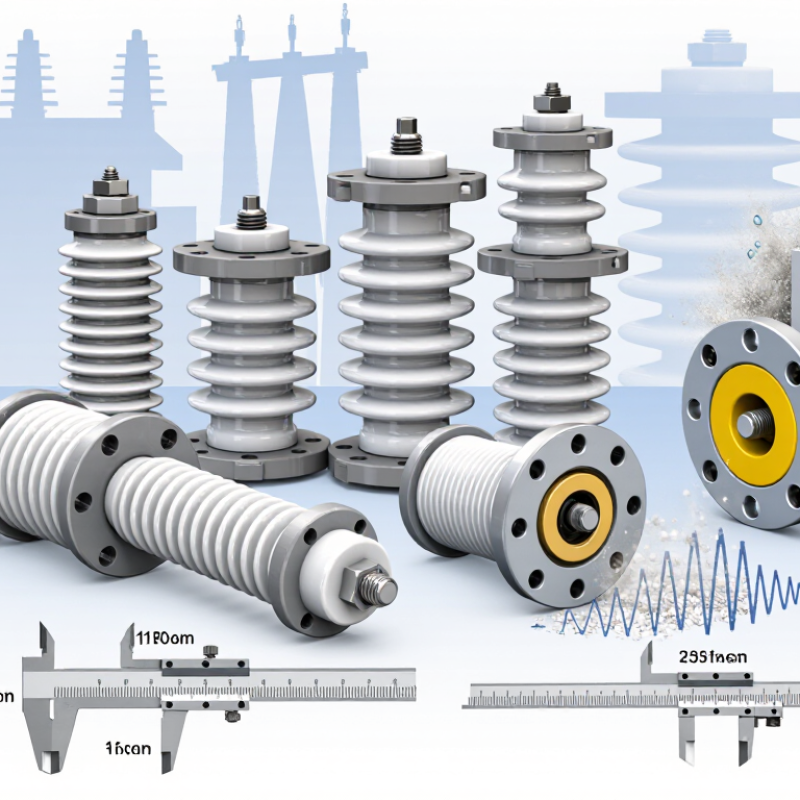
Begin with the equipment the porcelain bushing must serve. A bushing for a transformer may face different clearances and loads than one fitted to a switchgear enclosure. Record the system voltage, maximum operating voltage, current, and connection dimensions. Do not choose by nominal voltage alone. Small details matter.
Then examine the site. Is the bushing indoors or exposed to rain, dust, salt, or industrial pollution? These conditions affect insulation design and creepage distance. Note the expected temperature range, altitude, and any vibration or mechanical stress from attached conductors. Moisture matters. A sheltered installation can still experience condensation, especially during rapid temperature changes.
Compare these observations with the equipment drawings and the bushing’s technical data. Check terminal fit, mounting arrangement, electrical ratings, and specified environmental limits. If existing units have performed reliably, record their dimensions and service conditions, but do not assume an identical replacement is automatically suitable. Age, contamination, and changes to the installation can alter the picture. When a rating or measurement is uncertain, verify it with the equipment manufacturer or a qualified engineer before ordering. It is easy to overlook access for inspection; that deserves a second look.
| Application | Typical System Voltage | Voltage Rating to Check | Frequency | Current Rating | Installation and Environment | Key Selection Checks |
|---|---|---|---|---|---|---|
| Distribution transformer | 6.6–11 kV | For many 11 kV systems, check equipment rated for a maximum system voltage (Um) of 12 kV. | 50 or 60 Hz, according to the power system | Select for the transformer’s maximum continuous load current; common ratings for evaluation include 250, 400, 630, and 1,000 A. | Indoor or outdoor; assess pollution, rain exposure, and solar heating. | Confirm the transformer connection, terminal arrangement, insulation level, phase-to-ground clearance, and required creepage distance. |
| Industrial or substation transformer | 11–22 kV | For many systems up to 22 kV, check equipment rated for Um of 24 kV. | 50 or 60 Hz, according to the power system | Size for maximum continuous current and any specified overload duty; commonly evaluated ratings include 400–2,000 A. | Indoor electrical room, outdoor yard, or enclosure wall; account for humidity, dust, and contamination. | Check winding connection, bushing mounting dimensions, terminal forces, temperature rise, and system insulation coordination. |
| High-voltage power transformer | 22–33 kV | For many systems up to 33 kV, check equipment rated for Um of 36 kV. | 50 or 60 Hz, according to the power system | Determine from transformer rating and winding voltage; evaluate suitable classes such as 630, 1,250, 2,000, or 3,150 A. | Often outdoor; check pollution severity, altitude, ambient temperature, and exposure to weather. | Verify power-frequency and impulse withstand requirements, external clearances, creepage distance, and mechanical loading. |
| Switchgear or busbar wall penetration | Use the switchgear or bus system voltage | Match the bushing’s rated voltage and insulation level to the assembly and system requirements. | 50 or 60 Hz, according to the power system | Match the maximum continuous bus current; common values to evaluate include 630, 1,250, 2,000, and 3,150 A. | Indoor-to-indoor or indoor-to-outdoor separation; consider enclosure sealing and the external pollution environment. | Check conductor size, mounting pattern, phase spacing, temperature rise, short-time current duty, and required clearances. |
| Outdoor installation in a polluted area | Any system voltage; select the rating for the installation | Use the required equipment voltage rating for the system, including the applicable insulation withstand levels. | 50 or 60 Hz, according to the power system | Determine from the connected equipment’s maximum continuous current and specified overload conditions. | Assess salt, industrial deposits, dust, fog, rain, and the frequency of natural or planned washing. | Select creepage distance and insulator profile for the pollution severity and site conditions; do not use voltage alone to determine creepage. |
Selection note: Voltage and current examples are preliminary planning references, not universal ratings. Confirm the applicable standards, insulation coordination, pollution conditions, altitude, temperature limits, mechanical loads, and mounting details with the equipment design requirements before specifying a porcelain bushing.