10 Essential Tips for Choosing the Right Battery Backup Generator?
Choosing the right battery backup generator can be a daunting task. There are many options available today. Each has unique features and specifications. You must consider your needs carefully.
Understanding the power requirements is essential. What will you run during an outage? A refrigerator? Lights? Each device requires different wattage. This decision can impact your choice. Also, think about fuel types. Gasoline, propane, and diesel are common options. Each has benefits and drawbacks.
It's important to know your budget too. Prices can vary significantly. A cheaper model may not provide enough power. An expensive one might exceed your requirements. Do your research thoroughly. Read reviews and testimonials. The right battery backup generator should keep your home running smoothly during outages. Make an informed decision that suits your lifestyle.
Understanding the Importance of a Battery Backup Generator
When the power goes out, a battery backup generator becomes crucial. It ensures that your home remains functional during outages. Imagine a cold winter night with no heat. Your food, important documents, and comfort all depend on a reliable backup. A good generator can be a lifeline.
Understanding the importance of these generators goes beyond comfort. They can protect your appliances from damage due to sudden shutdowns. Data loss from computers can be catastrophic. A reliable power source may prevent that. But not all generators are created equal. Choosing one involves evaluating many factors, such as capacity and runtime. It’s easy to feel overwhelmed, especially with the myriad options available.
Don't rush your decision. Take the time to research different models. Consider your specific needs and the environment. Some generators may be too loud or inefficient for residential use. Reflect on your priorities. Do you need portability, or is quiet operation your main concern? These details matter in your final choice.
Battery Backup Generator Performance Comparison
This chart illustrates the run time of different battery backup generator wattages. As the wattage increases, the run time decreases, which is an important factor to consider when choosing a battery backup generator.
Evaluating Power Needs: How Much Capacity Do You Require?
When choosing a battery backup generator, it’s crucial to evaluate your power needs.
How much capacity do you truly require? Begin by listing essential appliances.
Consider items like refrigerators, lights, and computers. Each device has a specific wattage requirement.
A refrigerator might need around 800 watts. Meanwhile, lights could average 60 watts each.
This adds up quickly.
Calculate the total wattage. It’s smart to overestimate by about 20%. You might think you only need
2,000 watts, but maybe you need more when the fridge kicks on. Also, think about running time.
How long will the generator need to sustain power? Short outages may not require as much capacity, but lengthy blackouts do.
This adds complexity.
Reflect on your lifestyle, too. If you work from home, you need more than just lights and a fridge.
What about your internet? Without a stable connection, working becomes difficult.
In a bigger household, more devices run simultaneously. This can stress a smaller generator,
leading to disappointing performance. Therefore, taking time to evaluate your actual needs can save you headaches later.
Different Types of Battery Backup Generators Explained
When considering battery backup generators, it’s essential to understand the types available. Lead-acid batteries are common. They are affordable but have a limited lifespan. Typically, they last about 3 to 5 years. Lithium-ion batteries are gaining popularity. They last longer, often exceeding 10 years, and require less maintenance. However, they come at a higher initial cost.
Portable battery backup generators offer convenience. They are easy to transport and can power small devices. These are ideal for camping. For larger needs, standby generators are the preferred choice. They are permanently installed and automatically activate during power outages. A report from the Energy Information Administration states that about 20% of U.S. households experience outages regularly. This makes reliable options crucial.
Another option is solar battery backups, which are eco-friendly. They can store energy for later use. However, their efficiency depends on sunlight availability. A 2021 industry report indicated that 27% of consumers considered solar options. This reflects a growing trend toward sustainable energy sources. Despite their benefits, not all homes can easily integrate these systems. Each type has its pros and cons that should be weighed carefully before making a decision.
10 Essential Tips for Choosing the Right Battery Backup Generator
| Tip |
Description |
Type of Generator |
Run Time |
Power Output |
| Assess Your Power Needs |
Determine the wattage required for essential appliances. |
Portable Generator |
Up to 8 hours |
500 - 6500 Watts |
| Evaluate Power Source |
Choose between gas, diesel, or hybrid generators. |
Standby Generator |
Continuous |
5000 - 12000 Watts |
| Check Portability |
Consider weight and ease of transport. |
Inverter Generator |
Up to 10 hours |
2000 - 3500 Watts |
| Look for Safety Features |
Select models with CO detectors and overload protection. |
Dual-Fuel Generator |
8 - 15 hours |
4000 - 10000 Watts |
| Review Noise Levels |
Check the decibel levels for quieter operation. |
Quiet Inverter Generator |
Up to 12 hours |
2000 - 3000 Watts |
| Examine Fuel Efficiency |
Consider generators with longer run times on less fuel. |
Propane Generator |
Up to 10 hours |
3500 - 8000 Watts |
| Factor in Installation Costs |
Consider additional costs for wiring and transfer switches. |
Whole House Generator |
Continuous |
7000 - 20000 Watts |
| Research Warranty and Support |
Look for reliable warranties and customer service options. |
Solar Generator |
Varies |
300 - 3000 Watts |
| Consider Environmental Impact |
Evaluate eco-friendly options, including emissions. |
Green Energy Generator |
Varies |
500 - 6000 Watts |
Key Features to Look for in a Battery Backup Generator
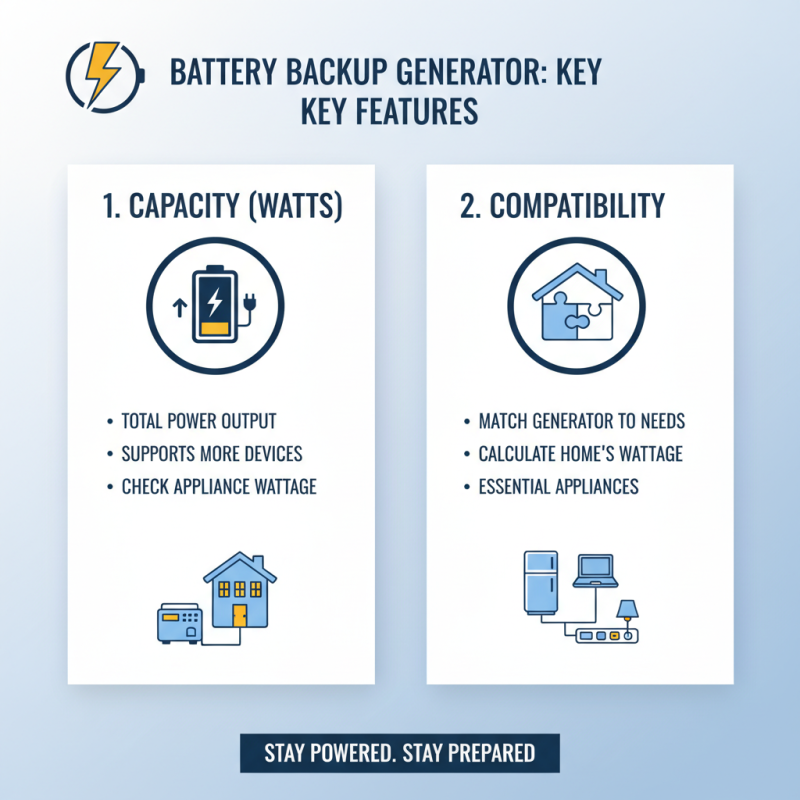
When choosing a battery backup generator, key features play a crucial role. First, consider the generator’s capacity. This determines how much power it can provide during an outage. A unit with a higher wattage rating will support more devices. Think about the essential appliances in your home. Calculate their combined wattage to ensure you select a compatible generator.
Next, look for battery type. Lithium-ion batteries are often lighter and charge faster. However, lead-acid batteries are a common choice due to their lower upfront cost. Reflect on your typical usage and storage space. Also, consider the generator’s runtime. How long will it last on a single charge? Checking the generator's efficiency during usage can save you frustration later.
Another important feature is portability. If you need to move the generator, weight and size matter. A compact generator might be easier to handle. Noise level is also worth considering. Some models run quietly while others produce excessive noise. Evaluate your living situation. A quieter generator may be preferable in residential areas.
Comparing Costs: Budgeting for Purchase and Maintenance
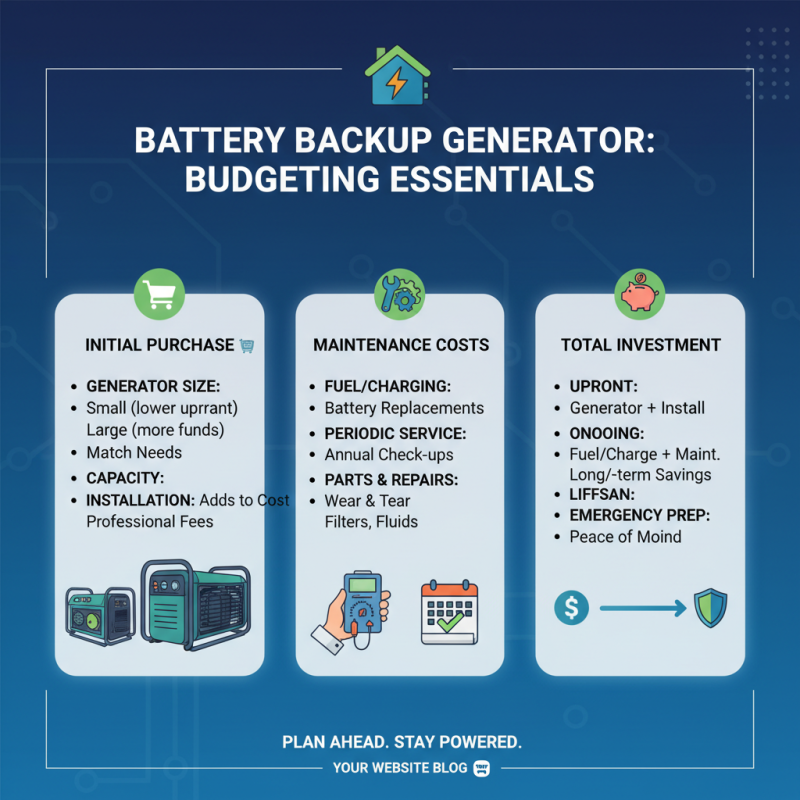
When budgeting for a battery backup generator, it's essential to consider both purchase and maintenance costs. The initial investment can vary greatly. Smaller generators may cost less upfront, but larger models with higher capacity will require more funds. Additionally, think about installation costs, which can add to your budget.
Maintenance is often overlooked. Regular upkeep is crucial, and some generators may need parts replaced after only a few years. It’s wise to plan for annual service checks. This ensures that your generator operates efficiently when you need it most.
Here are some tips to guide your selection. First, determine your power needs. Calculate the wattage of essential appliances. Understand what you really need to power during an outage. Next, consider fuel type. Some generators use propane, while others run on gasoline or natural gas. This can affect ongoing costs. Also, check local regulations and noise restrictions. These factors can influence your choice and expense. Investing time in research can save you from costly mistakes.