10 Essential Tips for Choosing the Right Battery Inverter for Your Needs?
When selecting a battery inverter, understanding your specific needs is crucial. A recent market analysis indicates that the battery inverter industry is expected to grow significantly, reaching a valuation of $16 billion by 2027. With the increasing reliance on renewable energy, choosing the right inverter becomes essential for both efficiency and cost-effectiveness.
Battery inverters play a vital role in energy storage systems, ensuring energy is effectively converted and used. Recent reports suggest that consumers often overlook key features, such as power capacity and efficiency ratings, leading to unsuitable purchases. Often, users face performance issues or unexpected costs later. Understanding the technical specifications can help buyers avoid such pitfalls.
When choosing a battery inverter, factors like installation complexity and warranty support also matter. Many buyers focus solely on price, neglecting the potential long-term implications. Making an informed decision requires careful consideration. Balancing cost with quality and support can lead to more reliable performance and satisfaction in the long run.
Understanding the Basics of Battery Inverters and Their Functions
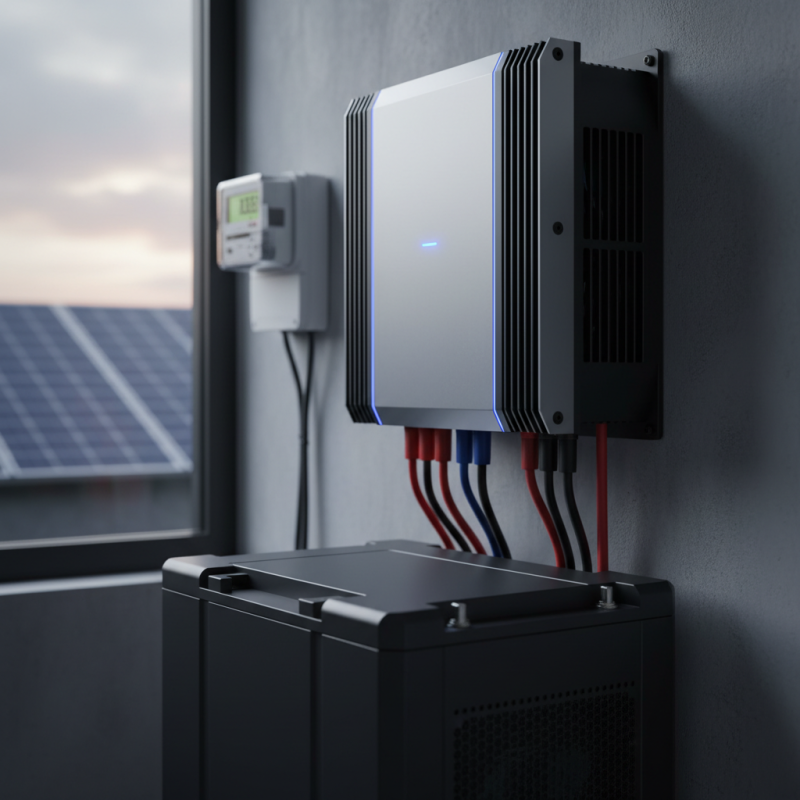
When exploring battery inverters, it's important to understand their fundamental functions. A battery inverter converts direct current (DC) from batteries to alternating current (AC) for appliances. This conversion allows you to power standard devices from stored energy. Typically, inverters are used in solar energy systems or for backup power at homes.
Choosing the right battery inverter can be daunting. Not all inverters have the same capabilities. Some may only support low power devices, while others can handle entire households. Evaluate your power needs. Consider the total wattage required for your devices, and if you plan to expand in the future, account for this growth too. Ensure the inverter offers features like overload protection for safety.
It's worthy to note that not every inverter is equally efficient. Efficiency ratings can vary significantly. A less efficient model will waste energy and may not meet your needs. Researching user reviews can provide insights into real-world performance. Reflecting on your energy requirements and potential usage is key to making a sound choice.
Battery Inverter Efficiency Ratings
Identifying Your Power Requirements and Load Needs
When selecting a battery inverter, understanding your power requirements is crucial. Start by assessing the total wattage of the devices you'll power. Count everything from lights to appliances. If you're not precise, you may end up with inadequate power supply.
Tip: Make a list of all essential devices. Calculate their total wattage. This will define your inverter’s capacity.
Consider your load needs too. For instance, inductive loads like refrigerators require higher starting wattage. If overlooked, this can lead to inverter overload. Think about surge capacity as well. It’s essential for appliances with high startup demands.
Tip: Look for an inverter that can handle peak demands. A good rule is to choose an inverter rated 20% higher than your calculated load. This safety margin ensures smooth operation.
Lastly, reflect on future needs. Will your energy consumption increase? Anticipating changes can save you from needing a new inverter sooner than expected. Keep flexibility in mind when making your decision. Choose wisely to ensure reliability in your energy needs.
Evaluating Inverter Types: Modified Sine Wave vs. Pure Sine Wave
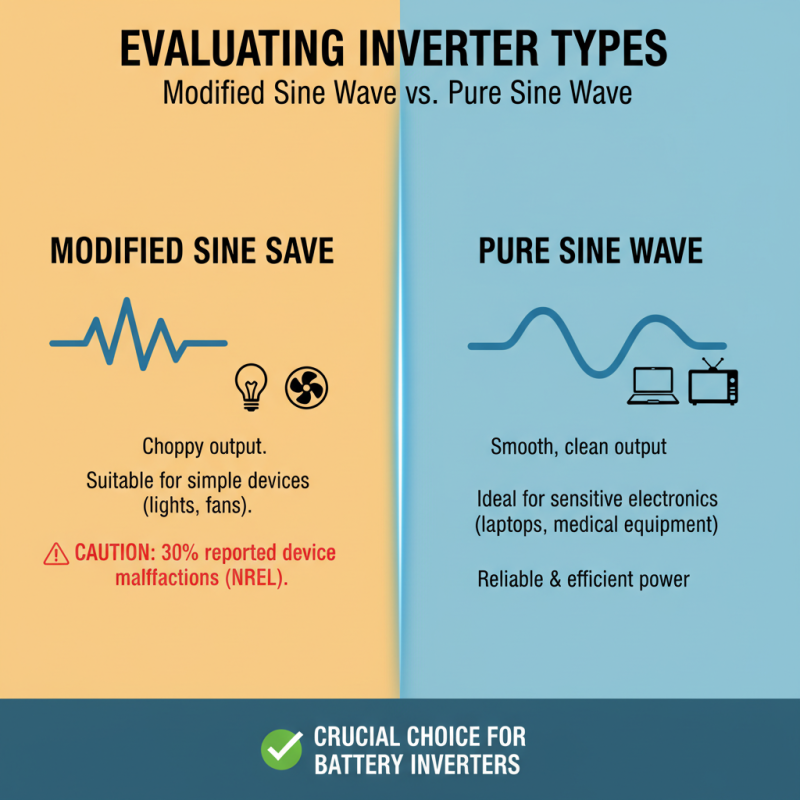
When it comes to choosing a battery inverter, understanding the differences between modified sine wave and pure sine wave inverters is crucial. Modified sine wave inverters deliver a choppy output, which is suitable for simple devices like lights and fans. However, they may create issues with sensitive electronics and devices that require precise voltage control. According to a report from the National Renewable Energy Laboratory, nearly 30% of users experienced device malfunctions when using modified sine wave inverters.
On the other hand, pure sine wave inverters produce a smooth, consistent output similar to grid power. This makes them ideal for complex equipment, including medical devices and high-end audio systems. Research by IEEE indicates that pure sine wave inverters can increase the efficiency of electronic appliances by up to 20%. Users often report that appliances running on pure sine wave inverters perform better and last longer, reducing long-term costs.
While pure sine wave inverters are more expensive, the benefits often outweigh the costs for many consumers. Selecting the right inverter requires assessing your power needs and the types of devices you plan to use. It’s essential to evaluate not just your current requirements but also potential future needs, as poor choices can lead to unsatisfactory performance and increased expenses.
Considering Battery Compatibility and Inverter Efficiency Ratings
Choosing the right battery inverter involves understanding two critical aspects: battery compatibility and inverter efficiency ratings. Battery compatibility is fundamental. Not all batteries work well with every inverter. Different chemistries like lithium-ion and lead-acid have unique requirements. Ensuring your inverter is compatible with your battery type can prevent performance issues and prolong lifespan. Always check the specifications before making a decision.
Inverter efficiency ratings play a crucial role in overall performance. An inverter converts DC power from batteries to AC power for use. Higher efficiency ratings mean less energy loss during this conversion. This can lead to significant savings over time. However, be wary of overly optimistic claims. Actual efficiency might vary under different loads and operating conditions. It’s beneficial to read user reviews and consult expert advice. Understanding both aspects will guide you toward a more informed choice, leading to better performance in real-world applications.
10 Essential Tips for Choosing the Right Battery Inverter for Your Needs
| Tip No. |
Tip Description |
Battery Compatibility |
Inverter Efficiency Rating |
| 1 |
Determine your power needs. |
Lithium-ion and Lead-acid. |
90%+ |
| 2 |
Choose the right wattage inverter. |
Compatible with multiple battery types. |
85%-95% |
| 3 |
Select a pure sine wave inverter for sensitive electronics. |
Best with Lithium-ion batteries. |
>90% |
| 4 |
Check inverter build quality. |
Standard for all types. |
Varies by model. |
| 5 |
Review safety features (overload protection, etc.). |
Applicable across battery types. |
N/A |
| 6 |
Consider your installation space. |
Ensure clearance for battery type. |
N/A |
| 7 |
Look into warranty and after-sales support. |
Not specific to batteries. |
N/A |
| 8 |
Evaluate the inverter’s noise level. |
Impact on battery cooling. |
N/A |
| 9 |
Check user reviews and ratings. |
General insights on compatibility. |
Overall efficiency ratings. |
| 10 |
Consult with a professional if needed. |
Expert insights on battery specifics. |
N/A |
Assessing Key Features: Protection, Size, and Portability Options
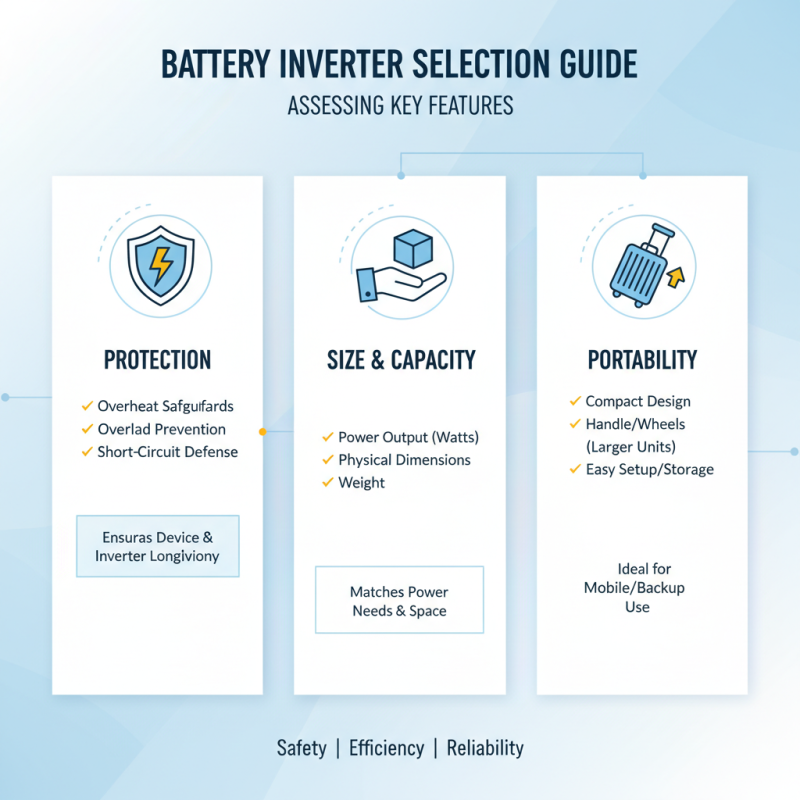
When selecting a battery inverter, there are several key features to consider. Protection mechanisms are crucial. Look for inverters with built-in safeguards against overheating, overloading, and short-circuiting. These features enhance safety and longevity. A good inverter protects both your devices and itself. Neglecting these aspects could lead to damage and costly repairs.
Size and portability are important for many users. If you're frequently on the move, a lightweight, compact inverter is essential. Consider how often you'll transport it. A bulky inverter might be reliable, but cumbersome to carry. Think about your lifestyle needs.
Assessing your energy requirements is critical. A small inverter may suffice for basic devices, while larger systems are needed for high-drain appliances. Plan accordingly. Calculate the total wattage you'll need. Ensuring proper sizing prevents overloading. Remember, an oversized inverter may lead to energy waste. Choose wisely to balance efficiency and practicality.