10 Essential Tips for Choosing a Home Backup Battery System
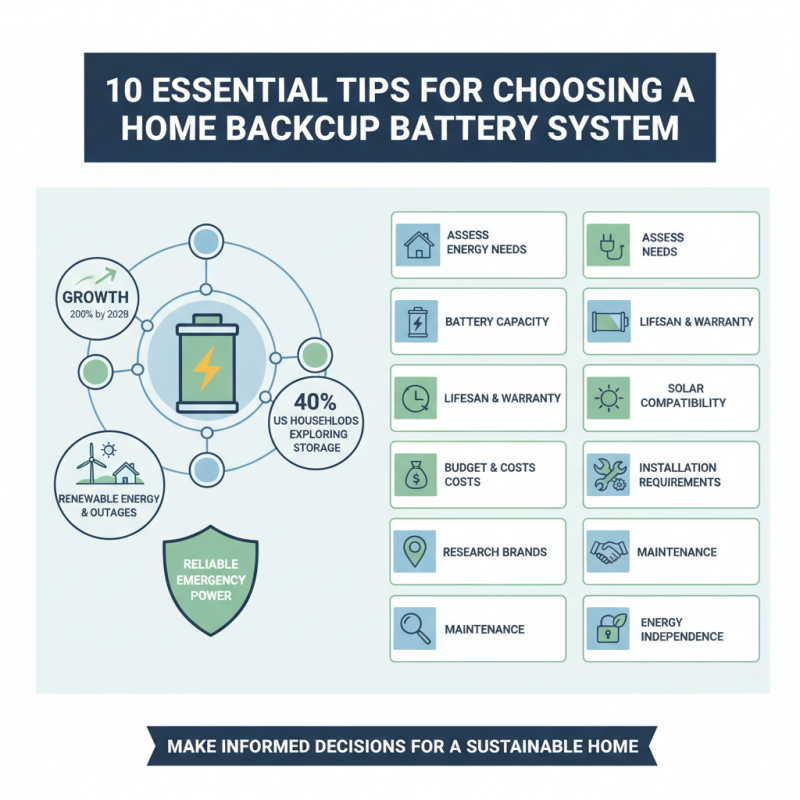
In recent years, the demand for home backup battery systems has surged significantly. According to the U.S. Energy Information Administration, over 40% of American households are exploring energy storage options. This trend is driven by the increasing frequency of power outages and a growing interest in renewable energy. Home backup batteries provide reliable power during emergencies, which can be life-saving.
Choosing the right home backup battery involves careful consideration. Factors such as battery capacity, lifespan, and compatibility with solar systems are vital. Many consumers overlook the importance of understanding their own energy needs, leading to potential overspending or insufficient backup power. Moreover, an industry report from Bloomberg New Energy Finance highlights the expected growth of the home battery market by 200% in the next five years. This statistic indicates that consumers must be informed to make the best choices.
Investing in a home backup battery is a crucial step towards energy independence. However, it's essential to conduct thorough research. The wrong decision may result in inadequate power supply during critical moments. With the right information, homeowners can secure a sustainable solution that meets their needs.
Understanding the Importance of a Home Backup Battery System
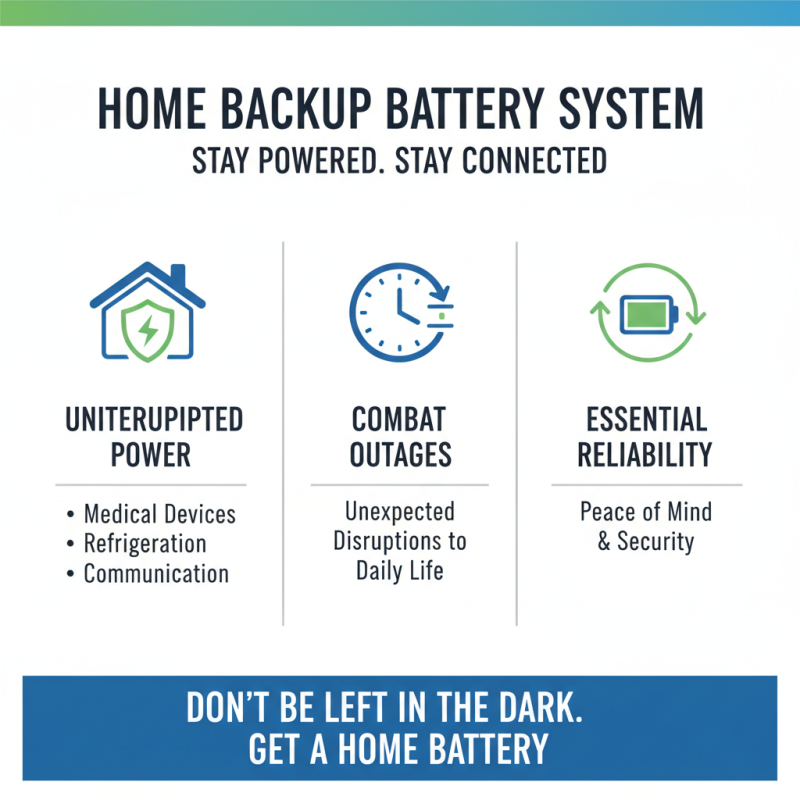
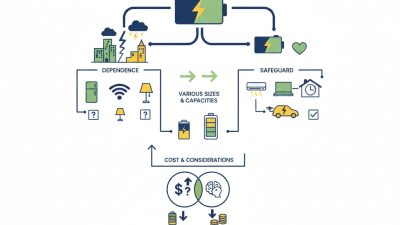
In today’s world, understanding the importance of a home backup battery system is essential. Power outages can happen unexpectedly. They disrupt daily life and leave you disconnected. A reliable backup system ensures essential appliances keep running. Whether it's for medical devices, refrigeration, or communication, a backup battery is crucial.
When selecting a system, consider your power needs. Assess your household’s energy consumption. Know which devices require power during an outage. This understanding will help you choose the right capacity. Avoid overspending on systems that provide more power than necessary. Sometimes, simplicity is key.
Battery systems vary in technology. There are lead-acid and lithium-ion options. Lithium-ion batteries often have longer lifespans and efficiency. However, lead-acid systems tend to be cheaper initially. It's important to weigh these factors carefully. Investing in quality can prevent future issues. Read reviews and consult experts, but personal experience matters too. You might find insights from others who faced similar challenges.
Assessing Your Power Needs and Usage Patterns
When selecting a home backup battery system, understanding your power needs is vital. Analyze your daily consumption. Make a list of devices you rely on—like refrigerators, lights, or home office equipment. Each item requires specific wattage. For example, a refrigerator might need 600 watts. Analyzing these details helps in estimating the total energy required during an outage.
Consider your usage patterns as well. Do you often work from home? If so, maintaining power for your computer and internet connection is crucial. Sometimes, you may only need backup for essential appliances. Reflect on past outages. Did you have enough power to keep your household comfortable? This assessment can guide your decision. Think about peak usage times. If your family is home in the evening, ensure your battery system can support those hours.
You might also want to consider the battery's capacity versus your actual needs. Some users overestimate their requirements, leading to unnecessary costs. Others might find their backup inadequate during real outages. Be honest with yourself about how much power you typically need. This reflective approach will lead to a wiser investment in your backup system.
Evaluating Different Types of Backup Battery Technologies
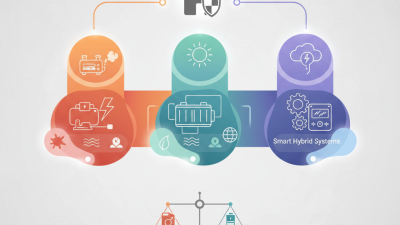
Choosing the right home backup battery system means understanding the different technologies available. Lead-acid batteries are common and affordable but tend to be heavy and have shorter lifespans. Lithium-ion batteries offer better energy density and longer cycles but come at a higher upfront cost. There’s also flow batteries, which are less common but promise scalability and longer durability. Each type demands a careful look at your home's energy needs and budget constraints.
Tip: Evaluate the typical power outages in your area. If outages last just a few hours, a smaller, less expensive battery might suffice. On the other hand, frequent or long outages call for a robust system with higher capacity. Don’t forget to check the battery’s depth of discharge rating and how many full cycles it can handle before performance drops.
Considering these details helps avoid overspending on unnecessary features or buying a system that won’t last. The choice isn’t perfect—it always involves trade-offs. Understanding these nuances can make the difference between frustration and reliable backup power when it matters most.
Energy Capacity Comparison of Different Backup Battery Technologies
Considering Installation and Space Requirements for Batteries
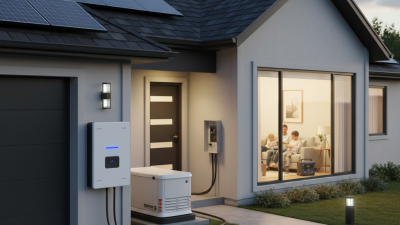
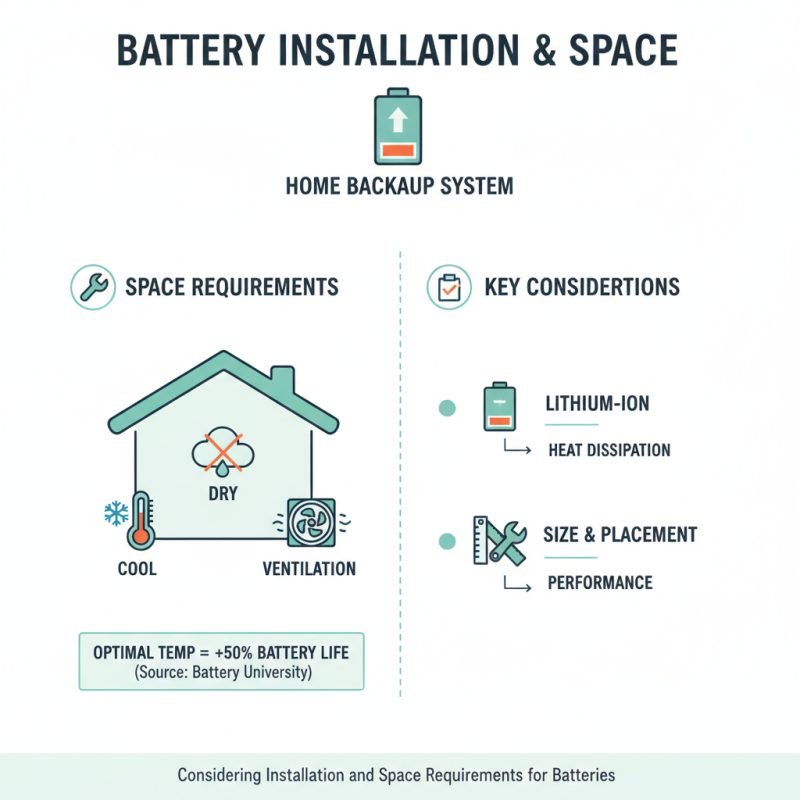
When selecting a home backup battery system, understanding installation and space requirements is crucial. The right space for battery placement can significantly affect performance. Most lithium-ion batteries require ventilation for heat dissipation. Ideally, the battery system should be located in a cool and dry environment. The Battery University notes that optimal temperatures can extend battery life by up to 50%.
Space consideration is not just about cooling. Battery systems can be bulkier than anticipated. An average home backup battery can weigh between 200 to 300 pounds. Homeowners need to plan for strong supports when installing these systems. Additionally, the floor space required can range from 3 to 6 square feet, depending on the system's capacity. This could limit potential placements in smaller homes or basements.
Some homeowners also overlook the accessibility of the system for maintenance. Regular battery checks are necessary to ensure reliability. If improperly installed or cramped in a corner, these systems may become difficult to reach. According to the U.S. Department of Energy, roughly 35% of homeowners do not adequately assess these factors, which can lead to lower efficiency and unforeseen costs.
Researching Reliability and Warranty Options for Battery Systems
When choosing a home backup battery system, reliability should be your top priority. A reliable system ensures your home stays powered during outages. Look for options that offer extensive testing and real-world usage data. This information showcases how well the batteries perform under various conditions. It’s important to check customer reviews and expert opinions. These insights can highlight common issues or strengths.
Warranty options play a crucial role, too. Most quality systems come with robust warranties. A longer warranty can be a sign of confidence from the manufacturer. Typical warranties range from five to ten years. Examine what is covered. Some warranties include labor costs, while others only cover parts. Understanding the terms can save you money and hassle later.
Consider asking yourself if the warranty information is clear and easy to find. A confusing warranty could be a red flag. Always seek transparency. It’s vital to know what you are investing in. Documentation should be readily available and easily understood. If it feels overly complicated, walk away. This process requires diligence, and your power backup is worth the effort.