What is an EV Charger for Your Car and How Does it Work?
Electric vehicles, or EVs, are transforming how we think about transportation. An essential component of owning an EV is the Ev Charger Car. This device allows you to charge your vehicle's battery at home or on the go. Understanding how it works is crucial for all EV owners.
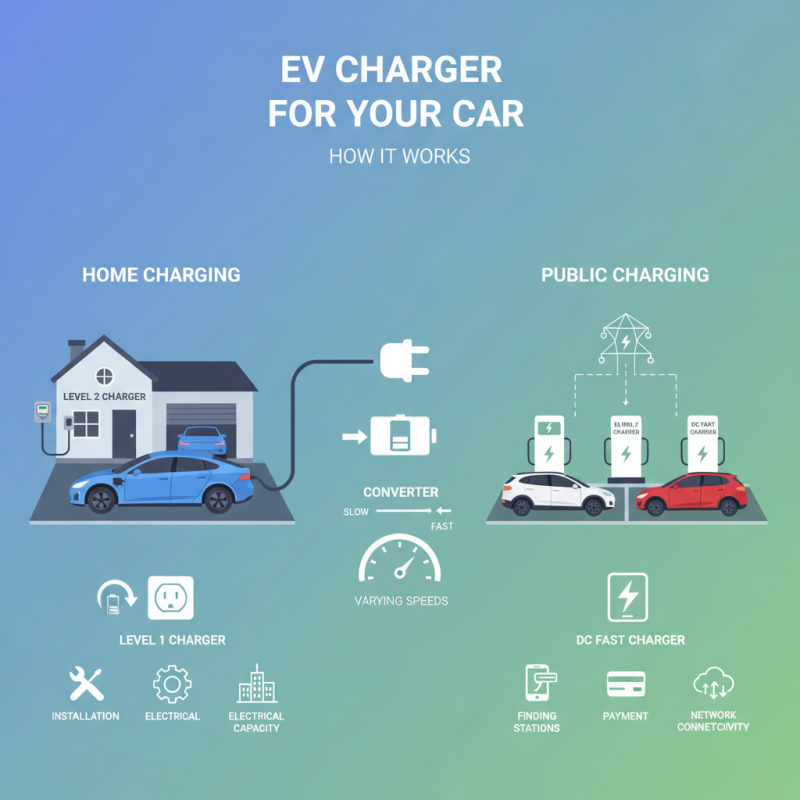
The EV charger car connects to the electrical system of your home or public charging station. It converts electricity into a form that your car can use. Different chargers offer varying charging speeds, which can confuse some users. For example, Level 1 chargers are slow but convenient, while Level 2 chargers provide faster charging options. Despite the benefits, many still struggle to grasp the technology behind it.
Installing an EV charger car may seem straightforward. However, installation can lead to challenges. Homeowners need to consider their electrical capacity and local regulations. Often, they must seek professional help. This can feel overwhelming for first-time EV buyers. Therefore, understanding the complexities is vital. In this rapidly evolving market, both knowledge and practical application are key for EV users.
What is an EV Charger and Its Importance for Electric Vehicles?
Electric vehicles (EVs) are gaining traction worldwide, making EV chargers crucial for their success. According to a report by the International Energy Agency, global EV sales reached 3 million units in 2020, a 41% increase from 2019. As the demand for EVs rises, so does the need for reliable charging infrastructure. EV chargers offer a convenient way for users to recharge their vehicles at home or on the go.
The importance of EV chargers cannot be overstated. They are essential for reducing range anxiety among potential EV buyers. A 2021 study by McKinsey reported that while consumers value EVs, their main concern is charging accessibility. Having a charging station nearby can significantly influence buying decisions. Additionally, public charging networks are expanding, with over 1.3 million charging points installed globally. This growth enhances the overall attractiveness of EVs.
However, challenges remain. Many regions still lack sufficient charging facilities. Inconsistent charging speeds can frustrate users. Moreover, some chargers face reliability issues, impacting user experience. These gaps highlight the need for continuous improvements in charger technology and infrastructure to meet consumer expectations. Addressing these issues is vital for the wider adoption of electric vehicles.
What is an EV Charger for Your Car and How Does it Work?
| Charger Type | Charging Speed (kW) | Typical Charging Time | Location | Connector Type |
| Home Charger | 3.7 - 7.4 | 8 - 12 hours | Residential | Type 1 / Type 2 |
| Level 2 Charger | 7.2 - 22 | 4 - 6 hours | Public / Commercial | Type 2 |
| DC Fast Charger | 50 - 350 | 30 minutes - 1 hour | Highway / Supercharger Stations | CHAdeMO / CCS |
| Wireless Charger | 3 - 10 | Variable | Home / Parking Lots | N/A |
Types of EV Chargers: Level 1, Level 2, and DC Fast Charging Explained
When you think about charging electric vehicles (EVs), consider the three main types of chargers: Level 1, Level 2, and DC Fast Charging. Level 1 chargers use a standard household outlet. They are the slowest option, adding about 4 to 5 miles of range per hour. This type is best for overnight charging at home. However, it may take a long time to fully charge your vehicle.
Level 2 chargers are more powerful. They operate at 240 volts and can provide 10 to 20 miles of range per hour. Ideal for home or public charging stations, Level 2 chargers can fully recharge many EVs in just a few hours. These chargers are becoming more common in workplaces and shopping centers.
DC Fast Charging is the fastest option. It can add over 100 miles of range within 30 minutes. However, not all vehicles support this type of charging. It's primarily found at highway stations, catering to long-distance travel. But be aware; frequent use can degrade battery life faster.
Tips: Always check your vehicle’s compatibility with each charger. Planning your charging stops can save you time. If possible, consider installing a Level 2 charger at home. It may seem costly upfront, but it enhances convenience in the long run. Remember, not all chargers deliver the same power; understanding these options is crucial for optimal use.
How EV Chargers Function: The Process of Charging Your Electric Car
Charging your electric vehicle (EV) involves a series of technical interactions. An EV charger connects to the electrical system of the car. It allows the transfer of electrical energy to the vehicle’s battery. This process can vary in speed, depending on the charger type. Level 1 chargers are slower, while Level 2 chargers offer quicker charging times. Fast chargers can significantly reduce charging duration.
The charging process begins when you connect your car to the charger. The charger identifies the vehicle's battery type. It then communicates to deliver the proper voltage. This is crucial for ensuring safe and efficient charging. During this time, the battery management system monitors the charge. It protects the battery from overcharging or overheating.
Tip: Always check the charger’s compatibility with your EV before use. This simple step can save you time and frustration.
Monitoring the charging process is worth the effort. Charging often happens overnight or while parked. This routine might not be seamless every time. Occasionally, the charger may fail to communicate effectively with the vehicle.
Tip: Keep your charging equipment in good condition. Regular maintenance can prevent unexpected issues.
Understanding how EV chargers function empowers drivers. It brings clarity to the charging experience. With knowledge, you can improve the efficiency and safety of your EV’s energy use.
Key Features to Consider When Choosing an EV Charger for Your Home
When selecting an EV charger for your home, several key features should influence your decision. Consider the charging speed. Level 2 chargers are popular because they can charge most electric vehicles (EVs) much faster than standard outlets. You might find that a higher amperage charger reduces your charging time significantly. However, don't forget that your home's electrical system should support the chosen charger.
Another important factor is the installation process. Some chargers require professional installation due to electrical requirements or local regulations. Do you have the right electrical capacity? It may be worth consulting an electrician. This can add to the initial costs but ensures safety and efficiency.
Connectivity features are also notable. Many modern chargers offer app integration for monitoring charging sessions. You might enjoy checking your charging status from your phone. However, technology can be unpredictable. Some users report connectivity issues that hinder functionality. Lastly, consider the charger's durability and warranty. Is it built to withstand the elements? An outdoor-rated charger might be necessary if installed outside.
Electric Vehicle Charger Types and Power Levels
This chart shows the different types of EV chargers and their respective charging power levels in kilowatts (kW). Understanding these types can help you decide which charger best fits your needs at home.
Installation and Maintenance Tips for EV Chargers to Ensure Safety and Efficiency
Installing an EV charger is crucial for electric vehicle owners. It ensures your car is charged efficiently at home. Start by choosing a suitable location. The charger should be easily accessible. Ideally, it should be near your parking spot. This makes connecting and disconnecting simple. Consider the installation process. It might require professional help to ensure safety.
Maintenance is essential for optimal performance. Regularly check the charger for wear and tear. Clear any debris or obstructions. This helps in maintaining a safe environment. Keep an eye on the cables. Damaged or frayed cables can create hazards. Ensure that connections are secure. If you notice any irregularities, consult a professional.
There are some common mistakes to avoid. Don’t ignore local regulations when installing. Ensure your setup complies with local codes. It’s also important not to overload your circuit. This can lead to overheating. Evaluate your electrical system's capacity. Consider future needs as you plan your installation. An adequately maintained charger leads to safe and efficient operation.
