Choosing the right home battery storage system can feel like comparing several unfamiliar tools. Each type serves a different household, climate, budget, and energy routine. Lithium iron phosphate batteries offer strong cycle life and stable performance. Nickel manganese cobalt models can provide compact energy storage with high energy density. Lead-acid systems remain familiar and affordable, although they usually need more space and maintenance. Saltwater batteries may appeal to buyers seeking different material choices, but availability and installer experience vary widely.
The best option depends on more than battery chemistry. Daily electricity use, rooftop solar output, backup priorities, indoor temperature, and available installation space all matter. A family running medical equipment may value dependable backup capacity. A small apartment may need a compact system with simple controls. Rural homeowners might focus on long outages and difficult service access. These details change the decision.
Independent testing, warranty terms, usable capacity, safety features, and local installation standards deserve careful review. Product labels can look impressive. Real-world performance is less tidy. Some specifications exclude inverter losses or reserve capacity, which can make comparisons misleading. Buyers should confirm certification requirements and professional installation rules in their region. Manufacturer claims are useful, but verified technical documents carry greater weight. No single battery wins every home. That assumption can fail.
This guide examines the top types of home battery storage for global buyers, including their strengths, limitations, maintenance needs, and practical applications. The goal is not to promote one technology. It is to support a clearer, more informed purchase decision. Carefully.
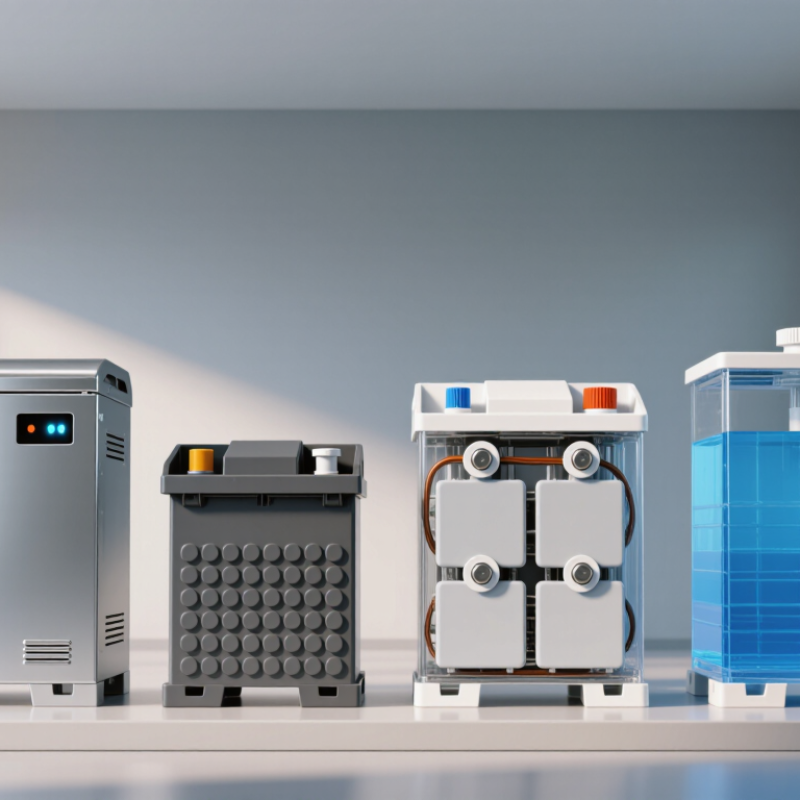
Home battery storage now combines several key technologies. Lithium iron phosphate cells are popular for their thermal stability and long cycle life. Nickel-based cells can offer higher energy density, but they require careful thermal management. A battery management system monitors voltage, temperature, and cell balance.
Hybrid inverters connect solar panels, batteries, household loads, and the grid. AC-coupled systems suit existing solar installations, while DC-coupled systems can reduce conversion losses. The choice depends on space, backup needs, and installation design.
Global market metrics reveal meaningful differences between regions. Typical residential systems range from 5 to 15 kWh. Round-trip efficiency often reaches 90% to 98%, depending on the inverter and operating conditions. Many systems support daily cycling and provide around 10 years of designed service. However, usable capacity declines with age. This detail is easy to overlook.
Household demand, electricity prices, solar penetration, outage frequency, and incentive structures strongly influence adoption. Market forecasts also vary because researchers use different definitions of installed capacity, shipment volume, and revenue.
Tips: Compare usable capacity, not only advertised capacity. Check continuous power output for refrigerators, pumps, or heating equipment. Ask for tested efficiency data and clear degradation terms. Confirm local certification requirements with a qualified installer. A larger battery is not always better. Oversizing can raise costs without improving daily savings. I would also review winter performance, because cold conditions may reduce charging speed. Small assumptions can change the payback period.
According to the IEA, lithium-ion batteries represent over 90% of new energy storage deployments. Their compact design, strong efficiency, and falling production costs support this dominance. For global buyers, this technology fits homes with rooftop solar, backup power, or unstable grids. A wall-mounted unit can store daytime electricity and release it after sunset.
Lithium iron phosphate batteries, or LFP, are widely selected for residential systems. They offer strong thermal stability and long cycle life. Nickel-manganese-cobalt batteries provide higher energy density in a smaller package. However, they require careful thermal management and responsible installation. Safety depends on more than chemistry. Battery spacing, ventilation, monitoring, and certified electrical work also matter.
Purchase decisions should match local weather, electricity tariffs, and daily energy use. A household running a refrigerator, router, and lights needs different storage than one using heat pumps. Check usable capacity, warranty conditions, operating temperature, and replacement support. Ask for tested performance data, not only laboratory claims. Real-world output may fall during extreme heat or cold. That assumption can fail. Some buyers also overlook inverter compatibility and future expansion. A modest system with clear monitoring may outperform a larger unit that remains poorly configured.
For global home-energy buyers, battery chemistry changes more than storage size. LFP systems commonly deliver about 3,000–6,000 cycles under controlled conditions. NMC can offer higher energy density, so a smaller cabinet may store the same usable energy. That advantage matters in apartments, narrow utility rooms, or homes with limited floor space. LFP usually provides stronger thermal stability and longer service potential. Yet cycle figures are not promises. Daily depth of discharge, heat, charging speed, and reserve settings can shorten real-world life. Conditions matter.
Tips: Compare usable kWh, not only rated capacity. Ask for cycle-test conditions and warranty assumptions. Check whether the system allows outdoor installation in your climate. A cool, shaded location can reduce stress. Leave ventilation and service access. Do not oversize blindly; unused capacity still costs money.
NMC may suit buyers who need compact storage beside a small solar inverter. LFP may suit households prioritizing frequent daily cycling and predictable long-term value. However, energy density is only one design variable. In a cold region, heating needs may affect efficiency. In a hot garage, temperature control can matter more than chemistry. Independent test data is useful, but it rarely mirrors every home. A practical comparison should include installation space, round-trip efficiency, replacement access, and expected daily energy use. I would also question optimistic payback claims. Real electricity tariffs change, and cloudy weeks expose weak assumptions. Choose the chemistry that fits the home, not the brochure.
Home battery buyers often compare price first, but depth of discharge changes the real value. At 50% DoD, lead-acid batteries usually deliver about 500–1,200 cycles, according to ranges summarized in the U.S. Department of Energy’s Energy Storage Handbook. This limit can suit backup systems used during short outages. However, frequent cycling may increase replacement costs. Keep the battery cool, ventilated, and away from living spaces.
Flow batteries target a different duty pattern. Industry assessments from the International Renewable Energy Agency and the U.S. Department of Energy report potential lifetimes above 10,000 cycles, depending on chemistry and operating conditions. They tolerate deep cycling better than conventional lead-acid units. Their electrolyte remains in external tanks, which can simplify capacity expansion. Yet pumps, larger footprints, and higher upfront costs complicate residential installation.
Size for real use.
A household consuming 10 kWh each evening may need more than 10 kWh of nominal lead-acid capacity at 50% DoD. In practice, installers also account for temperature, inverter losses, and aging. Flow systems may offer stronger lifetime economics where daily cycling is constant. Still, published cycle figures are not guarantees. Poor controls, heat, or partial operation can reduce performance, and many home projects underestimate space requirements.
Lead-Acid and Flow Batteries: 50% DoD and 10,000+ Cycle Options
Typical cycle-life estimates are shown at approximately 50% depth of discharge (DoD). Lead-acid systems commonly provide about 500–1,000 cycles, while flow batteries are generally designed for 10,000–20,000 cycles. Actual performance depends on operating temperature, charge rate, maintenance, system design, and discharge depth.
Home battery buyers usually compare three formats: wall-mounted, floor-standing, and modular rack systems. Wall-mounted units suit compact homes with limited utility space. Floor-standing systems offer easier access for inspection and replacement. Modular batteries can grow from 5 kWh toward 20 kWh as household demand changes. That flexibility matters.
A 10 kWh battery at 80% DoD provides about 8 kWh of usable energy. At 90% DoD, usable energy reaches roughly 9 kWh. However, deeper daily cycling may increase long-term stress if thermal control is weak. The U.S. National Renewable Energy Laboratory’s 2024 Annual Technology Baseline uses about 85% round-trip efficiency for representative battery systems. Buyers should therefore compare usable output, not only advertised capacity. The International Energy Agency reported 42 GW of new battery storage capacity in 2023, showing how quickly this market is scaling.
Ten-year warranties are now a serious buyer expectation. Read the conditions carefully. A warranty may include capacity retention, cycle limits, throughput limits, and temperature exclusions. Ten years alone proves little. BloombergNEF reported average lithium-ion pack prices of 139 dollars per kWh in 2023, down 14% year on year. Lower prices improve access, but they can encourage under-sized systems and rushed installations. A practical selection begins with daily load records, evening peak demand, local temperatures, and backup priorities. My own caution is simple: an impressive specification sheet cannot replace verified installation quality.
| Battery Storage Type | Common Chemistry | Typical Nominal Capacity | Typical Usable Capacity | Usable Depth of Discharge | Round-Trip Efficiency | Typical Cycle Life | Typical Warranty Term | Best-Fit Applications |
|---|---|---|---|---|---|---|---|---|
| Wall-Mounted LFP Battery | Lithium iron phosphate (LFP) | 5–15 kWh per unit | 4–13.5 kWh | 80–90% | 90–95% | Approximately 4,000–6,000 cycles | Up to 10 years, subject to energy-throughput limits | Daily solar self-consumption, compact homes, and backup power |
| Stackable Modular LFP System | Lithium iron phosphate (LFP) | 5–20 kWh per system | 4–18 kWh | 80–90% | 90–96% | Approximately 4,000–8,000 cycles | Typically 10 years or a defined throughput limit | Households needing expandable capacity and flexible installation |
| High-Voltage LFP Battery | Lithium iron phosphate (LFP) | 10–20 kWh per system | 8–18 kWh | 80–90% | 93–97% | Approximately 5,000–8,000 cycles | Typically 10 years, with installation and operating conditions specified | Larger homes, high-power loads, and hybrid solar installations |
| Rack-Mounted LFP Battery | Lithium iron phosphate (LFP) | 5–20 kWh per rack or cabinet | 4–18 kWh | 80–90% | 90–95% | Approximately 4,000–6,000 cycles | Commonly 5–10 years, depending on the supplier and usage limits | Utility rooms, off-grid systems, and installations requiring service access |
| NMC Residential Battery | Nickel manganese cobalt oxide (NMC) | 5–15 kWh per unit | 4–13.5 kWh | 80–90% | 90–95% | Approximately 2,500–5,000 cycles | Typically 10 years, often with temperature and throughput conditions | Space-constrained homes where high energy density is a priority |
| AC-Coupled Battery System | Usually LFP; some systems use NMC | 5–20 kWh per system | 4–18 kWh | 80–90% | 85–93% at system level | Approximately 3,000–6,000 cycles | Typically 10 years, subject to system configuration | Existing solar installations, retrofit projects, and backup applications |
Note: Capacity, efficiency, cycle life, and warranty terms vary by configuration, operating temperature, charge and discharge rate, installation method, and permitted annual energy throughput. Usable capacity is estimated from nominal capacity multiplied by the stated usable depth of discharge.