
Choosing among the top Machine Safety Fence manufacturers requires more than comparing prices or catalog photos. A reliable supplier should understand machine guarding, risk assessment, access control, and the working conditions inside modern factories. Strong manufacturers typically provide modular panels, robust posts, hinged gates, interlocks, and clear installation guidance. Their systems should support recognized safety principles, including those associated with ISO 12100 and ISO 14120.
The best choice depends on the machine, not the brochure. A stamping press may need impact-resistant panels, while a robotic cell may require wider access gates and carefully positioned safety switches. Experienced manufacturers can review layout drawings, identify reach-through risks, and recommend practical clearances. They should also offer traceable specifications, replacement parts, technical support, and installation documentation. These details matter during commissioning and later audits.
No ranking fits every factory. That is worth remembering. A famous brand may not provide the fastest local service, and a lower-cost supplier may still perform well in a controlled application. Conversely, attractive pricing can hide weak coatings, poor hinges, or difficult maintenance. This guide compares leading Machine Safety Fence manufacturers through product quality, customization, compliance support, durability, delivery capability, and customer experience. The evaluation is not perfect; supplier performance can vary by region and project team. Readers should confirm current certifications, test evidence, and engineering recommendations before purchasing. A fence is not merely a barrier. It is part of a wider safeguarding system, and small design errors can create serious consequences.
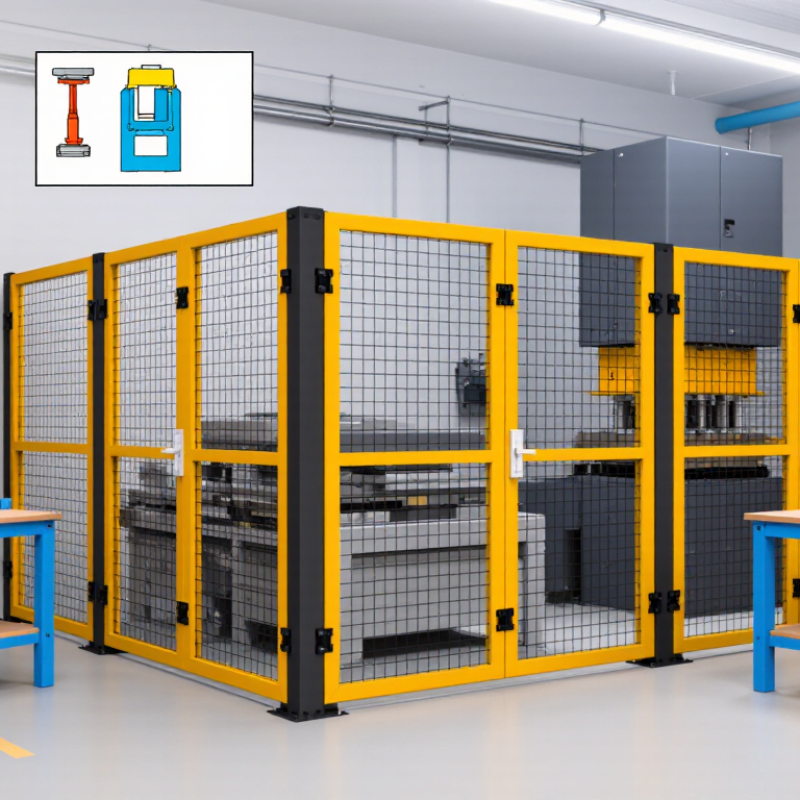
A machine safety fence is a physical barrier around equipment, robots, or moving production tools. It separates people from hazards such as rotating parts, crushing points, and unexpected machine movement. A properly designed fence also supports controlled access for inspection and maintenance. It should include secure panels, stable posts, suitable doors, and reliable interlocking devices.
The best machine safety fence manufacturers focus on more than strong steel. They study machine layouts, operator movement, visibility, cleaning needs, and emergency access. Experienced suppliers can provide measured designs instead of forcing standard panels into unsuitable spaces. In practical inspections, small gaps often create serious risks. A fence may look secure but still allow hands, tools, or clothing to reach dangerous areas. No system is perfect without regular review.
Tips: Check panel spacing before installation. Confirm that doors close completely. Test interlocks during scheduled inspections. Keep access routes clear and brightly marked. Replace bent panels promptly. A common weakness is poor maintenance, not poor material. Document each inspection, and question any design that blocks safe servicing or emergency response.
What Are the Top Machine Safety Fence Manufacturers?
A high-quality machine safety fence manufacturer begins with practical engineering experience. Its team should understand machine layouts, operator movement, maintenance access, and realistic workplace hazards. Strong manufacturers use rigid steel profiles, secure mesh panels, reliable fasteners, and corrosion-resistant finishes. Every connection should feel stable, even after repeated door opening and closing. Clear drawings, load information, and installation instructions also show professional control. A trustworthy supplier explains limitations instead of promising universal protection. That honesty matters.
Tips
Check the fence beside the machine, not only in a brochure. Look for smooth edges, visible locking points, adjustable feet, and enough space for tools. Ask how the supplier tests doors, panels, and interlocking areas. Request evidence of quality checks and documented compliance with applicable safety requirements. Small details often reveal big differences.
Reliable manufacturers support the product after delivery. They provide replacement parts, technical guidance, training materials, and responsive answers during installation. Modular designs can reduce downtime when a panel needs relocation or replacement. However, flexibility should not weaken the guarding system. No supplier gets every site detail right. Even experienced teams can overlook cleaning access or awkward emergency routes. A careful manufacturer welcomes site feedback and revises the design when necessary. It should also record changes, inspection points, and maintenance intervals. This combination of tested materials, practical support, and honest review defines a safety fence manufacturer worth considering.
The manufacturers leading the machine safety fence industry are not defined by production volume alone. They stand out through tested designs, accurate fabrication, and dependable technical support. Experienced suppliers understand how guards interact with robots, conveyors, presses, and maintenance access points.
Strong manufacturers usually offer modular steel panels, rigid posts, secure doors, and adjustable mounting options. Their teams can review machine layouts, identify access risks, and provide clear installation drawings. A practical supplier also explains mesh spacing, panel height, anchor selection, and lock performance without hiding technical limitations. This matters on a busy factory floor.
Quality control reveals more than a polished catalogue. Leading producers inspect welds, panel dimensions, coating coverage, and hardware alignment before shipment. They may provide sample assemblies or support a site trial. That hands-on experience builds confidence, especially when a fence must fit around uneven floors or existing equipment. Still, no manufacturer gets every project right. Poor measurements can create gaps, awkward doors, or difficult maintenance access. Buyers should question assumptions and verify details before approving production.
Reliable manufacturers document their test methods and keep replacement parts available. They respond clearly when specifications change. Some suppliers offer custom colors or layouts, but appearance should never replace impact resistance and safe access control. The best choice depends on machine type, workspace limits, installation skill, and ongoing service needs. A technically impressive fence can still fail if workers cannot use it naturally.
Machine safety fence manufacturers differ mainly in engineering depth, not just steel thickness. A practical comparison should examine mesh aperture, panel height, post spacing, door design, and safety clearance. OSHA’s FY2023 Top 10 data listed 1,644 machine-guarding violations. That figure does not prove fence failure, but it shows why a visual barrier needs careful specification.
More capable manufacturers support a documented risk assessment aligned with ISO 12100. They may also provide access-door solutions compatible with ISO 13849 or IEC 62061 safety controls. Ask for load data, installation drawings, material certificates, and validation records. Powder coating quality matters in a humid plant. So does the ability to replace one damaged panel without dismantling an entire line. These details separate a reusable system from a temporary-looking enclosure.
Service is another dividing line. A supplier may offer rapid site measurement, CAD layouts, spare-panel planning, and clear maintenance instructions. Others mainly ship standard parts. The U.S. Bureau of Labor Statistics reported 5,283 fatal work injuries in 2023, across all industries. Machine fencing cannot prevent every incident, but poor access control can increase exposure. A low quotation may hide missing interlocks, vague tolerances, or weak documentation. That assumption deserves scrutiny. A neat fence can still protect the wrong hazard.
Choosing the right machine safety fence manufacturer requires more than comparing prices. Buyers should verify practical engineering experience, documented testing, and installation support. ISO 14120 requires guards to be designed and constructed for strength, durability, and safe access. A qualified manufacturer should explain how its panels, posts, doors, locks, and mounting points meet these expectations.
Ask for material specifications, load-test records, risk-assessment support, and references from similar production environments. OSHA’s machine-guarding standard, 29 CFR 1910.212, emphasizes preventing body contact with hazardous moving parts. The fence should therefore match the machine’s actual danger zone, not simply fill the available floor space. Liberty Mutual’s 2023 Workplace Safety Index reported $58.5 billion in serious workplace injury costs in 2020. That figure shows why weak barriers and poor access planning can become expensive decisions.
Tips: Check whether the manufacturer measures your site before quoting. Confirm mesh size, clearances, corrosion protection, spare-part availability, and emergency-access design. Request drawings before production. A lower quotation may hide missing gates or difficult maintenance access. No supplier scores perfectly, and buyers should admit where their own risk assessment is incomplete. During a factory walk-through, look for sharp edges, loose anchors, blocked exits, and doors that workers may bypass. The best manufacturer welcomes these questions and provides clear evidence, not confident promises.
| Manufacturer Profile | Typical Product Scope | Common Safety Standards | Typical Panel Heights | Configuration Capability | Lead-Time Expectation | Best Fit for Buyers |
|---|---|---|---|---|---|---|
| Global integrated supplier | Guard panels, posts, gates, interlocks, access control, and engineered machine-guarding systems | ISO 14120, ISO 13857, ISO 14119, EN 953 legacy references, and applicable local machinery regulations | Approximately 1,000–2,500 mm, depending on application and risk assessment | High; suitable for complex layouts, robot cells, conveyors, and multiple access points | Standard components may ship quickly; engineered projects commonly require several weeks | Large factories requiring coordinated guarding, documentation, and global support |
| Specialist modular fabricator | Welded-wire mesh panels, square-tube posts, swing gates, sliding gates, and modular accessories | ISO 14120 and ISO 13857, with project-specific conformity documentation | Commonly 1,400–2,000 mm; custom heights may be available | Medium to high; modular systems can be adapted to most standard machine footprints | Often shorter for standard panels; custom cutting and finishing can extend production time | OEMs, system integrators, and plants seeking flexible protection at a controlled cost |
| Custom engineering manufacturer | Application-specific guarding, elevated platforms, special gates, operator access solutions, and integrated safety devices | ISO 12100 risk assessment principles, ISO 14120, ISO 13849-1, and relevant electrical safety requirements | Determined by the hazard analysis, machine geometry, and required separation distance | Very high; designed around unusual equipment, restricted spaces, and automated processes | Typically longer because of site surveys, drawings, calculations, and approval cycles | Manufacturers with unusual machinery, high-risk processes, or demanding site constraints |
| Regional production supplier | Standard safety fencing, machine enclosures, gates, posts, brackets, and replacement components | Usually aligned with regional machinery legislation and commonly referenced ISO standards | Commonly 1,000–2,000 mm for standard industrial applications | Medium; best for straightforward layouts using readily available components | Potentially short when inventory is available within the local market | Small and medium-sized facilities prioritizing local communication and service |
| Cost-focused volume manufacturer | Standard mesh panels, posts, doors, connectors, and basic machine-perimeter kits | Compliance depends on the supplied design; buyers should request test reports and technical declarations | Usually limited to common standard sizes, often around 1,000–2,000 mm | Low to medium; customization may be limited to panel dimensions and finish | Can be competitive for repeat orders and standardized projects | Buyers with simple layouts who can independently verify design and compliance |