10 Tips for Choosing Solar Panels for Your Home

Choosing solar panels for your home is not simply a search for the highest efficiency number. Your roof, climate, electricity use, budget, and installer quality all matter. A panel producing well in Arizona may perform differently under cloudy British weather. Roof shade can matter more than a small efficiency advantage.

The International Energy Agency reported that global solar photovoltaic capacity reached nearly 1,420 gigawatts by the end of 2023. Its Renewables 2024 report also expects solar PV to drive most new renewable capacity through 2030. These figures show strong industry confidence, but they do not guarantee savings for every household. The U.S. Department of Energy recommends reviewing energy consumption, roof conditions, shading, and local incentives before purchasing equipment.

Professor Martin Green, a leading photovoltaic researcher at UNSW Sydney, has described solar as “the most abundant energy resource we have.” His work supports a practical point: panel quality should be judged over decades, not by advertising alone. Look closely at degradation rates, product warranties, temperature coefficients, certifications, and the manufacturer’s financial stability. Installation workmanship deserves equal attention.

Small details matter.

This guide will compare panel efficiency, power ratings, warranty language, appearance, battery compatibility, and expected lifetime output. It will also question common assumptions. A premium panel may not repay its higher price. A cheaper panel may create problems if support disappears. The best choice is rarely universal. It should fit your roof, your electricity profile, and your tolerance for maintenance. Check local rules and obtain several written quotes before signing.
10 Tips for Choosing Solar Panels for Your Home

Assess Your Home’s Solar Energy Needs

Before choosing solar panels, measure how much electricity your home actually uses. Review twelve months of utility bills, not just one sunny month. Note seasonal changes from heating, cooling, water heating, and home offices. A summer bill can hide winter demand.

Walk around the roof at different times. Record shade from trees, chimneys, and nearby buildings. Even narrow shadows can reduce production across several panels. Check the roof’s age, direction, pitch, and usable area. A professional site assessment can confirm these details and identify wiring or structural concerns.

Tip: List your largest appliances and their running times. An electric vehicle, heat pump, or workshop may change the system size. Also decide whether your goal is lower bills, backup power, or greater energy independence. These goals require different equipment and budgets.

My first estimate was too optimistic. I ignored evening electricity use and underestimated winter heating. That mistake showed why hourly usage matters. Ask an installer for production estimates by month, including cloudy periods. Request clear assumptions about panel orientation, system losses, battery capacity, and local grid rules. Compare the estimate with your real bills. Do not rely on a single ideal-day calculation. Leave room for future demand, but avoid buying more capacity than your roof and budget can support. A qualified electrician should inspect final connections and safety equipment.
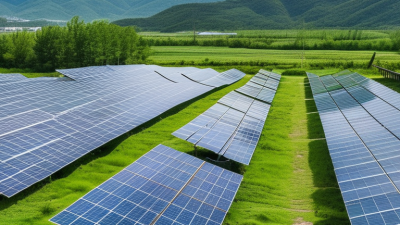

Compare Solar Panel Types and Efficiency Ratings

Choosing solar panels starts with comparing types, not chasing the highest percentage. Monocrystalline panels usually offer the strongest efficiency and the most power per square metre. They suit smaller roofs with limited sunlight exposure. Polycrystalline panels generally cost less, but their lower efficiency may require more roof space. Thin-film panels are lightweight and perform reasonably in some low-light conditions, though they often need a larger installation area.

Industry data supports this difference. The IEA PVPS Trends 2024 report states that crystalline silicon technology represents more than 95% of global photovoltaic production. The Fraunhofer Institute’s Photovoltaics Report shows that leading commercial silicon modules now approach 23% efficiency. Laboratory results can exceed 26%, according to the National Renewable Energy Laboratory, but those figures should not be confused with standard household products. They are not the same thing.

Look beyond the headline rating. A panel rated at 22% may produce less on a hot, partially shaded roof. Check its temperature coefficient, degradation rate, warranty terms, and tested performance under weak light. On a roof beside a chimney, shade can matter more than a one-percent efficiency gain. A practical design should also compare annual energy yield, not only panel wattage. I would measure roof space carefully, then question optimistic estimates. Real trees move, dust collects, and winter sunlight changes the calculation. Efficiency is useful, but context decides value.

Check Roof Conditions, Space, and Sunlight Exposure

Choosing solar panels for your home starts with the roof, not the sales brochure. Inspect missing shingles, soft decking, leaks, and roof age. A roof needing replacement soon can make installation more expensive. Check its structure with a qualified professional. Measure twice. Roof pitch also affects mounting, drainage, and maintenance access.

Map usable space around vents, skylights, chimneys, and roof edges. Do not count shaded sections as productive space. Even small obstructions can change panel placement. The National Renewable Energy Laboratory’s PVWatts guidance shows that shading and orientation can significantly reduce estimated energy production. Leave safe access paths, too. More panels are not always better.

Track sunlight across the roof during morning, noon, and late afternoon. Nearby trees may cast long winter shadows. The International Energy Agency Photovoltaic Power Systems Programme reported global solar capacity above 1.6 terawatts at the end of 2023, but local performance still depends on site conditions. Fraunhofer ISE’s 2024 Photovoltaics Report places many commercial modules near 20–24% efficiency, yet efficiency cannot repair a shaded roof. Ask for hourly production estimates, not only annual totals. Verify assumptions about weather, roof direction, and future tree growth. I used to trust clear midday skies too much; seasonal shade proved that judgment incomplete.

Evaluate Product Quality, Warranties, and Installation Services

When choosing solar panels for your home, evaluate quality beyond the efficiency percentage. Check power tolerance, expected degradation, temperature performance, and safety certifications. Independent test reports can reveal how panels perform under heat, humidity, and repeated weather changes. Small details matter. Ask for the exact model number and technical sheet before signing anything. A high-efficiency panel may not be the best choice if its testing data is unclear or its price strains your budget.

Read both the product warranty and the performance warranty carefully. Confirm the coverage period, guaranteed output, claim process, and conditions that could void protection. Some warranties cover materials but exclude labor, shipping, roof repairs, or removal costs. Ask whether the warranty transfers if you sell the house. Keep invoices, installation photographs, and inspection records in one file. I once underestimated paperwork’s value; missing documents can create unnecessary delays when a claim appears years later.

Installation quality often determines whether a good panel performs well. Choose a contractor with appropriate licenses, insurance, trained electricians, and experience with your roof type. Request a written scope covering roof inspection, mounting hardware, wiring, permits, grid connection, monitoring setup, and cleanup. Ask for recent customer references and a sample contract. A professional installer should explain shading, roof penetrations, drainage, and local electrical requirements in plain language. Be cautious when a quote promises perfect savings without studying your roof, usage history, and utility rules.

Calculate Costs, Incentives, and Long-Term Savings

Choosing solar panels should begin with a financial estimate, not a glossy efficiency number. List your monthly electricity use, roof direction, shading, and expected household changes. Use the National Renewable Energy Laboratory’s PVWatts tool to model production with local weather data. A six-kilowatt system producing 7,500 kilowatt-hours annually may offset most usage, but not necessarily winter demand.

Berkeley Lab’s Tracking the Sun report placed typical residential prices near 3 dollars per watt in recent market data. That makes a six-kilowatt installation roughly 18,000 dollars before incentives. A 30% tax credit, where currently eligible, could reduce the tax burden by about 5,400 dollars. Confirm eligibility with current government guidance. Local rebates, property-tax rules, export rates, and utility fees can change the calculation sharply. Do not treat a sales estimate as guaranteed. Ask for the assumptions in writing.

Compare at least three bids using total installed cost, estimated annual output, inverter replacement risk, warranty terms, and financing charges. Panels commonly lose a small amount of output each year, so include degradation in a 20-year cash-flow model. Battery storage may improve resilience, but it often extends the payback period. That gap matters. My own rough estimate once ignored a future roof repair, making the payback look almost two years faster. Check roof age, tree growth, insurance, and monitoring access before signing. The International Energy Agency Photovoltaic Power Systems Programme reports continued global solar growth, but local economics still depend on sunlight, tariffs, and policy. Use conservative assumptions. Keep receipts.