Choosing a battery inverter is not just a matter of matching a product to a battery. The inverter shapes how stored energy reaches household circuits, solar equipment, and the grid. Its power rating, battery voltage, and operating mode must work with the rest of the system. A mismatch can limit usable output or complicate installation. Small details matter.
The International Energy Agency’s Batteries and Secure Energy Transitions report says global battery storage capacity additions in the power sector reached about 42 GW in 2023, up 130% from 2022. The report also projects that global storage capacity must grow sixfold by 2030 in its pathway aligned with national climate goals. These figures show why dependable storage equipment is gaining attention. They do not, however, identify the right inverter for every home.
A useful comparison starts with the actual job the system must perform. Will it provide backup during an outage, support daily self-consumption, or do both? Check continuous and surge power, efficiency, battery compatibility, monitoring, and warranty terms. Look closely at the manufacturer’s operating limits, not just the headline rating. A spec sheet cannot show every installation challenge. Cable runs, temperature, and future expansion can change what works in practice. Some details are easy to overlook. The ten tips that follow offer a practical way to evaluate options, question assumptions, and choose a battery inverter that fits your system—not simply the largest or cheapest model.

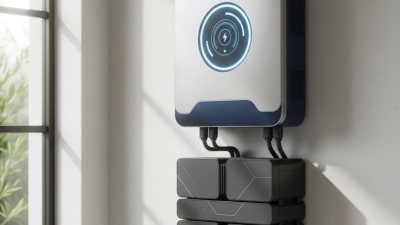
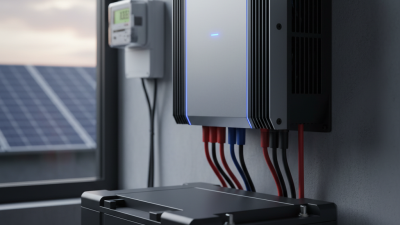
A battery inverter connects stored energy to the electrical devices people use every day. Batteries supply direct current, while most household outlets deliver alternating current. The inverter changes one form into the other, making stored power usable for lights, refrigerators, and selected circuits. That distinction matters. An inverter does not make energy; it converts it, with some energy lost as heat.
Some systems also use an inverter to manage charging, but not every model does. During a power outage, the inverter may supply backed-up circuits, provided the system is designed and wired for that purpose. Its continuous output rating should match the expected load. Brief startup surges matter too: a refrigerator compressor can demand more power for a moment than it uses while running. Small loads count. Standby consumption can slowly drain a battery even when little is switched on.
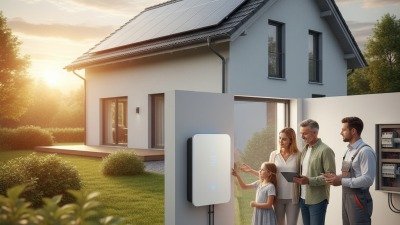
Choosing one means checking more than the headline wattage. Confirm that the inverter’s battery voltage matches the battery system, and review its output waveform and efficiency. Sensitive electronics and motor-driven appliances may have different requirements. I find this part easy to underestimate: a system can look powerful on paper but still have limited usable energy because the battery is small. A qualified installer can assess wiring, protection, and local requirements. The fit between battery, inverter, and actual loads matters more than any single specification.
| # | What to Check | Practical Guidance | Why It Matters |
|---|---|---|---|
| 1 | Inverter function | A battery inverter converts the battery’s DC electricity into AC electricity for compatible household loads. A bidirectional inverter can also convert AC electricity into DC to charge the battery. | Confirm whether you need backup power, battery charging from AC, solar integration, or a combination of these functions. |
| 2 | Continuous AC output | Compare the inverter’s continuous output rating, in watts or kilowatts, with the loads you expect to run at the same time. Add the running power of those loads rather than relying only on a home’s total daily energy use. | A unit can have enough stored energy but still be unable to power several high-demand appliances simultaneously. |
| 3 | Surge capacity and duration | Check both the surge-power rating and how long the inverter can sustain it. Motors in equipment such as pumps and refrigerators can draw more power during startup than while running. | A headline surge rating without its duration may not show whether the inverter can start a particular appliance. |
| 4 | Battery voltage and current | Match the inverter’s supported battery voltage to the battery system’s nominal voltage, such as 12 V, 24 V, or 48 V. Also check the maximum charge and discharge current limits. | Voltage or current mismatches can prevent operation, restrict usable power, or exceed the battery’s permitted limits. |
| 5 | Battery chemistry and communications | Verify that the inverter supports the battery’s chemistry and required charging profile. For lithium batteries, confirm whether the inverter communicates with the battery management system and supports the required protocol. | Compatibility helps keep charging and discharging within battery limits and enables protective controls to work as intended. |
| 6 | AC voltage, frequency, and waveform | Choose output that matches the electrical system and connected equipment. Common systems use 120 V or 230 V AC at 50 or 60 Hz, depending on location; some North American homes require 120/240 V split-phase output. A pure sine-wave output is suitable for a wide range of sensitive electronics and appliances. | Incorrect voltage, frequency, or phase configuration can make equipment incompatible or cause it to operate improperly. |
| 7 | Efficiency and standby consumption | Compare efficiency figures under similar operating conditions, and check whether the published figure is peak or weighted efficiency. Review idle or standby consumption if the inverter will remain on continuously. | Conversion losses and standby use reduce the energy available to loads; a peak-efficiency number alone does not describe performance at every load level. |
| 8 | Grid connection and backup switching | For a grid-connected system, confirm that the inverter is intended for the required operating mode and complies with applicable local interconnection rules. For backup use, check transfer time, supported backup circuits, and whether an external transfer switch is required. | Grid-connected equipment must meet local requirements, and backup arrangements must prevent unsafe energizing of utility lines. |
| 9 | Operating environment and protection | Check the specified operating-temperature range, ventilation clearances, enclosure rating, and whether the equipment is approved for indoor or outdoor installation. Follow the manufacturer’s installation instructions. | Heat, moisture, dust, and poor ventilation can affect performance, reliability, and installation safety. |
| 10 | Monitoring, protection, and system sizing | Look for clear monitoring of battery state, power flow, alarms, and fault conditions. Size the inverter for peak power and size the battery separately for the energy required, accounting for usable capacity and expected conversion losses. | Power (kW) describes how much can run at once; energy (kWh) describes how long it can run. Both ratings are needed for a suitable system. |