China Top Solar Power Solutions Suppliers for Global Buyers

China has become a major source of solar power solutions for commercial, industrial, and utility-scale projects worldwide. Its suppliers offer photovoltaic modules, inverters, battery storage, mounting systems, and integrated energy management platforms. However, product variety does not automatically guarantee project reliability.

The real question is practical: can a supplier perform consistently after the purchase order is signed? Global buyers need evidence. Factory audits, third-party test reports, traceable component data, and documented installation experience matter. So do warranty terms, response times, spare-parts planning, and local technical support. A low quotation may look attractive, but weak after-sales service can create expensive delays under harsh sunlight, heavy rain, or dusty conditions.

Fatih Birol, Executive Director of the International Energy Agency, stated, “Solar PV is now the cheapest source of electricity in history.” His observation reflects solar energy’s growing economic importance, but price alone cannot define a dependable solution. System design, degradation rates, grid compatibility, safety controls, and lifecycle performance deserve equal attention.

This guide examines leading Chinese suppliers through an evidence-based lens. It considers technical capability, manufacturing scale, certifications, delivery experience, and communication quality. Some companies appear strong on paper. Reality can be less tidy. Public information may be incomplete, and project results can vary by region. Buyers should verify every important claim independently.

The strongest solar power solutions providers combine competitive equipment with transparent documentation and responsive service. They understand that a successful project is not measured only on installation day. It is measured years later, when the panels still produce power and the support team still answers.
China Top Solar Power Solutions Suppliers for Global Buyers

What Defines a Solar Power Solutions Supplier in China

China Top Solar Power Solutions Suppliers for Global Buyers

What Defines a Solar Power Solutions Supplier in China

A capable solar power solutions supplier does more than sell panels and inverters. It studies the buyer’s site, electricity demand, climate, and installation limits. Strong suppliers provide complete designs, including generation estimates, battery sizing, mounting plans, and monitoring systems. Their engineers should explain assumptions clearly, not hide behind impressive brochures. Factory audits, product testing records, and recognized certifications also support reliability. Still, documents alone are not enough. Real project references reveal how equipment performs after months of heat, dust, rain, and unstable grids. A serious supplier offers traceable components, quality inspections, safe packaging, and practical after-sales support. Response time matters when a controller fails during peak production.

Tips: Ask for a sample energy analysis, not a generic quotation. Check warranty terms, service response times, spare-part availability, and installation responsibilities. Request clear testing evidence. Vague answers deserve caution.

Price remains important, but the cheapest proposal may create expensive problems later. I have seen procurement teams focus on unit cost and overlook integration work, shipping damage, or software compatibility. That mistake is understandable, yet avoidable. Suppliers should welcome technical questions and admit design limits. No system is perfect. A supplier’s honesty under pressure may be more valuable than polished sales language.

Key Solar Products and Technologies Offered to Global Buyers

China’s solar suppliers now offer complete systems, not only photovoltaic modules. According to IRENA’s Renewable Capacity Statistics 2024, solar capacity reached about 1,419 GW worldwide by the end of 2023. Solar added roughly 346 GW that year. This growth increases demand for reliable products with clear technical documentation.

Global buyers can source bifacial modules, n-type TOPCon cells, heterojunction modules, string inverters, hybrid inverters, and battery storage systems. Bifacial panels can collect reflected light from bright ground surfaces. TOPCon and heterojunction designs improve output in limited spaces. Yet performance depends on temperature, shading, installation quality, and cleaning conditions. A higher laboratory efficiency does not guarantee higher annual energy production.

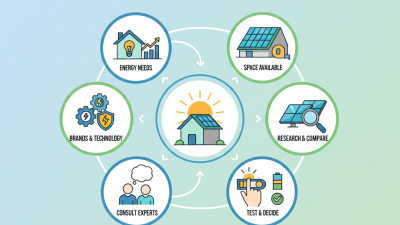
Storage is becoming equally important. The IEA’s Renewables 2024 report expects global renewable capacity to expand by nearly 5,500 GW from 2024 to 2030, with solar providing most new capacity. Suppliers therefore provide lithium iron phosphate batteries, energy management software, monitoring platforms, aluminum mounting structures, and tracking systems. Buyers should examine degradation warranties, inverter compatibility, fire protection, certification, and spare-part availability. Small details matter. A poorly matched inverter can reduce system value. Product selection also needs local load data, grid rules, roof structure, and weather records. No single technology fits every market. That assumption is easy to make, and often costly.

How to Evaluate Chinese Solar Suppliers and Manufacturers

Choosing a Chinese solar supplier requires more than comparing quoted prices. Ask for a complete company profile, factory address, ownership details, and export history. A reliable manufacturer should explain its production capacity without vague monthly figures. Request current IEC test reports, material declarations, and quality-control records for the exact module model. Check whether certificates match the factory, product code, and production date. Details matter.


A remote video tour is useful, but an independent factory audit provides stronger evidence. Inspect incoming cell testing, lamination records, EL inspection, and serial-number traceability. Ask how rejected modules are isolated and documented. Review warranty terms carefully, including response times, transport responsibilities, and the legal entity providing support. Speak with recent buyers in a similar climate, not only references selected by the supplier. Their feedback may reveal delayed documentation or uneven packaging.


For inverters, batteries, and mounting systems, compare efficiency curves, operating temperatures, spare-part access, and local grid requirements. A technically impressive datasheet can hide practical weaknesses. Request sample units or a pilot order when possible. Measure output, packaging damage, and communication during the trial. I have found that fast replies do not always mean strong after-sales service. No evaluation is perfect. Record assumptions, challenge unusually low prices, and leave room for an independent inspection before payment. This small pause can expose risks that polished presentations conceal.

Export Standards, Certifications, and International Compliance

China Top Solar Power Solutions Suppliers for Global Buyers

Global buyers need more than competitive pricing. The IEA PVPS Trends 2024 report recorded about 456 GW of new solar capacity worldwide in 2023. This scale increases pressure on suppliers to prove quality, traceability, and market readiness. Export documentation should match the destination country, not only the factory’s domestic process. For modules, buyers commonly request IEC 61215 and IEC 61730 test evidence. Inverters may require IEC 62109, IEC 61727, and IEC 62116 compliance. Certificates should come from laboratories and certification bodies accredited under ISO/IEC 17025 or ISO/IEC 17065.

A reliable supplier should provide serial-number records, factory inspection results, warranty terms, and a clear bill of materials. Customs invoices, packing lists, certificates of origin, and transport insurance also need consistent details. A certificate alone is not proof. Production may change after testing, and this is an uncomfortable risk. Buyers should compare the certificate holder, factory address, model number, and manufacturing date. The IEA Renewables 2024 report also highlights solar PV’s continued dominance in new renewable capacity, making supplier verification increasingly important.

Tips: Request recent test reports, not scanned certificates only. Use independent pre-shipment inspections. Check local grid codes before ordering. Keep written records of corrective actions. Small details matter.

China Top Solar Power Solutions Suppliers for Global Buyers - Export Standards, Certifications, and International Compliance

Solution Category Typical Export Product Scope Key International Standards or Regulations Common Certification or Evidence Important Export Documents International Compliance Notes
Photovoltaic Modules Monocrystalline silicon modules, bifacial modules, framed modules, and glass-glass modules IEC 61215 for design qualification and type approval; IEC 61730 for photovoltaic module safety qualification Applicable IEC test reports, factory quality records, product datasheet, and traceable serial-number records Commercial invoice, packing list, bill of lading, certificate of origin where required, and insurance documents when applicable The importer should verify destination-country marking, labeling, warranty terms, customs classification, and local grid or building requirements
Solar Inverters Grid-tied inverters, hybrid inverters, off-grid inverters, and microinverter systems IEC 62109-1 and IEC 62109-2 for power converter safety; IEC 62116 for anti-islanding test procedures Electrical safety test reports, electromagnetic compatibility test reports, declaration of conformity where applicable, and grid-code test evidence Technical datasheet, user manual, wiring diagram, test reports, invoice, packing list, and shipment documentation Grid connection approval is market-specific; European, North American, Australian, and other grid-code requirements are not interchangeable
Solar Battery Energy Storage Lithium-ion battery packs, residential storage systems, commercial battery cabinets, and battery modules IEC 62619 for industrial secondary lithium cells and batteries; UN 38.3 transport testing for lithium batteries UN 38.3 test summary, safety data sheet, battery specifications, protection-system information, and applicable safety test reports Dangerous-goods declaration when applicable, UN 38.3 documentation, safety data sheet, packing certificate, invoice, and packing list Lithium-battery transport rules vary by transport mode and destination; air shipments may require additional IATA documentation and packaging controls
Solar Mounting Systems Rooftop rails, ground-mount structures, clamps, brackets, fasteners, and tracker components Structural design should follow the destination market's applicable building, wind, snow, seismic, and corrosion requirements Material certificates, structural calculations, load-test evidence, corrosion-resistance information, and installation instructions Material list, engineering drawings, installation manual, commercial invoice, packing list, and certificate of origin where requested Required design loads depend on the project location; aluminum alloys, galvanized steel, and stainless-steel grades should be clearly specified
Solar Charge Controllers MPPT and PWM controllers for standalone photovoltaic systems and small energy-storage applications Applicable low-voltage electrical safety and electromagnetic compatibility requirements of the destination market Electrical safety test report, EMC test report, input/output rating information, and operating-temperature data Product specification, user manual, wiring instructions, invoice, packing list, and customs information System voltage, battery chemistry, maximum photovoltaic input voltage, ambient temperature, and enclosure rating must match the installation design
Complete Off-Grid Solar Kits Integrated packages combining modules, inverter or controller, batteries, cables, protection devices, and mounting hardware Each component must meet its applicable product standard; the complete system also requires compatibility and electrical safety review System single-line diagram, component test reports, installation manual, risk assessment, and commissioning procedure Complete packing list by component, commercial invoice, certificate of origin when required, manuals, and battery transport documents if included A system-level quotation should identify electrical ratings, included accessories, exclusions, spare parts, installation responsibility, and after-sales scope
European Union Market Supply Photovoltaic equipment intended for distribution or installation in European Union member states CE marking framework where applicable; relevant low-voltage, EMC, radio-equipment, RoHS, and WEEE obligations depend on the product EU Declaration of Conformity, technical documentation, risk assessment, test reports, and product labeling evidence Commercial invoice, packing list, customs declaration data, declaration of conformity, and economic-operator information when required CE marking is a manufacturer's declaration of conformity for applicable legislation, not a universal quality certification; importer obligations may also apply
North American Market Supply Modules, inverters, storage equipment, rapid-shutdown devices, and balance-of-system components Destination-specific electrical codes, product safety standards, interconnection rules, and certification requirements Recognized laboratory certification where required, installation instructions, electrical ratings, and grid-interconnection test documentation Commercial invoice, packing list, bill of lading, customs entry information, certificates or test reports requested by the importer Requirements differ between the United States, Canada, and individual jurisdictions; approval should be confirmed before purchase and installation
Quality and Sustainability Documentation Factory production controls, inspection services, environmental records, and supply-chain due-diligence files ISO 9001 quality-management systems, ISO 14001 environmental-management systems, and customer-specific responsible-sourcing requirements Valid management-system certificates, factory audit reports, inspection reports, corrective-action records, and material declarations Inspection certificate, packing photos, serial-number list, production records, material declaration, and shipment release documents Management-system certification does not replace product certification; buyers should verify certificate scope, validity, issuing body, and covered production site

Procurement, Logistics, Installation, and After-Sales Support

Selecting solar power solutions from China requires more than comparing panel prices. Experienced buyers review production capacity, quality records, test reports, and bill-of-material details. Factory audits can reveal storage conditions, calibration practices, and packaging weaknesses. Requesting a sample order is wise. It may expose issues before a full shipment.

Procurement should define technical specifications, delivery milestones, inspection points, and payment terms in writing. Logistics planning covers container loading, moisture protection, customs documents, and destination duties. A clear Incoterm prevents expensive misunderstandings. Some suppliers coordinate freight, but buyers should still verify vessel schedules and insurance coverage. Small details matter.

Installation support should include layout drawings, cable schedules, safety procedures, and commissioning guidance. Local licensed technicians may be necessary because grid rules differ by country. After commissioning, reliable suppliers provide training, monitoring access, spare parts, and documented response times. Remote diagnosis can reduce downtime, but it cannot replace site inspections after storms or equipment faults. No project is perfectly smooth. Delays happen, and early communication usually limits the damage. Buyers should record serial numbers, test results, and maintenance actions from day one. A practical weakness remains: some promises sound precise until a real warranty claim arrives. Written service procedures and accessible replacement parts offer stronger protection than friendly assurances.