10 Best Solar Power Batteries for Global Buyers?
Choosing the right solar power battery can shape the reliability, cost, and safety of a home or business energy system. Global buyers face different electricity prices, climates, grid conditions, and installation rules. A battery that performs well in Germany may struggle in a hot, humid region without suitable thermal management.
This guide examines ten leading battery options for international buyers. It considers usable capacity, round-trip efficiency, battery chemistry, cycle life, warranty terms, and system compatibility. Installation quality matters just as much as the product label. A well-designed battery should support daily solar storage, backup power, and practical energy management without creating unnecessary risks.
Safety comes first.
Lithium iron phosphate batteries often attract attention because of their thermal stability and long service life. However, no chemistry is perfect. Weight, charging speed, cold-weather performance, and replacement costs can change the buying decision. Buyers should also verify certifications, inverter compatibility, after-sales support, and local recycling arrangements before ordering.
Real-world experience suggests that advertised capacity does not always equal usable energy. Temperature, discharge limits, and aging reduce available output. This guide therefore avoids relying only on laboratory figures. It compares published specifications with practical ownership concerns, while recognizing that regional testing and pricing may change.
Some rankings remain debatable. That is intentional. The best battery depends on the buyer’s property, budget, energy habits, and local regulations. By reviewing these factors carefully, readers can make a more informed and responsible purchasing decision.
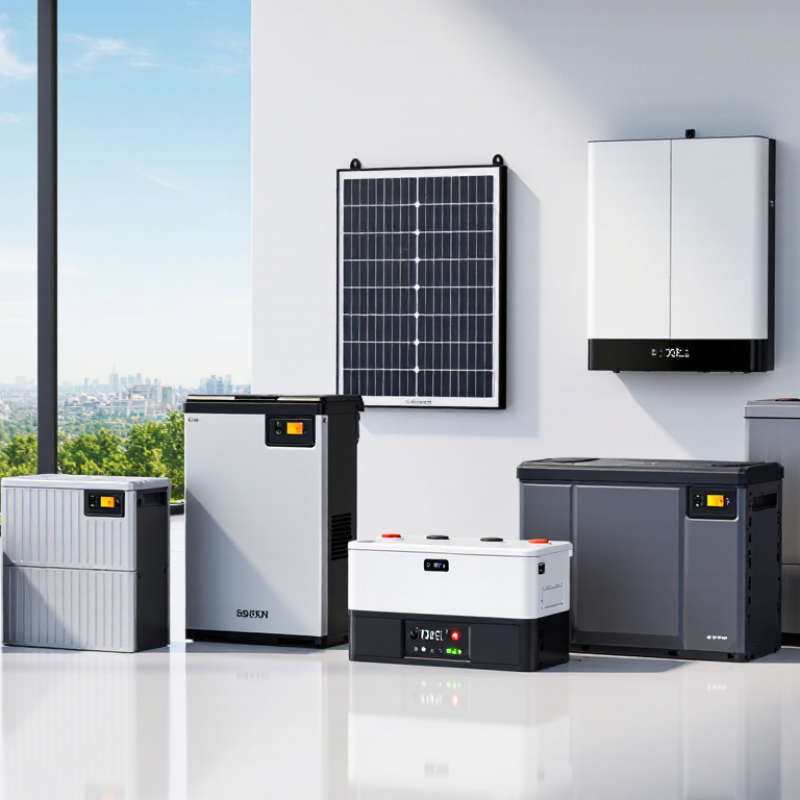
Solar Battery Basics: 42 GW of New Global Storage in 2023 (IEA)
Global solar storage is moving from a niche upgrade to essential energy infrastructure. The International Energy Agency reported 42 GW of new global storage in 2023. This figure describes power capacity, not stored energy. A 10 kW battery could deliver 10 kW for one hour, depending on its usable capacity.
For global buyers, the best solar battery starts with local conditions. Check temperature ranges, humidity protection, warranty terms, and service availability. A coastal home may need stronger corrosion protection. A cold-climate system may require heating controls before charging. Daily usage also matters. A household using 8 kWh after sunset should not automatically buy a 20 kWh battery. Oversizing can increase cost and leave capacity idle.
Look beyond headline capacity. Compare usable energy, round-trip efficiency, cycle life, safety testing, and installation requirements. Ask whether the system supports backup loads, grid charging, or future expansion. Certified installers should assess wiring, ventilation, fire separation, and emergency isolation. These details affect reliability more than a polished product photograph.
I would also question simple payback claims. Electricity prices change. Tariffs differ. Battery performance declines gradually. A spreadsheet can hide these uncertainties. Some buyers may value outage protection more than financial savings, which is reasonable. Others may discover that better insulation or load management costs less. There is no universal best battery, only a better fit for the home, climate, grid rules, and daily habits.
Compare the 10: 85–95% Round-Trip Efficiency and LFP Cycle Life
10 Best Solar Power Batteries for Global Buyers?
Compare the 10: 85–95% Round-Trip Efficiency and LFP Cycle Life
Across ten solar battery systems, round-trip efficiency usually falls between 85% and 95%. This figure measures stored energy returned for household use. A higher percentage reduces daily charging losses. However, test conditions can change the result.
Look beyond the headline rating. Battery temperature, inverter quality, cable length, and charge speed all influence real performance. A system rated at 95% may deliver less in a cold garage. An 85% system might perform better with careful installation. This detail is often missed.
Most leading options use lithium iron phosphate, or LFP, cells. Their expected cycle life commonly ranges from 3,000 to 8,000 cycles. Daily cycling can therefore support many years of service. Yet cycle claims often assume moderate temperatures and controlled discharge levels. Actual life may be shorter.
Depth of discharge matters greatly. Keeping a reserve can reduce chemical stress. Good battery management also prevents extreme charging or overheating. For global buyers, check operating temperature, warranty conditions, replacement support, and grid compatibility. These practical details can outweigh a small efficiency difference.
My comparison is not flawless. Manufacturers may use different testing methods. I would treat efficiency as a range, not a promise. A reliable choice balances usable capacity, LFP cycle life, installation quality, and transparent technical data. Sometimes, the less impressive specification is the more honest one.
Rank the 10 Best Batteries by Capacity, Warranty, Safety, and Cost
For global buyers, the strongest solar batteries balance usable capacity, warranty length, safety, and lifetime cost. Capacity alone can mislead; a 10 kWh battery may provide only 8 kWh after depth-of-discharge limits.
Rank 1: A 15 kWh lithium iron phosphate battery offers excellent safety, long cycle life, and strong value. Rank 2: A 10 kWh unit with a 10-year warranty suits most family homes. Rank 3: A modular 20 kWh system works well for larger properties and backup loads. Rank 4: A compact 5 kWh battery reduces upfront cost for apartments. Rank 5: A high-voltage 12 kWh system can improve inverter efficiency. Rank 6: A 7 kWh battery is practical for evening energy use. Rank 7: A weather-resistant 10 kWh model suits outdoor installations. Rank 8: A 15 kWh battery with remote monitoring helps commercial users track performance. Rank 9: A lower-cost lead-acid system remains useful where budgets are very limited. Rank 10: A small 3 kWh battery fits lighting, refrigeration, and emergency charging.
Tips: Compare usable capacity, not only advertised capacity. Check cycle warranties, temperature limits, installation rules, and replacement support in your country. Look for recognized safety testing, such as IEC 62619, UL 1973, and UN 38.3. Ask for the battery’s round-trip efficiency and expected capacity after ten years. A cheaper battery may become expensive after early degradation. This ranking is practical, but household loads and climate can change the order. 马会
10 Best Solar Power Batteries for Global Buyers? – Ranked by Capacity, Warranty, Safety, and Cost
| Rank |
Battery Configuration |
Chemistry |
Nominal Capacity |
Usable Capacity |
Typical Warranty |
Expected Cycle Life |
Round-Trip Efficiency |
Safety Profile |
Typical Installed Cost |
Best Use Case |
| 1 |
10 kWh Modular Home Battery |
LiFePO4 |
10 kWh |
8–9 kWh |
10 years |
4,000–6,000 cycles |
90–95% |
Very high thermal stability |
US$700–1,100/kWh |
Daily residential solar shifting and backup |
| 2 |
15 kWh High-Capacity Home Battery |
LiFePO4 |
15 kWh |
12–13.5 kWh |
10 years |
4,000–6,000 cycles |
90–95% |
Very high thermal stability |
US$650–1,050/kWh |
Large homes with high evening electricity demand |
| 3 |
5 kWh Compact Wall-Mounted Battery |
LiFePO4 |
5 kWh |
4–4.5 kWh |
8–10 years |
4,000–6,000 cycles |
90–95% |
Very high thermal stability |
US$800–1,300/kWh |
Small homes, apartments, and essential-load backup |
| 4 |
20 kWh Scalable Storage System |
LiFePO4 |
20 kWh |
16–18 kWh |
10 years |
4,000–6,000 cycles |
90–94% |
Very high thermal stability |
US$600–950/kWh |
High-consumption homes and small commercial sites |
| 5 |
48 V Rack-Mount Battery Module |
LiFePO4 |
5.1 kWh |
4.6–4.8 kWh |
5–10 years |
3,500–6,000 cycles |
90–95% |
Very high thermal stability |
US$450–850/kWh |
Off-grid systems, telecom backup, and DIY-compatible installations |
| 6 |
10 kWh NMC Home Battery |
Nickel-Manganese-Cobalt |
10 kWh |
8–9 kWh |
10 years |
3,000–5,000 cycles |
90–95% |
Requires robust thermal management |
US$750–1,250/kWh |
Space-constrained installations requiring high energy density |
| 7 |
Lead-Carbon Solar Battery Bank |
Advanced lead-acid |
10 kWh |
5–6 kWh |
3–7 years |
1,500–3,000 cycles |
75–85% |
Stable but requires ventilation |
US$250–600/kWh |
Low-cost off-grid applications with moderate cycling |
| 8 |
AGM Deep-Cycle Battery Bank |
Sealed lead-acid |
10 kWh |
4–5 kWh |
2–5 years |
500–1,500 cycles |
70–85% |
Low maintenance; ventilation still recommended |
US$200–500/kWh |
Seasonal cabins, emergency backup, and low-use systems |
| 9 |
Flow Battery Storage Unit |
Vanadium redox flow |
20 kWh |
18–20 kWh |
10–20 years |
10,000–20,000+ cycles |
65–85% |
Non-flammable aqueous electrolyte |
US$900–2,000/kWh |
Long-duration commercial and stationary storage |
| 10 |
Saltwater-Aqueous Battery System |
Aqueous sodium-ion |
10 kWh |
8–9 kWh |
5–10 years |
3,000–5,000 cycles |
80–90% |
Low fire risk and water-based electrolyte |
US$800–1,500/kWh |
Safety-focused stationary storage where energy density is less important |
Data note: Figures are technology-level market ranges for comparable solar-storage systems, not brand-specific quotations. Usable capacity assumes a battery depth of discharge of approximately 80–90%. Installed cost varies by country, inverter requirements, labor, taxes, permitting, shipping, and site conditions. Warranty terms must be confirmed in the final supplier contract.
Global Buying Checks: IEC 62619, Grid Codes, and Regional Voltage
Global buyers should treat IEC 62619 as a safety checkpoint, not complete purchasing approval. It addresses industrial lithium battery safety, including abuse tests, construction, and protection controls. Ask for the current certificate, test scope, cell chemistry, and covered battery model. Documents matter. Some sellers show a laboratory report for cells, while the assembled battery remains unverified. That gap can affect insurance, installation approval, and long-term service decisions.
Grid compatibility requires equal attention. An inverter may need anti-islanding, frequency response, power-quality, and emergency shutdown functions. These requirements vary between countries and utilities. Check approval with the local utility or electrical authority before ordering. A battery marked 230 volts is not automatically suitable for every 230-volt system. Nominal voltage, maximum charge voltage, phase arrangement, and frequency must match. Regional systems commonly use 120, 230, or 240 volts, at 50 or 60 hertz. Small mismatch, big trouble.
During supplier comparisons, I would record certificate numbers, inverter limits, usable capacity, and operating temperature. Request wiring diagrams and firmware requirements in writing. CAN and RS-485 settings may not be interchangeable. I once considered voltage matching sufficient; that checklist was too simple. Installation space, local service skills, and replacement procedures can matter just as much. A technically strong battery may still be a poor choice if nobody nearby can safely commission or maintain it.
Total Cost of Ownership: 2024 Pack Prices Reached $115/kWh (BNEF)
For global buyers, a low battery price does not guarantee low ownership costs. BloombergNEF’s Battery Pack Prices 2024 report placed average lithium-ion pack prices at 115 dollars per kWh. This was a major decline from earlier years. However, pack pricing excludes inverters, containers, thermal management, installation, transport, taxes, and commissioning. A 100 kWh pack may therefore become a much larger project investment.
Total Cost of Ownership should include usable capacity, efficiency losses, cycle life, degradation, maintenance, financing, and eventual replacement. The International Energy Agency’s Batteries and Secure Energy Transitions report highlights growing battery demand and the need for resilient supply chains. NREL’s 2024 Annual Technology Baseline also shows that system-level costs depend heavily on project design and operating conditions. Lazard’s 2024 Levelized Cost of Storage analysis reinforces one point: storage economics vary widely by duration, cycling frequency, and market application. A battery used daily may justify a higher purchase price. A rarely used backup unit may not. The calculation is easy to underestimate.
Tips: Request a five-year cash-flow model, not only a pack quotation. Ask for guaranteed usable energy after degradation. Check round-trip efficiency at partial load. Add shipping, labor, permits, software, insurance, and disposal costs. Also question optimistic cycle-life claims. Real sites experience heat, dust, delays, and imperfect maintenance. That reality matters.