How to Choose the Best Home Backup Battery in 2026?
Choosing the best home backup battery in 2026 requires more than comparing storage capacity and retail prices. A reliable system must keep essential loads running when the grid fails. Think of a refrigerator, Wi-Fi router, medical equipment, and a few lights—not every appliance in the house.
The International Energy Agency’s Batteries and Secure Energy Transitions report highlights rapid battery deployment and falling technology costs. BloombergNEF’s 2024 Battery Price Survey also reported a global average lithium-ion pack price of $115 per kilowatt-hour. However, residential buyers usually pay more after adding inverters, installation, permits, monitoring, and service. The headline price is not the final price.
Real performance depends on usable capacity, continuous power, surge power, round-trip efficiency, cycle life, operating temperature, and warranty terms. A 10-kilowatt-hour battery may not deliver 10 kilowatt-hours to your appliances. Reserve limits and conversion losses matter. So does compatibility with rooftop solar and your local electrical panel.
Safety remains essential. Look for certified equipment, professional installation, clear fire-safety documentation, and responsive support. The U.S. Department of Energy and National Renewable Energy Laboratory both emphasize system integration, resilience planning, and careful load assessment. Their research supports a practical lesson: size the battery around critical loads and outage duration, not marketing claims.
This guide uses the phrase home back up battery because many shoppers search that way. The wording is imperfect, but the decision is important. A cheaper system may disappoint during a winter outage. A larger system may sit underused for years. Your tariff, climate, roof, and daily habits can change the answer. There is no universally best battery.
Define Your Home’s Backup Power Needs and Energy Priorities
How to Choose the Best Home Backup Battery in 2026?
Define Your Home’s Backup Power Needs and Energy Priorities
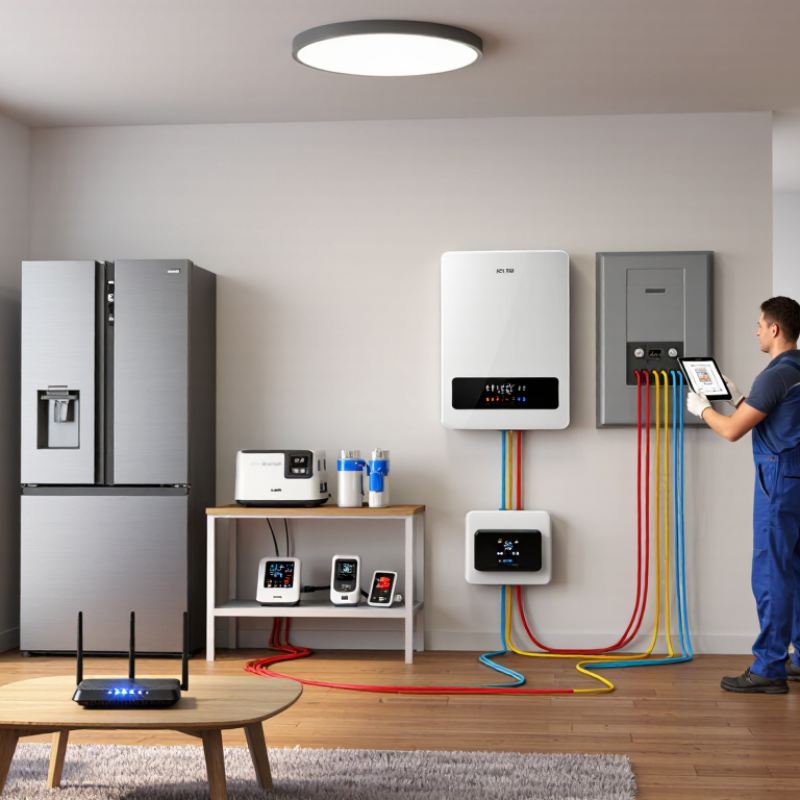
Start with the devices that matter during an outage. List your refrigerator, medical equipment, internet router, lights, and heating controls. Record each device’s running watts and starting surge. A refrigerator may use modest power, then briefly demand much more. That detail changes battery sizing. Decide how long backup should last, too. Four hours is different from two days. Your answer depends on local outage patterns, weather, and household routines.
A useful assessment separates essential loads from convenient ones. You may protect the refrigerator and router while leaving laundry appliances disconnected. Check the battery’s usable capacity, continuous output, and surge rating. Also examine recharge options, operating temperature, installation space, and safety certifications. A licensed electrician should verify wiring and local code requirements. Do not rely only on the advertised capacity. Real performance can fall during cold weather or heavy loads. The estimate may still be wrong.
Tips: Track your electricity use for one week. Note which appliances run together. Test your emergency plan before an outage. Keep a written load list near the electrical panel. If solar charging is important, estimate winter production separately. A smaller system may serve your priorities better than a larger, expensive one. Reconsider those priorities every year. Needs change.
How to Choose the Best Home Backup Battery in 2026?
Define Your Home’s Backup Power Needs and Energy Priorities
The chart shows realistic planning estimates for common essential loads during a power outage.
Add the daily energy use of the appliances you need, then choose a battery with usable capacity above that total.
Also check the battery’s continuous and surge power ratings, especially for refrigerators, pumps, and heating or cooling equipment.
Actual consumption varies with appliance efficiency, household size, weather, and operating hours.
Compare Battery Capacity, Power Output, and Expandability
How to Choose the Best Home Backup Battery in 2026?
Battery capacity and power output solve different problems. Capacity, measured in kilowatt-hours, shows how long the battery can run appliances. Power output, measured in kilowatts, determines what it can start and operate together. A 10 kWh battery delivering 5 kW may provide two hours in ideal conditions. Real usage is shorter because of conversion losses, temperature, and reserve settings.
The International Energy Agency reported in Renewables 2024 that global energy storage capacity may need to increase sixfold by 2030. This reflects a wider shift toward flexible electricity systems. For homeowners, expandable storage can be valuable as electricity use grows. However, expansion is not always simple. The inverter may limit total output, and older battery modules can reduce system efficiency. The U.S. Department of Energy also treats duration, power, and cycle life as separate storage metrics. One number cannot describe the whole system.
Tips: List essential loads before comparing capacity. A refrigerator, router, lights, and medical equipment need different priorities. Check the battery’s continuous and surge output, not only its headline rating. Ask whether future modules require matching ages and firmware. I would also leave a margin of roughly 20 percent for cold weather and aging. That margin may feel excessive today. It can prevent disappointment during a long outage.
Evaluate Battery Chemistry, Lifespan, Safety, and Warranty
How to Choose the Best Home Backup Battery in 2026?
Battery chemistry should match your household’s daily demands. Lithium iron phosphate chemistry usually offers strong thermal stability and long cycle life. Other lithium chemistries may provide higher energy density, but heat management becomes more important. Check usable capacity, not only the advertised capacity. A battery rated at 10 kWh may deliver less after reserve settings and conversion losses. I once focused too heavily on capacity and ignored charging speed. That was a costly mistake.
Lifespan depends on cycles, temperature, depth of discharge, and maintenance. Ask for expected capacity after ten years, not just the original warranty length. A useful warranty should explain cycle limits, retained capacity, labor coverage, and replacement procedures. Safety details matter too. Look for tested battery systems, protective controls, clear fault alerts, and installation guidance. A qualified electrician should confirm wiring, ventilation, wall strength, and local requirements. Do not assume every indoor installation is automatically safe.
Tips: Compare independent test results with the manufacturer’s data. Read exclusions carefully. Check performance below freezing if your garage gets cold. Keep a photo of the installation and warranty documents. Leave room for imperfect real life; cloudy weeks, aging cells, and higher power use can reduce backup time. Choose a system with practical monitoring, because silent problems are harder to fix.
Check Solar Integration, Installation Requirements, and Compatibility
How to Choose the Best Home Backup Battery in 2026?
Solar integration should be your first checkpoint, not an afterthought. Confirm whether the battery uses AC coupling, DC coupling, or both. DC coupling can reduce conversion losses in a new solar installation. AC coupling may suit an existing system more easily. Ask for the battery’s usable capacity, continuous output, surge rating, and charging limits. A battery that stores plenty of energy may still struggle with a refrigerator, pump, and induction cooker running together.
Installation details often decide whether a good battery works well at home. Measure the wall or floor space before ordering. Check required clearances, operating temperatures, weather protection, and ventilation. Some systems need a dedicated electrical panel or transfer equipment for outage protection. Local permits and inspection requirements also matter. Have a qualified electrician verify the main service, cable size, grounding, and backup-load calculation. Small details matter.
Compatibility deserves careful testing. Match the battery voltage and inverter requirements with your solar equipment. Review communication protocols, phase configuration, maximum solar input, and generator interactions. Ask whether the system can restart after a full shutdown. Read the installation manual, not only the sales sheet. I once assumed “solar ready” meant automatic coordination; it did not. That assumption could delay commissioning and increase costs. Keep room for uncertainty, because published capacity may change with temperature, reserve settings, and battery age.
Calculate Total Costs, Savings, and Long-Term Value
Choosing the best home backup battery in 2026 requires more than comparing advertised capacity. Calculate usable energy, not just the nameplate rating. A 10 kWh battery may deliver less after reserve limits and conversion losses. Check installation, wiring, permits, monitoring, and labor costs. These often add several thousand dollars to the purchase price.
Estimate savings from your actual electricity bill. Record monthly usage, peak rates, outage frequency, and solar production. A battery may reduce expensive evening purchases, but savings depend on charging and discharge efficiency. For example, if it stores 8 kWh but returns 7 kWh, the lost energy affects every annual calculation. Use conservative electricity-price assumptions. Rapid rate increases look attractive on paper, yet they are not guaranteed.
Include maintenance, software fees, insurance changes, and possible replacement costs. Battery life depends on temperature, cycling, and depth of discharge. A ten-year warranty does not always mean ten years of full performance. Read its capacity-retention terms carefully. I would also assign a value to backup power, such as protecting refrigerated food, medical equipment, or remote work during a twelve-hour outage. That value is personal, not perfectly measurable. My first estimate would probably be too optimistic. Recheck it with a lower savings rate and a higher replacement cost. A spreadsheet showing payback, yearly savings, and remaining capacity can expose weak assumptions before installation.