Top 10 Home Inverters for Reliable Backup Power

A power cut can interrupt more than lighting: it may stop a Wi-Fi router, quiet a refrigerator, and leave phones uncharged. A home inverter can keep selected essentials running, but the right choice depends on your household’s actual needs. Start by listing the devices you want to power, their wattage, and how long they must operate. Small details matter. A refrigerator’s startup surge, for example, can exceed its usual running demand.

This guide to the Top 10 Home Inverters for Reliable Backup Power compares practical features, including continuous output, surge capacity, battery compatibility, charging options, and safety protections. It also considers installation needs, noise, maintenance, and the space available for the unit and batteries. Specifications can be useful, but they do not tell the whole story; real backup time changes with battery age, temperature, and connected load. No unit is perfect. A larger system may provide longer runtime, yet cost more and occupy valuable space. Before buying, verify the manufacturer’s ratings and consult a qualified installer when wiring or system sizing is involved. The best choice is not necessarily the most powerful one. It is the system that can reliably support your essential devices, within your budget, without promising more than it can deliver.
Top 10 Home Inverters for Reliable Backup Power

How Home Inverters Provide Backup Power

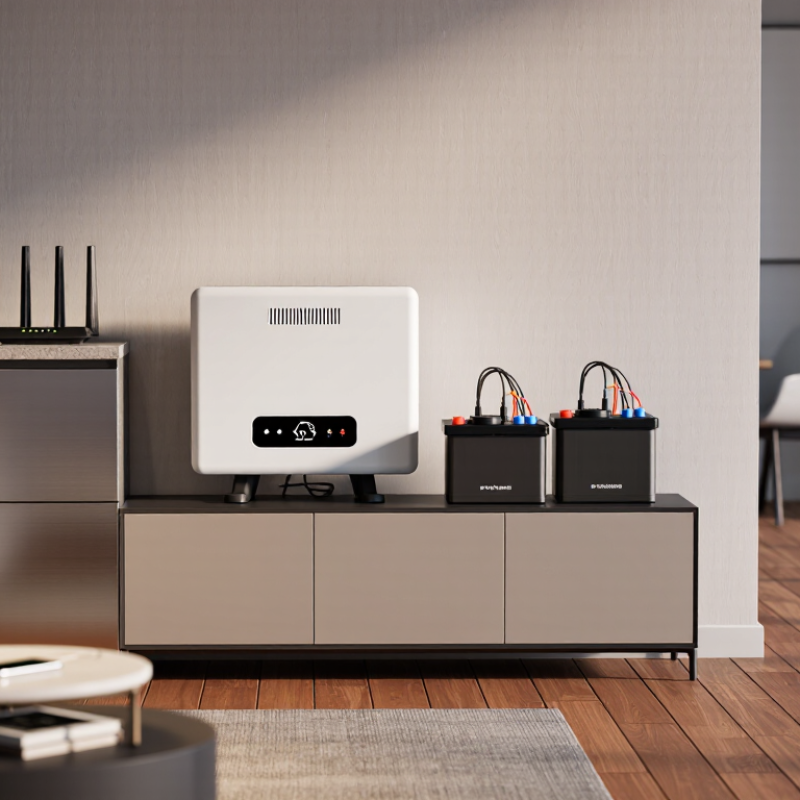
When utility power fails, a home inverter draws direct-current electricity from a connected battery and converts it into alternating current. That is the type of power most household outlets use. A transfer switch or built-in switching system routes electricity to chosen circuits, such as a refrigerator, modem, or hallway lights. The changeover may be nearly seamless, though a brief pause can reset sensitive electronics. Not magic. An inverter does not create energy; it manages what the battery has stored.

Backup time depends on battery capacity, inverter efficiency, and the appliances running at once. A refrigerator may use more power when its compressor starts than while it runs steadily. Small details matter. A technician can help size the system, account for peak loads, and check wiring, grounding, and ventilation. Homeowners should also know which circuits are backed up and how to read the system’s charge display. Testing those circuits before an outage can reveal surprises, like an overlooked outlet or a battery that has not fully charged. Even a carefully planned system has limits, and heavy heating or cooking appliances can drain stored power quickly.


How Home Inverters Provide Backup Power

A home inverter converts a battery’s stored DC electricity into AC power for household devices. This chart shows estimated runtime for example 5, 10, and 15 kWh batteries, assuming 90% conversion efficiency and a fully charged battery. Estimates use battery capacity × efficiency ÷ load; actual runtime varies with usable battery capacity, inverter limits, and changing power use.

Key Features for Comparing Home Inverters

When comparing home inverters, start with the loads you actually need during an outage. A refrigerator may need several times its running power for a brief startup surge. Add lights, a router, and a furnace fan, then compare the total with the inverter’s continuous output and surge rating. Do not size from one wattage figure. Numbers can mislead. A unit that handles a kettle may still struggle when a compressor starts at the same time. Check whether the inverter provides pure sine-wave output, especially for sensitive electronics and motor-driven appliances.

Battery voltage and chemistry must match the inverter’s requirements; battery capacity affects backup time. For example, a 1,000-watt load running for four hours uses 4 kWh, before conversion losses and reserve capacity. Real results vary with temperature, battery age, and changing loads. Check the label. Compare efficiency, standby draw, transfer time, and charging options, not just headline power. Fast transfer may matter for a desktop computer, while quiet operation may matter more in a bedroom. Look for overload, over-temperature, and low-voltage protection, plus clear installation instructions and service support. A specification sheet can leave practical questions unanswered, such as whether the cables reach your planned battery location. That detail is easy to miss.

Top 10 Home Inverters for Reliable Backup Power - Key Features for Comparing Home Inverters

The entries below are representative inverter configurations, not specific products or brands. Ratings and features vary by model; verify the manufacturer’s datasheet and local electrical requirements before purchasing.

Rank Representative configuration Continuous AC output Battery / backup Solar input Typical key features Best suited for
1 Hybrid, 6 kW 6 kW; often 120/240 V split-phase 48 V nominal battery; backup output; transfer commonly in the 10–20 ms range on applicable models About 8 kW maximum PV input, model dependent Battery charging, solar conversion, and backup switching in one unit; pure sine-wave output is common Whole-home essential circuits and moderate residential loads
2 Hybrid, 5 kW 5 kW; output voltage depends on design 48 V nominal battery; backup operation when paired with compatible storage About 6–7 kW maximum PV input, model dependent Integrated solar and battery management; check backup output and surge rating Small to medium homes prioritizing essential loads
3 Off-grid inverter-charger, 3 kW 3 kW; commonly 120 V or 230 V, depending on region 24 V or 48 V battery system; designed to operate without the grid PV charging may be built in or provided by a separate charge controller Battery inverter with AC charging capability; confirm generator input and charging limits Cabins, small homes, and essential-load backup systems
4 Hybrid, 10 kW 10 kW; split-phase or single-phase options exist Typically a high-voltage or 48 V battery, depending on system design; backup capability varies About 12–15 kW maximum PV input on some configurations Higher output for multiple circuits; check continuous and surge ratings, and whether parallel operation is supported Larger homes with substantial backup requirements
5 Hybrid, 8 kW 8 kW; voltage and phase depend on model Compatible battery required for stored-energy backup; confirm battery communication support Often configured for roughly 10–12 kW of PV input Useful balance of solar capacity and backup output; some systems allow expansion with additional units Homes with several high-priority circuits and room to expand
6 Grid-tied solar inverter, 7.6 kW 7.6 kW AC nominal output No battery backup by itself; standard grid-tied units shut down during a grid outage for safety PV-only input; DC-to-AC sizing depends on the design and inverter limits Grid synchronization and solar energy conversion; backup requires compatible storage and islanding equipment Reducing grid electricity use where backup is not required
7 Off-grid inverter-charger, 5 kW 5 kW; commonly paired with a 48 V battery bank Battery-based operation; AC generator or utility charging may be supported Integrated PV input varies; some designs use a separate MPPT charge controller Designed for standalone power; size the battery and charging sources to expected daily use Off-grid homes and properties with generator backup
8 Grid-tied solar inverter, 5 kW 5 kW AC nominal output No backup without compatible battery and backup hardware PV-only input; check MPPT voltage range and maximum DC voltage Typically includes grid protection functions; installation must meet local interconnection rules Smaller solar arrays connected to the utility grid
9 Battery inverter, 3 kW 3 kW AC output Usually paired with a 48 V battery; solar charging may require separate equipment Not necessarily included; depends on whether the unit has a built-in solar charger Focuses on converting battery DC power to household AC; check transfer behavior and overload rating Backup systems using an existing battery or separate solar charger
10 Compact inverter-charger, 1.5 kW 1.5 kW; 12 V or 24 V battery input is common Small battery system; available runtime depends on battery capacity and load Solar charging is generally separate unless specifically integrated Compact option for low-power circuits; verify output waveform and appliance starting requirements Communications equipment, lighting, and other essential low-power loads

Comparison tip: Check continuous output, surge capacity, battery compatibility, usable PV input range, transfer time, efficiency, safety certifications, and whether the inverter can provide backup when the grid is down. A grid-tied inverter alone generally does not supply power during an outage.

The Top 10 Home Inverters for Reliable Backup Power

The top 10 home inverters for reliable backup power should be judged by how well they fit a household, not by headline wattage alone. A compact unit may suit a modem, lights, and a refrigerator. Larger homes may need more continuous output and battery capacity. A neat ranking can mislead. Check the inverter’s rated output, surge capacity, and compatibility with the battery system before comparing models.

During an outage, small details matter. A refrigerator’s compressor can draw extra power when it starts, while a router may run for hours on little energy. Pure sine wave output is generally suitable for sensitive electronics and many household appliances. Look for clear overload protection, temperature limits, and accessible service information. Quiet operation helps at night. So does a readable display.

Installation deserves equal attention. Keep the unit dry, ventilated, and away from combustible materials, and use a qualified installer for fixed household wiring. Estimate backup time from actual appliance loads; advertised runtime often assumes ideal conditions. I would still leave a margin, because batteries age and real usage is messy. Even a well-chosen inverter cannot compensate for an undersized battery or poor maintenance. Check whether replacement batteries and local support are realistically available before buying.

How to Match Inverter Capacity to Household Needs

A reliable inverter is sized for the appliances you need during an outage, not simply your monthly bill. The U.S. Energy Information Administration reported average household electricity use of about 10,791 kWh in 2022, or roughly 30 kWh per day. That figure is a useful reference, not a sizing target: homes differ, and daily use does not reveal peak demand.

List essential devices and check each nameplate for running watts. Add the loads likely to operate together, such as a refrigerator, router, lights, and a medical device. Then check starting surge: refrigerator compressors and well pumps can briefly draw more power than their running ratings suggest. The inverter’s continuous rating must cover the simultaneous load; its surge rating must handle motor start-up. Leave some headroom. Real life is messy.

For example, a household might run a 700-watt refrigerator, 100 watts of lighting, and a 50-watt router, then briefly need much more when the compressor starts. Use the appliance labels or manuals, not guessed averages. This estimate can still miss unusual start-up behavior. Battery capacity is a separate calculation: watts describe the load, while kilowatt-hours help estimate runtime. A qualified electrician can verify transfer equipment, wiring, and local requirements before installation.

Installation, Safety, and Maintenance Essentials

A dependable inverter begins with correct sizing, not the biggest unit on the shelf. List essential loads, such as a refrigerator, lights, and router, then check their starting surge and total running demand. Match the inverter’s voltage and battery type to the system specifications. A qualified electrician should handle fixed wiring, protective devices, and commissioning. Keep the unit away from water, direct heat, and blocked vents. Leave the clearance stated in its manual. Keep it dry.

Safety details are easy to underestimate. Use correctly rated cables, secure connections, and an accessible isolation switch. Never open an energized inverter or guess which terminals are safe to touch. A tidy installation can still be poorly sized; that mistake may only show up when several appliances start together. Test the backup system under a realistic load, and note how long it runs. Then adjust expectations if the result differs from estimates.

For maintenance, inspect the case, vents, and visible cables monthly for dust, damage, or unusual heat. Clean exterior surfaces with a dry cloth while the system is safely shut down. Do not tighten live terminals; ask a qualified technician to inspect connections and batteries. Record test dates, alarms, and battery changes. Small gaps in that log happen, but they make recurring faults harder to spot.