Who Are the Top Home Solar Suppliers in China?

Choosing a home solar supplier in China means looking beyond a familiar brand name. Buyers need panels, inverters, and support that work together under local conditions. China has major manufacturers, including LONGi, JinkoSolar, Trina Solar, and JA Solar. Huawei, Sungrow, GoodWe, and Deye are also recognized in inverter and energy-storage markets. But a large name alone does not guarantee the right system for every home.

This guide examines what makes these companies relevant to residential solar, while separating equipment manufacturers from installers and distributors. That distinction matters. A homeowner should compare product efficiency, warranty terms, independent certifications, service access, and compatibility with batteries. Available models and support can vary by region, and published specifications do not tell the whole story. Ask for written terms. Check the details.

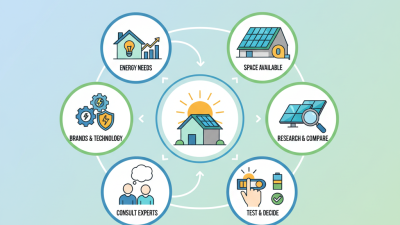
“Top” is not a fixed ranking. It depends on roof size, household electricity use, budget, and the availability of reliable installation and after-sales service. A high-efficiency panel may be useful where roof space is tight, while a lower-cost option may suit a larger roof. Neither choice is automatically better. This overview offers a practical starting point for researching home solar suppliers in China, not a substitute for checking current product documents and local installer credentials. Some comparisons will remain imperfect, because pricing, service quality, and product availability change. That deserves attention.

Who Are the Top Home Solar Suppliers in China?

How China’s Home Solar Supply Market Is Structured

Who Are the Top Home Solar Suppliers in China?

How China’s Home Solar Supply Market Is Structured

China’s home solar market is a supply chain, not a single supplier list. It spans polysilicon, wafers, cells, modules, inverters, batteries, and installation services. The International Energy Agency’s 2022 report on solar PV supply chains found China held over 80% of global manufacturing capacity across key production stages; its share of wafer production was even higher. These figures describe manufacturing concentration, not the quality of every household system.

For homeowners, suppliers usually fall into three groups: component makers, system integrators, and local installers. In 2023, China added 216.88 GW of solar capacity, including 96.29 GW of distributed solar, according to the National Energy Administration. Distributed systems can include rooftop projects, but national figures do not show which supplier serves each home. A practical comparison should check module and inverter warranties, battery compatibility, after-sales coverage, and who handles installation. A low module price may not mean a lower lifetime cost.

Tip: Ask for a written equipment list and a site-specific energy estimate. Check shading, roof direction, and expected seasonal output. The supply chain is strong, but service quality can vary. And paperwork is easy to overlook. These reports give useful market context, yet they cannot replace local quotes or a roof inspection.


What Makes a Supplier a Leader in Residential Solar

A leading residential solar supplier is not defined by panel output alone. Homeowners need equipment that performs on a shaded roof, connects safely with an inverter, and remains serviceable years later. China’s National Energy Administration reported 216.88 GW of newly installed solar capacity in 2023, including 96.29 GW of distributed systems. That scale makes dependable installation support especially important. Big numbers do not prove good service.

Look for verifiable test records, clear performance and product warranties, and published degradation figures. Ask how the supplier handles roof leaks, monitoring faults, and replacement parts. The details matter. A written response-time commitment is more useful than a vague promise of “lifetime support.”

The IEA Photovoltaic Power Systems Programme’s Trends in Photovoltaic Applications 2024 documents the rapid expansion of solar markets, but market growth is not a quality score. Buyers should compare the exact system design, not just headline panel efficiency. One imperfect point: warranty terms can be difficult to compare when exclusions differ. Read the fine print, and confirm who provides service in your area.

A supplier’s track record should include actual residential installations, trained technicians, and accessible technical documentation. Ask for references from homes with similar roof materials and weather exposure.

Major Chinese Suppliers Serving the Home Solar Market

China’s home solar market is served by manufacturers of photovoltaic modules, inverters, batteries, and mounting hardware. Some suppliers focus on one component, while others offer coordinated systems for rooftops and small residential projects. Their products may reach homeowners through local installers, wholesalers, or export distributors, so the supplier and the installer are not always the same company.

For a household, technical fit matters more than a broad product catalogue. A supplier should provide clear module and inverter specifications, warranty terms, installation guidance, and access to replacement parts.

Ask whether the proposed battery can work with the inverter, and check how the system handles shade across different roof sections. Details matter. A neat brochure cannot confirm local service quality.

Installers can help assess roof condition, wiring routes, and expected household demand, but their estimates still depend on weather and usage habits. Comparing written system designs is useful, though homeowners may overlook delivery and maintenance arrangements. That deserves a second look.

Products and Services Offered by Leading Suppliers

Leading home solar suppliers in China typically offer more than photovoltaic panels. Their product ranges may include rooftop modules, hybrid inverters, battery storage, mounting rails, cables, and monitoring devices. Some provide complete kits sized for a particular household. A useful product sheet should show rated output, operating temperature, warranty terms, and compatibility between components. Check those details carefully.

Service can matter as much as hardware. Suppliers may help with system design, roof-layout planning, shipment coordination, and remote technical support. For example, a proposal should explain how many panels fit around chimneys, vents, or shaded sections—not just show an ideal roof diagram. Ask who handles troubleshooting after installation and how quickly replacement parts can be arranged. Small details matter.

Quality evidence deserves a close look. Request independent test reports, clear warranty conditions, and references for projects in similar climates. Compare inverter monitoring features and battery capacity using the same assumptions. Quotes can be difficult to compare; sometimes the cheapest package leaves out installation guidance or essential accessories. I have to admit that product brochures can make every system look effortless. Real roofs are less tidy, so confirm the design with a qualified local installer before ordering.

China’s Share of Global Solar PV Manufacturing Capacity (2021)

China’s manufacturing footprint spans the solar supply chain, from polysilicon and ingots to wafers, cells, and finished modules. These figures show estimated shares of global manufacturing capacity, not a ranking of individual suppliers or their service offerings. Source: International Energy Agency, Solar PV Global Supply Chains (2022).

How to Assess Suppliers for a Home Solar Project

A home solar project is only as dependable as the equipment and support behind it. When comparing suppliers in China, check whether their proposed panels, inverter, battery, and mounting hardware work together as one system. Ask for model-specific datasheets, warranty terms, and test reports—not just a polished catalogue. Details matter.

Look closely at how the supplier handles project questions. Can they explain expected output using your roof direction, shading, and local weather? Request a sample system layout and ask what assumptions shaped its estimates. A supplier should also clarify who manages shipping, installation guidance, and replacement parts. Ask for proof. A quick, precise answer is useful; a vague promise is not.

Check whether warranty coverage is practical for your location, including how claims are handled and who pays for transport. Confirm product traceability, quality-control steps, and the availability of technical documents in a language your installer can use. Compare quotations line by line, since a lower price may exclude monitoring equipment or support. I would not treat a long warranty as a guarantee of easy service; that part can be difficult to judge before purchase. Speak with past customers if possible, and ask what happened when something needed repair.

Who Are the Top Home Solar Suppliers in China? - How to Assess Suppliers for a Home Solar Project

Supplier assessment guide: compare product documentation, project suitability, service commitments, and total installed cost. The checks below are evaluation criteria, not a ranking of named companies; specifications and warranty terms vary by product and contract.

Assessment area Evidence to request What to check Practical assessment
Solar modules Current module datasheet, model-specific certificates, product and performance warranty documents Rated power, dimensions, efficiency, temperature coefficient, mechanical-load ratings, and whether the exact model is covered by the submitted documents Compare modules at the same test conditions and confirm that the proposed dimensions and output suit the roof layout.
Module warranty and output terms Written warranty stating coverage period, performance guarantee, claim process, exclusions, and responsible legal entity Separate product-defect coverage from the performance guarantee. Check how output is measured and who handles claims in the installation country. Use the signed warranty for comparison; do not assume all products from a supplier have identical terms.
Inverter Inverter datasheet, installation manual, grid-compliance documentation, and warranty terms for the specific model Rated AC output, operating voltage range, number of MPPT inputs, monitoring functions, protection features, and compatibility with the proposed modules Confirm the inverter is approved for the local grid and sized for the system design, not just the module nameplate capacity.
Battery storage, if required Battery datasheet, usable-capacity specification, warranty, installation requirements, and system compatibility statement Usable rather than nominal capacity, continuous and peak power, operating limits, warranty conditions, and compatibility with the inverter and local rules Request a documented backup-load design. Battery capacity alone does not establish how much power the system can deliver.
Safety and conformity Certificates and test reports for the exact product model, issued by an appropriate body or laboratory Check relevant standards for the destination market. Examples include IEC 61215 and IEC 61730 for PV module qualification and safety, and IEC 62109 for inverter safety. Verify certificate numbers, model coverage, validity, and local acceptance; a logo or general certificate claim is not enough.
Residential project design Site survey, roof layout, shading assessment, electrical single-line diagram, and expected-energy estimate with stated assumptions Roof orientation and pitch, shading, usable roof area, local weather data, system losses, electrical constraints, and estimated annual production Compare proposals using the same location, consumption profile, and assumptions. Treat production estimates as estimates, not guaranteed output.
Installation and local compliance Installer qualifications, scope of work, permits and interconnection responsibilities, and inspection plan Confirm who is responsible for design, installation, utility approval, commissioning, and compliance with local electrical and building requirements. Prefer a clearly assigned local installation and service contact; equipment supply alone does not complete a residential solar project.
After-sales support Written service process, local contact details, troubleshooting procedure, spare-parts plan, and warranty-claim instructions Response channels, service coverage in the installation area, remote monitoring access, and responsibility for labour, shipping, and replacement parts Ask for service commitments in writing and identify which party remains responsible after commissioning.
Supplier and product traceability Business registration details, manufacturing and quality-control records, model and serial-number information, and shipment documentation Check that the contracting entity, product labels, datasheets, certificates, and invoice refer to consistent model identifiers. Verify the legal seller and the supply chain for the actual products being quoted; avoid relying on marketing claims alone.
Quoted price and contract scope Itemized quote, payment schedule, delivery terms, warranty allocation, exclusions, and change-order rules Separate equipment, shipping, taxes, installation, permits, monitoring, and optional storage so proposals can be compared on a like-for-like basis. Compare total installed cost and contractual responsibilities, not just the per-module price or headline system price.