7 Hybrid Inverter Buying Tips for Global Buyers

Choosing a hybrid inverter is not just a matter of comparing power ratings. The right unit must work with your solar panels, battery, household loads, and local grid conditions. A mismatch can limit backup performance or create avoidable installation costs. Small details matter.

Start with the system you actually need. List the appliances that must keep running during an outage, such as a refrigerator, router, or water pump. Check their starting power as well as their normal consumption. Then compare the inverter’s continuous output, surge capacity, battery voltage, and supported battery types. Product names can sound similar, but specifications reveal important differences.

Global buyers should also verify grid compatibility, communication protocols, monitoring features, warranty terms, and access to local technical support. Requirements and service options vary by market, so confirm them with the manufacturer, distributor, or a qualified installer before ordering. Review the datasheet carefully. Ask for written confirmation when compatibility is unclear.

Efficiency figures deserve attention, but they are not the whole story. Installation quality, operating temperature, battery settings, and daily usage can all affect real-world results. A spreadsheet cannot capture every site condition. That is worth remembering. The following seven buying tips offer a practical way to compare models, ask better questions, and avoid choosing an inverter based on headline specifications alone.
7 Hybrid Inverter Buying Tips for Global Buyers

Understanding How Hybrid Inverters Coordinate Solar, Batteries, and the Grid

7 Hybrid Inverter Buying Tips for Global Buyers
Understanding How Hybrid Inverters Coordinate Solar, Batteries, and the Grid

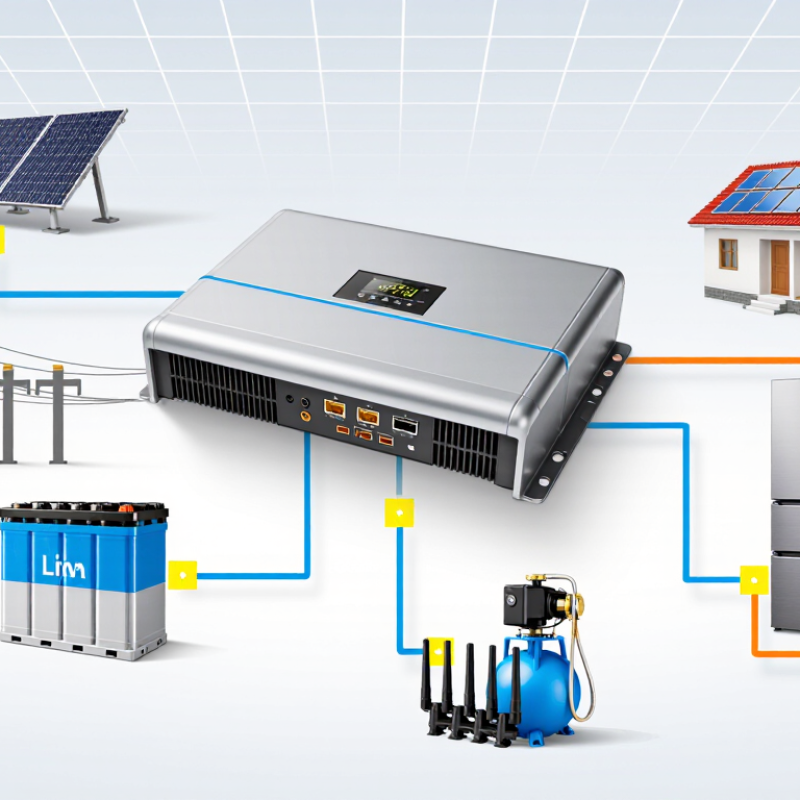
A hybrid inverter manages power from solar panels, a battery, household loads, and the grid. The IEA’s Renewables 2024 report recorded nearly 510 GW of renewable capacity additions in 2023, with solar PV making up about three-quarters. More solar means more homes must handle changing output. At noon, panels may supply the home and charge the battery. After sunset, the inverter can draw from stored energy, then import from the grid when needed. Small shifts matter. Check whether the unit lets you set battery charging times, reserve levels, and grid-export limits.

Look beyond headline power ratings. Confirm the inverter’s continuous output can run the appliances you need together, such as a pump and refrigerator. Check its battery voltage range and whether it supports the battery type you plan to use. During an outage, backup power requires a design that safely separates the home from the grid; not every hybrid setup provides whole-home backup. This is where product sheets can mislead: a large solar input rating does not guarantee strong backup output. Ask for the operating limits at your expected temperatures, and review the manufacturer’s test documentation. Real installations are rarely perfect. A shaded roof or an undersized battery can change how the system behaves.

Matching Inverter Capacity to Your Loads and Energy Storage Needs

7 Hybrid Inverter Buying Tips for Global Buyers
Matching Inverter Capacity to Your Loads and Energy Storage Needs

Size a hybrid inverter around both continuous demand and short power surges. List the appliances that must run during an outage, then add their running watts. Include compressor starts from refrigerators, pumps, and air conditioners; their brief demand can exceed normal operating power. Not just watts. Check the inverter’s surge rating and how long it can sustain that output. A unit sized only to total appliance labels may still trip when a motor starts.

Then estimate the energy those loads use across the hours you need backup. For example, 2 kW of essential loads running for five hours requires 10 kWh of delivered AC energy. Battery capacity must be higher to account for reserve limits and conversion losses. NREL’s 2024 Annual Technology Baseline uses about 85% round-trip efficiency for modeled utility-scale battery systems; it is a planning reference, not a guaranteed household-system figure. Check the actual inverter and battery specifications. Also confirm their compatible voltage and charge-power limits. A spreadsheet can miss real habits: people may run a kettle while cooling is already on. Leave room for that imperfect estimate, but avoid buying excess capacity without a clear load or expansion plan.

Hybrid Inverter Sizing: Match Capacity to Loads and Storage

Illustrative examples for three household load profiles. Compare estimated peak demand with inverter capacity on the left axis, and daily energy use with nominal battery capacity on the right axis.

The examples assume roughly 20–25% inverter headroom and one day of usable battery energy, allowing for approximately 90% battery depth of discharge and 95% discharge efficiency. Actual sizing depends on simultaneous loads, motor starting surges, desired backup duration, battery power limits, and local electrical requirements.

Checking Grid Compatibility, Voltage Standards, and Operating Modes

Grid compatibility means more than matching a plug. Check the inverter’s supported grid frequency, phase arrangement, and permitted voltage range against the site supply. A 230-volt, single-phase system is not interchangeable with every three-phase installation. Small differences matter. Ask for the exact input and output specifications, not just a broad regional description. Confirm that the equipment can meet local utility requirements, and have a qualified installer review the connection plan. Keep the answer in writing.

Operating modes affect what happens when conditions change. In self-consumption mode, solar power may serve household loads before charging the battery. Backup mode may reserve battery capacity for an outage, while grid-support modes can manage power exchange where permitted. Names vary between manufacturers, so compare actual behavior rather than labels. Check whether the inverter can switch modes automatically, how long backup transfer takes, and which circuits remain powered. A refrigerator and a few lights need a different backup plan than an entire home. I still find battery reserve easy to underestimate; test your assumptions against a typical evening’s usage. Also verify that the battery voltage range matches the inverter’s specifications. Be precise here.

Comparing Efficiency, Safety Certifications, and Environmental Ratings

For a hybrid inverter, compare efficiency under realistic operating conditions, not just the highest number on its label. IEA PVPS reported that global cumulative solar photovoltaic capacity reached about 1,624 GW by the end of 2023. That scale makes consistent, comparable product data especially useful. Check the European or California weighted efficiency, where applicable, and ask for test results across different loads. A unit may reach 98% peak efficiency yet perform differently during cloudy mornings or partial battery charging. Small details matter.

Safety and environmental ratings answer different questions. IEC 62109-1 and IEC 62109-2 cover safety requirements for power converters and photovoltaic inverters; verify the exact model’s test documents, not only a brochure claim. Grid-connection approval is a separate check. For enclosure protection, IEC 60529 defines IP codes: IP65 indicates dust-tight protection and resistance to water jets, not immersion. Salt mist, heat, and humidity can still affect service life. Check the operating-temperature range and derating curve for the installation site.

Compare independent reports, certification scope, and warranty exclusions side by side. Ask whether published efficiency includes standby consumption, and whether output falls at high ambient temperatures. A rooftop unit in a hot, dusty region faces different conditions from one in a mild indoor setting. One point is easy to overlook: an impressive rating cannot replace clear documentation. I would question any seller who cannot provide it.

7 Hybrid Inverter Buying Tips for Global Buyers - Comparing Efficiency, Safety Certifications, and Environmental Ratings
Buying Tip Comparison Dimension What to Check Relevant Data or Standard Buyer Action
1. Compare efficiency on equal terms Conversion and weighted efficiency Review both maximum conversion efficiency and a weighted efficiency figure where available. Confirm the figures use comparable test methods and refer to the same operating configuration. Peak efficiency describes performance at a particular operating point; weighted figures represent performance across multiple load conditions. Neither figure alone predicts annual energy yield. Request the full efficiency curve and test documentation. Compare models under similar DC voltage, load, and grid conditions rather than relying only on the highest headline percentage.
2. Check MPPT performance and PV compatibility Maximum power point tracking (MPPT) Check the number of independent MPPT inputs, MPPT voltage range, maximum input current, and permitted PV array voltage and power. MPPT operating limits and input-current ratings are product-specific. Separate MPPTs can help manage PV arrays with different orientations or shading patterns. Match the inverter limits to the planned module strings and site layout. Verify string voltage at the site’s expected minimum and maximum temperatures.
3. Verify safety standards and certificates Electrical and inverter safety Look for certificates and test reports applicable to the inverter model, configuration, and destination market. Confirm the issuing body and certificate scope. IEC 62109-1 and IEC 62109-2 cover safety requirements for power converters used in photovoltaic systems. Market-specific requirements may also apply. Ask for current, verifiable documents covering the exact model and relevant variants. Do not treat a general declaration or a standard listed in a brochure as proof of certification.
4. Confirm grid and anti-islanding compliance Grid connection and protection Check the grid-code settings, voltage and frequency ranges, export-control functions, and required anti-islanding test evidence for the installation country. IEC 62116 specifies a test procedure for islanding prevention measures used with utility-interconnected photovoltaic inverters. Grid-connection rules differ by jurisdiction. Confirm approval requirements with the local utility or authority before purchase. Ensure the supplied configuration supports the required country-specific settings.
5. Review ingress protection and installation conditions Enclosure protection Check the IP rating, permitted installation location, cable-entry requirements, and any restrictions on direct exposure to rain, dust, or sunlight. Under IEC 60529, IP65 indicates a dust-tight enclosure protected against water jets. An IP rating does not by itself establish suitability for submersion or every outdoor condition. Match the enclosure rating to the actual site and follow the installation manual. Check whether connectors, covers, and cable glands retain the specified protection when installed.
6. Compare operating limits and thermal derating Temperature, altitude, and cooling Review the operating-temperature range, rated-output conditions, altitude limits, cooling method, and any power-derating curves. Permitted temperature and altitude ranges vary by model. Output may be reduced outside specified operating conditions, including at high ambient temperatures or elevations. Compare the published derating curves with the site’s climate and elevation. Allow appropriate ventilation and clearance as stated in the installation instructions.
7. Assess environmental and market requirements Materials, EMC, and local compliance Check electromagnetic compatibility documentation, restricted-substance obligations where applicable, warranty conditions, and end-of-life or recycling requirements. IEC 61000 series standards address electromagnetic compatibility topics. EU RoHS requirements restrict certain hazardous substances in covered electrical and electronic equipment. Confirm which rules apply in the destination market and request relevant declarations or test reports. Treat environmental claims as model- and jurisdiction-specific.

Assessing Warranty Coverage, Local Support, and Lifetime Costs

Treat warranty terms as operating costs, not brochure details. Check coverage length, labor, freight, replacement parts, and whether a replacement restarts the warranty. Ask who handles fault diagnosis and how quickly local technicians can respond. A spare inverter board in a nearby warehouse can matter more than a long email promise. Read the exclusions. NREL’s 2024 Annual Technology Baseline models utility-scale solar projects over 30 years and assumes inverter replacement in year 15. This is a planning benchmark, not a prediction for every hybrid inverter, but it shows how a ten-year warranty can leave a costly gap.

Compare lifetime costs, not just purchase prices. Include installation, monitoring, conversion losses, replacement labor, shipping, and downtime; ask for a written estimate under your expected daily load. IRENA’s Renewable Power Generation Costs in 2023 reports a global weighted-average utility-scale solar PV cost of USD 0.044 per kilowatt-hour, 12% below 2022. That benchmark is not a household quote, yet it shows why small efficiency and service differences deserve attention over time. Still, cost models can miss the inconvenience of waiting weeks for a part. Check local stock, support hours, and escalation procedures before signing.