How to Choose the Right Home Backup Battery
A power cut rarely arrives at a convenient moment. The refrigerator clicks off, the router goes dark, and a phone battery suddenly matters more. Choosing a home back up battery is not just about buying the biggest unit. It means deciding which appliances must keep running, for how long, and what your household can realistically afford.
Energy scientist Amory Lovins is widely associated with the principle, “The cheapest energy is the energy you don’t use.” That idea matters here: reducing unnecessary loads can make a smaller backup system more useful. Still, it is easy to underestimate everyday demand. A refrigerator may cycle on and off, while a heater or pump can draw far more power than expected. Check appliance labels, note essential circuits, and compare both battery capacity and continuous output. Those figures answer different questions.
There is no perfect setup. A battery that suits a mild outage may disappoint during a long winter storm. Solar panels can help recharge some systems, but only when the equipment is compatible and conditions allow. Look closely at installation requirements, usable capacity, warranties, and service support. Ask an installer to explain the assumptions behind their estimate. Then check them yourself. This guide will help you weigh those details and choose a system that fits your home—not an idealized one.
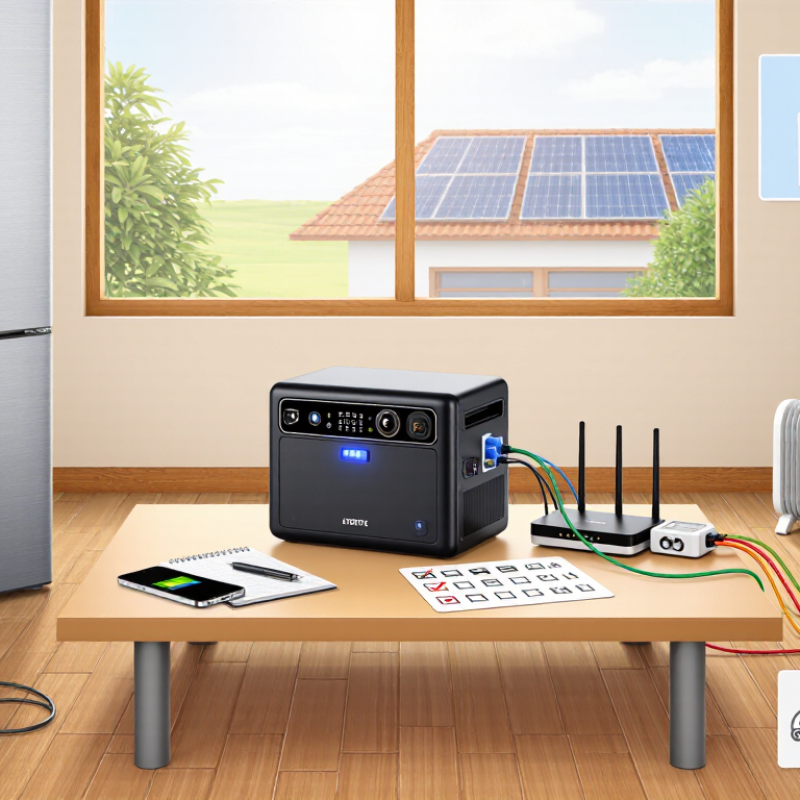
Estimate Backup Energy Using EIA’s 10,791 kWh/Year U.S. Household Benchmark
How to Choose the Right Home Backup Battery
Estimate Backup Energy Using EIA’s 10,791 kWh/Year U.S. Household Benchmark
The EIA’s 10,791 kWh annual household benchmark works out to about 29.6 kWh per day. Treat that as a starting point, not a battery-size recommendation. Your home may use much less during an outage if you switch off air conditioning, laundry, and other heavy loads. Or it may use more during a cold snap.
List the essentials you want to keep running: perhaps a refrigerator, a few lights, phone chargers, and a medical device. Check appliance labels, then estimate watts multiplied by hours of use. A refrigerator cycles on and off, so its label alone may overstate daily use. A plug-in energy meter can give a more useful reading. Add the estimates and compare them with the battery’s usable capacity, not just its advertised total. Allow for conversion losses and some reserve.
The daily average is useful, but blunt. It smooths over busy evenings and seasonal heating needs. Try a simple test: track essential circuits for a few ordinary days, then repeat during colder or hotter weather if possible. Your estimate will still have gaps. That’s worth noticing before choosing a system with too little stored energy—or paying for capacity your household rarely needs.
Size Usable Capacity for Essential Loads, Runtime, and Conversion Losses
Choosing a home backup battery starts with the loads you truly need during an outage. Write down each device, its wattage, and the hours you expect to use it. A refrigerator may cycle on and off, while a modem runs steadily; treating them alike can skew your estimate. Add their energy use in watt-hours, not just their power ratings. Small distinction. It matters.
Next, compare that daily need with usable battery capacity, not the headline capacity alone. Some stored energy is lost as electricity passes through the inverter and wiring. If your essential loads need 2,000 watt-hours, a battery rated at exactly 2,000 watt-hours may not provide that much at the outlets. Check the manufacturer’s usable-capacity figures and conversion-efficiency conditions. Real-world runtime varies. Cold temperatures, battery age, and reserve settings can reduce available energy, too.
Power rating is a separate check. A battery may hold enough energy for a day but struggle with a pump or refrigerator’s brief startup surge. Add the running watts of devices likely to operate together, then check the inverter’s continuous and surge ratings. I once underestimated a small pump because its normal draw looked modest. That was an imperfect estimate, and worth revisiting before choosing a system.
Match Continuous and Surge Power to Appliance Starting Loads
How to Choose the Right Home Backup Battery
Match Continuous and Surge Power to Appliance Starting Loads
A home backup battery must handle both steady demand and brief startup surges. Continuous power is what it can supply over time. Surge power is the short burst some appliances need when their motors start. A refrigerator may draw much more for a moment than it uses while running. Check the appliance label or manual for both figures when available.
List the devices you want to run, then note their running watts and starting requirements. A sump pump, refrigerator, and furnace fan may each start at different times, but their loads can overlap. Add the continuous loads you expect to use together, then check whether the battery can cover the largest likely startup surge. Surge ratings vary in duration, so compare the stated time as well as the number. Estimates can be imperfect; real startup demand depends on the appliance and its condition.
Tips: Keep a simple load list beside the electrical panel. Include the microwave or kettle if you may use one during an outage. These high-draw appliances can quickly use the available capacity. Leave some margin rather than sizing to the exact total.
Compare Battery Chemistry, Cycle-Life Ratings, and Warranty Throughput
How to Choose the Right Home Backup Battery
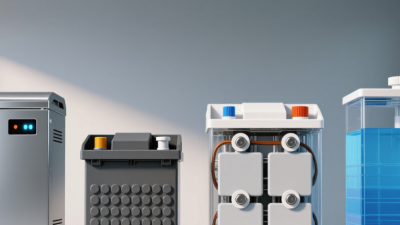
Battery chemistry affects how a system handles daily use, heat, and long-term wear. Lithium iron phosphate batteries often offer strong cycle life and thermal stability, while other lithium-ion chemistries may provide more energy in a smaller space. Neither label tells the whole story. Check the usable capacity, operating-temperature range, and required installation clearances in the product specifications.
Cycle-life ratings need context. A battery rated for 6,000 cycles may reach that figure only under specific conditions, such as a set discharge depth and moderate temperature. Compare the test conditions, not just the headline number. For a home that cycles nightly, a rating at 80% depth of discharge may be more relevant than one measured under gentler use. Small print matters.
Warranty throughput estimates how much energy the battery can deliver over its covered life. Compare that figure with your expected annual use: a household shifting 8 kilowatt-hours each evening uses about 2,920 kilowatt-hours yearly. Also check the warranty’s remaining-capacity threshold and exclusions. The math can feel awkward. I’d still leave room for changing habits, since backup use during outages is hard to predict. A careful comparison beats choosing by cycle count alone.
How to Choose the Right Home Backup Battery — Compare Battery Chemistry, Cycle-Life Ratings, and Warranty Throughput
| Battery chemistry |
Typical cycle-life range |
Depth of discharge (DoD) |
Typical round-trip efficiency |
Warranty-throughput comparison |
Practical considerations |
| Lithium iron phosphate (LFP) |
About 3,000–6,000 cycles, depending on cell design and test conditions |
Often designed for regular use at roughly 80–100%; follow the product’s operating limits |
About 90–95% |
Not standardized by chemistry. Compare the specific warranty’s cumulative energy-throughput limit, warranty term, and retained-capacity requirement. |
Commonly selected for stationary storage because of long cycle life and strong thermal stability. Actual performance depends on temperature, charge rate, and operating settings. |
| Lithium nickel manganese cobalt oxide (NMC) |
About 1,000–3,000 cycles, depending on cell design and test conditions |
Often designed for regular use at roughly 80–100%; usable limits are product-specific |
About 90–95% |
Not standardized by chemistry. Check the product warranty for its cumulative discharged-energy limit and any annual or lifetime conditions. |
High energy density can support a compact system. Cycle life and thermal-management requirements vary by cell and system design. |
| Lead-acid (deep-cycle) |
About 300–1,000 cycles; cycle life generally falls as discharge depth increases |
Often operated around 50% DoD to help extend service life; product guidance takes precedence |
About 70–85% |
Terms vary by product and may be expressed as a warranty period rather than a lifetime energy-throughput allowance. Confirm the written warranty. |
Typically lower upfront cost, but lower usable energy at a given rated capacity and more frequent replacement can affect lifetime cost. |
How to compare: Cycle-life figures are approximate ranges, not guarantees; results depend on temperature, discharge depth, charge rate, and end-of-life criteria. For warranty throughput, compare the guaranteed lifetime discharged energy in kWh alongside the warranty term and minimum retained capacity. A useful normalization is equivalent full cycles = warranted throughput (kWh) ÷ usable battery capacity (kWh).
Check UL 9540 Certification and NEC Article 706 Installation Requirements
A home backup battery is not just a battery; it is a complete energy storage system. UL 9540 certification evaluates the system, including key components and their interactions. Check the certificate for the exact battery and inverter combination being installed. A component’s separate listing does not prove that the complete system is certified. Not just a label. UL 9540A is different: it is a test method for evaluating thermal runaway and fire propagation, not a system certification. I still find that distinction easy to miss when comparing spec sheets.
NEC Article 706 addresses energy storage system installations, including disconnects, wiring, overcurrent protection, and equipment access. Requirements depend on the code edition adopted locally and the authority having jurisdiction. Ask a qualified installer to confirm the applicable edition, permits, required clearances, and inspection process before work begins. Details matter. A certified product can still be installed incorrectly.
The market is growing quickly. The 2024 U.S. Energy Storage Monitor from Wood Mackenzie and the Solar Energy Industries Association reported about 1.2 gigawatt-hours of U.S. residential storage installations in 2023, nearly double the prior year. More choices make careful document checks even more useful. Request the UL 9540 certificate and installation drawings, then compare them with the actual equipment and site. I would not rely on a sales sheet alone.
How to Choose the Right Home Backup Battery
Check UL 9540 certification and NEC Article 706 installation requirements.
This chart counts selected review items in this guide, not the total requirements in either standard. Confirm that the complete energy storage system and its specific configuration are covered by a UL 9540 certification, follow the listing and manufacturer’s installation instructions, and have the installation checked against the locally adopted NEC edition and local authority requirements.